


The Puppy Blues Are Real: Surviving the Weeks That Break New Owners
That overwhelmed, sleep-deprived, what-have-I-done feeling has a name. Most puppy chaos comes down to an overtired pup and a missing routine. Here's the daily rhythm that fixes it, and how to protect yourself while it does.

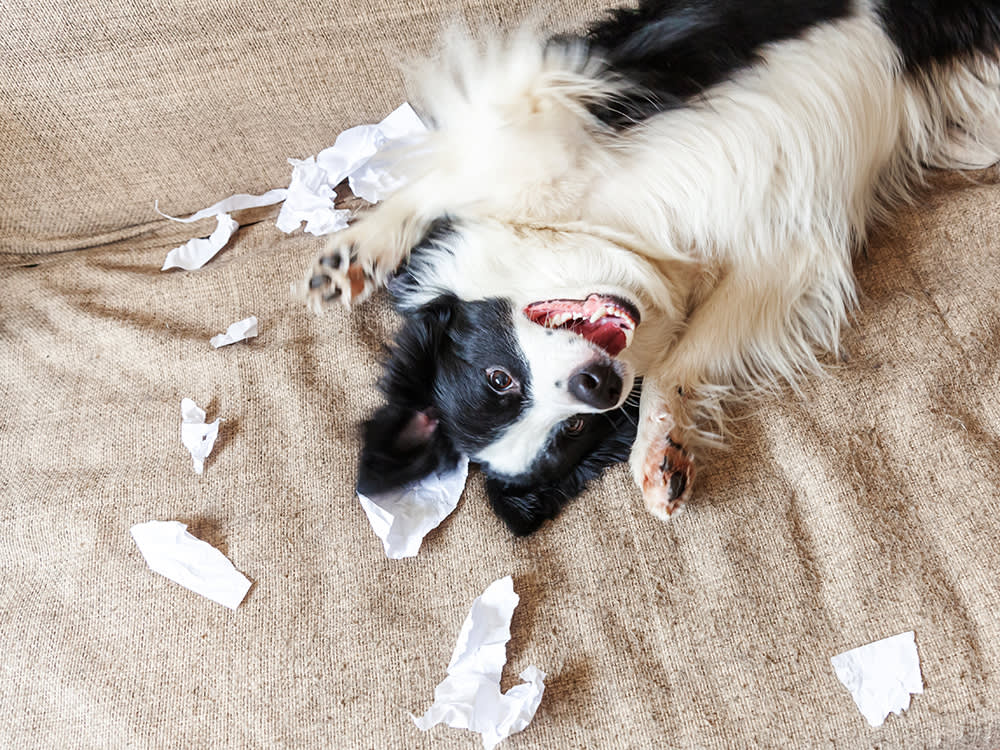
No matter how cute your little rascal is, the first weeks with a puppy can flatten you. Everyone promised joy and unconditional love, and that is real, but nobody mentioned the stress, the exhaustion, the resentment, and the quiet panic of wondering whether you have ruined your life. That feeling is common enough to have a name: the puppy blues. If you are running on no sleep, mopping up mystery puddles, and prying your own belongings out of needle teeth all day, you are not failing. You are in the part everyone forgets to warn you about.
Here is the reframe that makes it survivable. Most puppy chaos is not a behavior problem and it is not your fault. It is two things stacked together: an overtired, under-structured puppy, and a depleted human trying to manage it without a plan. Fix the puppy’s rhythm and protect your own nervous system, and the worst of it passes faster than you think. Let’s take both.
Most “bad” puppy behavior is overtired behavior
This is the single most useful thing to understand. That fur tornado spinning around your living room and biting everything in reach is rarely a “bad” puppy. They are usually an exhausted one. Puppy energy comes in short, intense bursts, and when a puppy runs past the point of tiredness, the result looks exactly like misbehavior: frantic biting, chewing, barking, and whining. The same way a toddler does not say “I am sleepy” but instead melts down in the cereal aisle, an overtired puppy acts out.
And the sleep need is enormous. Young puppies need somewhere in the range of 18 to 20 hours of sleep a day, well more than the 17 hours people often quote and far more than most new owners provide, because a wired puppy does not look sleepy, they look like they need more activity. They almost never do.
“When a new client tells me their puppy is wild and impossible, the first question I ask is how much the puppy is actually sleeping,” says Dr. Mara Chen, a veterinary behaviorist. “Nine times out of ten the puppy is chronically overtired, and the family is responding by adding more stimulation, which is pouring gas on the fire. Enforced rest fixes more behavior than any training technique.”
The loop that fixes most of it
Puppies thrive on rhythm, and the rhythm that prevents meltdowns is a simple repeating loop you run all day:
Potty → short burst of activity → enforced rest → repeat.
A sample stretch might look like this:
- Wake and straight outside to potty.
- 15 to 30 minutes of activity: a sniffy walk, a few rounds of fetch, a short training game, or a scattered-treat treasure hunt across the floor.
- Back in the crate or pen for a 1 to 2 hour nap, ideally before the puppy looks tired.
- Out to potty, and around again.
The activity does not have to be a long walk. Mental work, a puzzle feeder, a snuffle mat, a chew, sniffing games, tires a puppy faster and more durably than physical exercise, and it is something you can do without leaving the house on a bad-weather day. Time the bigger play sessions for when your puppy naturally gets the zoomies, and you will work with their energy instead of against it.
The enforced nap is the load-bearing piece. Do not wait for your puppy to wind down on their own; put them down in the crate with a safe chew, the way you would put a small child down for a nap. They may protest at first. With consistency they learn the rhythm and, crucially, learn to settle themselves, which is a skill, not a mood.
Teach calm like it’s a trick
You can actively grow the behavior you want more of. Whenever you catch your puppy lying down quietly, chewing a toy or just relaxing, silently walk over and set a treat beside them, then walk away. This technique, sometimes called capturing calmness, rewards the puppy for the exact state you are hoping for. The first few times they may pop up excited; that is fine, you still reinforced the calm moment. Repeat it over days and you build a genuine positive association with being settled. Pair that with a dependable routine and fewer stressful triggers, and a calm puppy becomes your default rather than your dream.
The part nobody preps you for: you
Here is what the standard “six tips” list always leaves out. Even with a perfect routine, you will hit moments where you are simply done with the puddles and the teeth. That is not a sign you are doing it wrong. Caring for a needy creature on broken sleep is genuinely depleting, and your wellbeing is not a luxury here, it is part of the training plan, because a frazzled human is a worse, more reactive teacher.
A few things that actually help:
- Take real breaks without guilt. Hand your puppy to a trusted friend or relative for an afternoon or a whole day. People love spending time with a puppy, especially someone who has not been scrubbing a rug all morning, and it doubles as socialization for your dog. Use the time to genuinely reset.
- Use the crate as a pause button for you, too. When you feel your patience snap, it is completely fine to put your puppy somewhere safe, like their crate, for five minutes while you breathe. A short, intentional break is far better than reacting in frustration.
- Keep a mantra for the worst moments. Something like “this is one moment” or “the puppy phase will pass.” It sounds small, but it interrupts the spiral and reminds your brain that this is a temporary season, not your new permanent life.
- Know the puppy blues are normal, and time-limited. Feeling overwhelmed, weepy, or regretful does not mean you made a mistake or that you do not love your dog. It is a well-documented experience that lifts as the puppy matures and the routine takes hold. If the feelings are heavy or lasting, it is worth talking to someone, the same as you would with any other kind of burnout.
It gets better, genuinely
As you and your puppy settle into your shared rhythm, the chaos thins out and the bond fills in. The biting eases as the adult teeth come in, the naps get more reliable, and one day you realize the puddles have stopped. Before long you will not be able to picture life without them, which, on the hard nights, is worth holding onto.
References
- American Veterinary Society of Animal Behavior, Puppy Socialization Position Statement
- Adams, V.J. et al., research on canine sleep and rest requirements in early development
Sara Lim leads our Product Picks coverage, testing and comparing the things pets and their owners actually use. From everyday essentials to home-and-style finds, she focuses on honest, useful recommendations rather than hype.
Meet our experts ↗Keep reading
 First DaysYou Don't Give a Puppy Water. You Wean Them Into It.Dr. Ravi Mehta · 9 min
 First DaysEight Weeks Isn't a Feeding Milestone. It's a Behavior Deadline.Dr. Priya Nair · 9 min
 Health & WellnessThe Runt Isn't the Problem. The First 48 Hours Are.Dr. Priya Nair · 9 min
 First DaysNighttime Crate-Training Usually Fails for One Reason: Bladder MathNina Vasquez · 8 min
 First DaysCleaning a Newborn Puppy: Why Warmth Matters More Than the MessDr. Lena Park · 7 min
 Health & WellnessStop Watching Your Puppy Breathe. Start Counting.Dr. Lena Park · 8 min