


Cleaning a Newborn Puppy: Why Warmth Matters More Than the Mess
With a two-week-old puppy, the dirt is rarely the danger. The real risk is chilling. Here's a warmth-first way to clean a neonate safely and know when to call the vet.

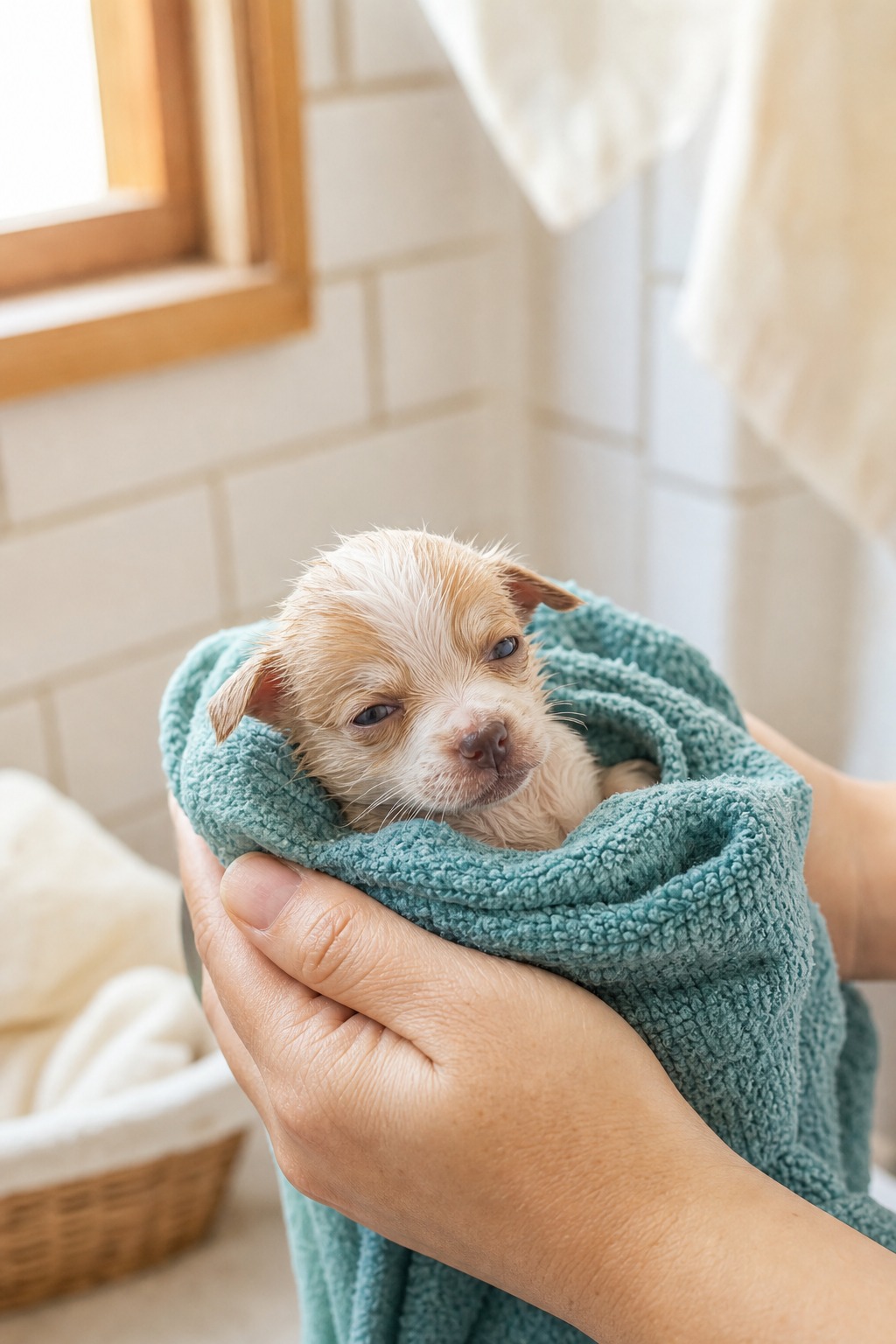
Here is the counterintuitive truth about a filthy two-week-old puppy: the mess is almost never the emergency. The cold is. A neonatal puppy cannot yet hold its own body temperature, so the single most dangerous thing you can do to a dirty newborn is the obvious thing, which is to bathe it. Wet plus cold, in an animal that cannot warm itself back up, is how a manageable cleanup turns into a feeding crisis or an infection. So the rule that actually protects your puppy is not “how do I bathe it,” but “how do I get it clean without ever letting it chill.” That reframing changes every decision that follows.
Start with the thermostat, not the sink
A newborn puppy runs its whole life on one priority: staying warm enough to nurse. Puppies do not have a working thermoregulatory system until they are around four weeks old, which means they cannot warm themselves in a cool room or shed heat when they are too warm. They rely entirely on their mother, their littermates, and the ambient temperature of their nest. When a neonate’s body temperature drops, it stops being able to nurse and digest milk properly, and a chilled puppy is far more vulnerable to infection. That is why warmth comes before hygiene in every scenario below. Before you touch a dirty puppy with anything damp, make sure the room is genuinely warm and you have dry towels standing by.
With a neonate, chilling is the actual danger, not the dirt. I would much rather a puppy stay a little grubby for another hour than get wet in a cool room. Warm the environment first, clean second, and keep the whole thing short.
The good news: mom has most of it covered
Most newborn puppies do not need cleaning at all in their first weeks. Their mother handles hygiene with tongue baths, which do double duty by stimulating the puppies to urinate and defecate (neonates cannot eliminate on their own without that prompting). At this age a puppy’s entire job is to eat, sleep, and stay warm, and they simply do not generate much mess doing it. So before you intervene, ask whether the mess will resolve on its own with a few more of mom’s cleanings. Often it will, and leaving her to it is safer than any bath you could give.
When a puppy genuinely needs cleaning: two methods, warmth-first
If a puppy has landed in a pile of feces or some other mess that mom cannot manage, you have two tools, and neither is a bath.
Spot-cleaning one dirty area. When only a paw or a patch of the puppy is soiled, this is all you need. Dampen (do not saturate) a washcloth with warm water and gently wipe the dirty spot. Do not scrub; let the warmth and moisture loosen crusted debris on their own. Keep a warm, dry towel ready and dry each damp area immediately, then confirm the whole puppy is dry before you finish.
A limited sponge bath. If a pup has rolled through the litter’s mess head to tail, set up in a comfortably warm room with a washcloth and two or three warm towels. Wipe from head to tail with the damp cloth, and unless your vet has told you otherwise, use no soap or shampoo at all. Even human baby shampoo is too harsh for neonatal skin, and every extra bit of product and water is more chilling risk for no real benefit. Towel-dry with a fresh-from-the-dryer warm towel, swapping towels as they dampen, and make absolutely sure the puppy is dry and warm before returning it to mom.
Afterward, a little extra heat support can help, but do it carefully: place a heating pad under only half of the bedding, with several layers between the pad and the puppy so there is never direct contact. Heating only half the nest lets mom and pups wriggle to a cooler spot if it gets too warm. Never lay a puppy directly on a heating pad and never aim a hot blow dryer at a neonate; overheating is its own hazard.
The lightest touch usually wins
Small messes almost never justify a sponge bath, and there is a real bonus to keeping cleanups minimal: gentle, early handling teaches a puppy that grooming is nothing to fear, which pays off for the rest of its life. For minor tidying, a soft brush suited to the coat can lift crusties and keep fur clean, and unscented wipes labeled safe for puppies handle light messes. Remember that mom is still licking her litter constantly, so plain warm water is usually the better default over any product.
Read the puppy, not just the mess
A bath is stressful, and for a neonate that is already struggling, that stress can tip into danger. Stop and reassess if you notice any signs that a puppy is failing to thrive or in distress, because these change the situation from “cleaning” to “call the vet now”:
- Lethargy or floppiness
- No interest in nursing
- Inability to latch or suckle
- Constant vocalization
- Pale or blue gums
While you work, protect the vulnerable parts. A two-week-old’s eyes and ears are still opening, so keep soiled water away from them. And because neonates lack the reflexes to guard their airway, water in the nose or mouth can be aspirated and lead to pneumonia; keep the cloth well away from the face.
The fleas-and-parasites trap
Here is where good intentions go most wrong. If mom has fleas, the puppies will have fleas too, and the instinct is to reach for a flea shampoo. Do not. Flea products and flea shampoos are formulated for older animals, and many are unsafe below a certain age or body weight; using one on a neonate can cause real harm. The right move is prevention through mom: make sure she is on a safe, age-appropriate flea preventative so the litter is protected indirectly. If fleas are already established in the litter, that is a vet call, not a home project. Your vet can protect mom, the puppies, and your home with something actually safe for neonates.
When to call your vet
Beyond fleas, a few things warrant a call rather than home care: constant diarrhea, poor appetite, signs of skin infection such as bumps or scabs, and any sign that mom is neglecting the litter. With animals this fragile, an early phone call almost always beats guessing.
What current neonatal guidance emphasizes
Veterinary neonatology keeps circling back to the same non-negotiable: warmth. Current teaching-hospital guidance stresses that a puppy kept below its ideal environmental temperature will not nurse or digest properly, and that re-warming a chilled neonate must be done gradually rather than with direct high heat, which can cause its own problems. Newer neonatal-care protocols also emphasize weighing puppies daily on a small kitchen or postal scale as the earliest warning system: a neonate that fails to gain, or that loses weight, is often in trouble before any other sign appears, and it is a far more sensitive flag than how a puppy looks or acts. None of this changes the cleaning rules, but it reinforces them. Keep any cleanup brief, keep it warm, skip products unless a vet directs otherwise, and let the scale and a quick clinic call catch problems early.
Frequently asked questions
How do I groom a new puppy once it’s older?
Once a pup is past the neonatal stage, gather the right tools, including puppy shampoo, towels, and treats. Keep sessions short, offer plenty of praise, and rinse and dry thoroughly. If you would rather use a professional groomer, wait until your pup is 16 weeks old and fully vaccinated.
How often should I groom my dog?
It depends on coat type, fur length, how much time your dog spends outdoors, and any skin conditions. Every dog is different, but many do well with grooming every three to six weeks.
How soon can I bathe a newborn puppy?
Not with a full bath, because of the chilling risk. Use a warm, damp cloth to spot-clean or sponge-clean only when necessary, dry the puppy thoroughly, and keep it warm throughout.
References
- Merck Veterinary Manual: Management of the Neonate in Dogs and Cats
- Lawler, D. F. Neonatal and Pediatric Care of the Puppy and Kitten
- Mila, H., et al. Monitoring Neonatal Body Weight as an Early Predictor of Puppy Survival
Dr. Park is a board-certified emergency and critical care specialist. She reviews our health and safety content for clinical accuracy and contributes guides on recognising urgent conditions. Her focus is helping owners act quickly and correctly when it matters most.
Meet our experts ↗Keep reading
 TrainingYour Puppy Isn't Being Dramatic. Separation Anxiety Is Real, and Fixable.Dr. Lena Park · 7 min
 First DaysThe Best Puppy Book in Years Isn't a Training Manual. It's a Coming-of-Age StorySara Lim · 6 min
 TrainingYou're Probably Training Your Puppy Too Hard. Here's the 6-Month Plan That Works.Sasha Ford · 6 min
 First DaysYou Don't Give a Puppy Water. You Wean Them Into It.Dr. Ravi Mehta · 9 min
 First DaysHalf of New Puppy Owners Feel Terrible. The Research Says When It Stops.Dr. Amara Solis · 6 min
 First DaysTwo Puppies Sound Twice as Sweet. Trainers Beg You to Reconsider.Dr. Mara Chen · 8 min