


You Don't Give a Puppy Water. You Wean Them Into It.
Puppies don't decide to start drinking. Water is a side effect of the food getting drier. Manage the mash and the water takes care of itself.

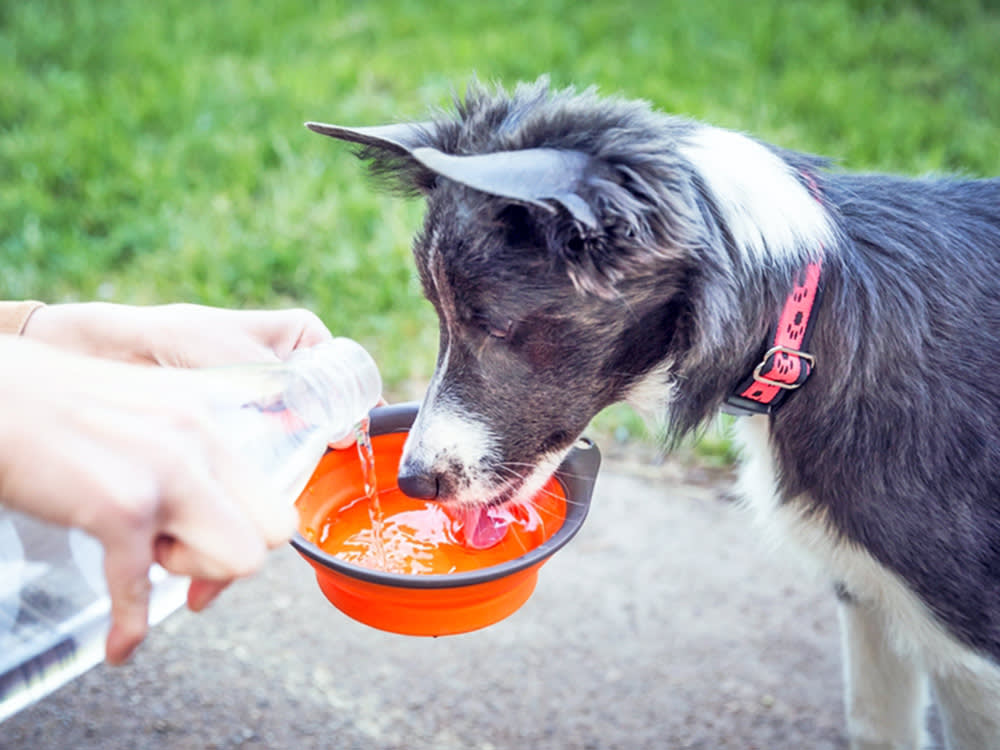
“When can puppies drink water” sounds like a question with a gate behind it. As if there is a day, and on that day you are allowed to put down a bowl.
There isn’t, and there isn’t a bowl either. Puppies do not decide to start drinking water. Water is a side effect of their food getting drier.
That is the whole mechanism, and once you have it, the timeline stops being something to memorize and starts being something you can actually run. A nursing puppy gets nearly all their fluid from milk. Their first solid food is barely solid at all, closer to soup, so it keeps supplying that fluid. Then, week by week, you thicken the food. As the water leaves the bowl of food, the puppy has to go find it somewhere else. And that is the moment they start drinking.
Manage the mash, and the water manages itself. Which means everything below is really about the food.
Why the fluid part is not a footnote
It is easy to treat hydration as the boring half of weaning, the thing you handle by putting down a dish. It is not, and the reason is that a puppy is a much smaller buffer than a dog.
Newborn puppies are a substantially higher percentage water than adult dogs are. They also cannot regulate their own temperature well, they have almost no fat reserve, and they are gaining weight at a rate that leaves no slack. A day of poor intake in a two-week-old puppy is not a day of being a bit off. It is a genuine emergency, and it arrives fast.
Here is what proper hydration is actually doing inside a growing puppy:
- Peeing. Every process in the body throws off waste, and it leaves via the urine. The kidneys can only clear it if there is enough fluid coming through them to carry it out.
- Digesting. Food does not become nutrients without fluid to break it down first. When a puppy runs dry, the gut is among the very first things to falter.
- Pooping. The lower bowel does more work on the body’s water balance than anyone gives it credit for. Skimp on fluid and the stool comes out hard and stuck. Flood it and the colon cannot reabsorb fast enough, and it comes out as diarrhea. The bowel is, in effect, a live readout of how the fluid balance is going.
- Delivering the goods. Blood pressure depends on hydration, and the heart’s job gets harder without it. Growth is built entirely out of the oxygen and nutrients that a normal circulation delivers.
- Staying warm. For the first weeks a puppy borrows heat from the room, from their mother, and from the pile of siblings. As they start regulating their own temperature, hydration becomes central to it.
That is five systems, all leaning on the same thing. Which is why the water dish goes down at the same moment the first mash does, not later.
The window: 21 to 28 days
The weaning process gets going for most litters somewhere around three to four weeks old. Opinions about the exact right day are plentiful, and nearly every dog lands inside that window regardless.
The smallest toy breeds often hang back, and may want nothing to do with any of it until they are almost four weeks. Larger breeds tend to be ready for their first food and their first water a little sooner than that.
Expect indifference at first, and do not read anything into it. Puppies still nursing are getting all the water they need from their mother, or from a milk replacer if they are being bottle-fed. On top of that, the very first food you offer them is essentially liquid. From the puppy’s point of view there is no thirst to solve yet.
They will, however, play in the water long before they drink it. Standing in it, paddling in it, sitting down in it. This is normal, expected, and not a sign that anything has gone wrong.
The one safety rule: shallow, not deep
This is the part of the process where the danger is, and it is easy to miss because it does not look like danger.
Water for weaning puppies goes in a very shallow container. A low-lipped baking sheet is the classic. The requirement is that they can reach the water with no possibility of drowning, and a three-week-old puppy who cannot reliably stand up is exactly the animal a normal water bowl is dangerous to.
As they progress through weaning, get steadier, and start eating more solid food, you can move to a bowl sized appropriately for them. Not before.
Making the mash, which is the real job
Out in the wild, a mother dog begins regurgitating partially digested food when the puppies hit weaning age. It is warm, soft, pre-chewed, and perfect for a mouth with no functional teeth in it. It is also disgusting to have happening in your kitchen.
So you make a substitute. That is genuinely all a weaning mash is.
Weeks 3 to 4: soup. Drop puppy kibble into water and leave it there until the whole lot has gone soft, then break it down with a fork. Aim, at first, for something barely thicker than a runny porridge. Not food with water in it. Water with food in it.
Weeks 4 to 8: thicken, slowly. From there you stiffen the mixture a little each week, so that by roughly eight weeks they are managing plain dry kibble. Take it slowly, because chewing is a skill they are acquiring at the same moment the teeth to do it with are pushing through, and the food has to wait for both.
Throughout: keep the shallow water available, so that as the liquid disappears out of the food, they can replace it themselves. That is the handoff. That is the entire trick.
Running a weaning litter without losing a puppy
The tips below are not a list of nice-to-haves. Each one is closing a specific gap that litters actually fall through.
Set meals, not a buffet. Put the mash down four times a day and take it up again once they are done. Nothing sits out afterwards. Around the eight-week mark most breeds can drop to three meals a day. The tiny breeds often need to stay on more meals for longer, because they are genuinely prone to their blood sugar crashing.
Warm it, then check it with your own finger. What they know is milk at body heat, so the mash should be barely warm and never steaming. A microwave heats unevenly, so stir it right through and test it yourself before it goes down. Food that is too hot will genuinely burn a puppy’s mouth.
Tilt the dish. Use something flat and shallow, and prop one edge up so a puppy can reach the food while still lying down. Their entire eating career so far has happened on their stomachs, at the milk bar, so meeting them there is the path of least resistance. Bring the angle down bit by bit until they are eating on their feet.
Give each puppy their own bowl. It is the only reliable way to see who is actually getting their share, and it is how you catch a puppy with an upset stomach before it turns into a sick puppy.
Coach the slow one. There is usually one in a litter, sometimes two, who simply do not twig that the mash is food. A dab on your fingertip is generally all it takes. Most of them get it within a minute and shove their way in with everyone else. If that fails, keep them off their mother for a few hours first, and let hunger do the persuading.
Weigh them twice a day. Throughout nursing and weaning, puppies should be gaining five to 10 percent of their birth weight every day. A scale and thirty seconds is the single most sensitive instrument you have, and a puppy who stops gaining is telling you something before anything else does.
Ring the vet sooner than feels necessary. In an animal that small, throwing up, loose stools, going flat, or simply not putting on weight can escalate frighteningly quickly. The entire game is intervening while the puppy still looks basically fine, because once they look ill, most of your room to maneuver is gone.
Let the mother do her half
Most mothers begin discouraging nursing on their own during weaning, and they are usually right about the timing. Puppies may still latch a couple of times a day up to eight weeks, and the expectation is that she will say no more and more often as those sharp puppy teeth come in.
A slow weaning is kinder to everybody. Some mothers slam the door shut the moment they feel teeth, and when the milk stops that fast, the puppies tend to get an upset gut and she tends to get sore, engorged mammary glands. Occasionally health or circumstance forces the abrupt version. It is not what you are aiming for.
Whatever route the weaning takes, keep weighing them through it. The transition is exactly when a puppy can quietly fall behind on nutrition.
Everyone watches the food bowl and nobody watches the scale. A weaning puppy who is not gaining is the earliest warning you will get, and it shows up days before the puppy looks unwell.
When to bring your vet in
Before you start, ideally. It is worth working with your vet throughout the newborn puppy process, and especially if this is your first litter. How much to put down shifts with the size of the breed, with how calorie-dense the food happens to be, and with how much water you have stirred into it. No article can hand you a number that fits the actual litter in front of you. Use the food manufacturer’s feeding guide as a starting point and let your vet adjust it.
And one thing worth carrying forward past puppyhood, since it is the question people ask most often about water: an unexplained increase in how much a dog drinks is a symptom, not a quirk. Some dogs naturally drink a lot, depending on metabolism and activity level. But a real change in thirst can point to conditions like diabetes or Cushing’s disease. Notice the change, and go get it looked at.
References
- Merck Veterinary Manual. “Management of the Neonate in Small Animals.” https://www.merckvetmanual.com/management-and-nutrition/management-of-the-neonate/management-of-the-neonate-in-small-animals
- Vassalo, F. G., et al. “Topics in the routine assessment of newborn puppy viability.” Topics in Companion Animal Medicine, vol. 30, no. 1, 2015, pp. 16–21. https://doi.org/10.1053/j.tcam.2015.02.003
- Bergström, A. “Nutrition of the bitch and neonate during gestation, lactation and weaning.” Journal of Small Animal Practice, 2017.
- Czerwinski, V. H., et al. “A Review of Maternal Behaviour in Dogs and Potential Areas for Further Research.” Applied Animal Behaviour Science, vol. 180, 2016, pp. 1–8. https://doi.org/10.1016/j.applanim.2016.04.010
- Alves, I. “A model of puppy growth during the first three weeks.” Veterinary Medicine and Science, vol. 6, no. 4, 2020, pp. 946–950. https://doi.org/10.1002/vms3.334
- UC Davis Koret Shelter Medicine Program. “Guide to Raising Unweaned Puppies.” https://www.sheltermedicine.com/library/resources/canine-guide-to-raising-unweaned-puppies
Common questions
When can I wean puppies off milk?
The process typically gets going at three or four weeks. The more of their calories come off a plate, the less they take from their mother, and by six to eight weeks most litters are done with her entirely.
When can puppies drink from a bowl?
Start with a tray or a dish with almost no lip at three to four weeks, as weaning begins. Once they are steadier on their feet, a proper bowl scaled to their size is fine.
How much should I feed puppies who are being weaned?
There is no single number. It moves with how big the breed is, how calorie-dense the kibble happens to be, and how much water you stirred in. Start from the manufacturer's guide and let your vet adjust it, because what they need changes almost weekly.
Why does my dog drink so much water?
Plenty of dogs are simply heavy drinkers, and metabolism and how much they run about both feed into it. What matters is a change you cannot account for. A genuine jump in thirst can be the first visible sign of something like diabetes or Cushing's, and it is worth a vet visit.
When can a puppy eat solid food?
Mashed, sodden food arrives at three to four weeks. Dry kibble with nothing added is usually manageable by about eight weeks.
Dr. Mehta is a board-certified veterinary nutritionist who evaluates pet food formulations, ingredient quality, and the science behind dietary trends. He writes and reviews all nutrition content at The Pet Times, including our food rankings and feeding guides.
Meet our experts ↗Keep reading
 First DaysYour Puppy Isn't Manipulating You. Stop Letting Them Cry It Out.Dr. Nina Kohl · 6 min
 First DaysThe Only Puppy in the Litter Missed a Class. It Shows Up Years Later as a Bite.Dr. Nina Kohl · 9 min
 TrainingA Stranger Held His Puppy 50 Times in a Month. The Science Says He Was Right.Dr. Mara Chen · 6 min
 Health & WellnessStop Watching Your Puppy Breathe. Start Counting.Dr. Lena Park · 8 min
 First DaysCleaning a Newborn Puppy: Why Warmth Matters More Than the MessDr. Lena Park · 7 min
 First DaysYour Puppy's First Vet Visit Is Won Before You Leave the HouseDr. Ravi Mehta · 8 min