


A Stranger Held His Puppy 50 Times in a Month. The Science Says He Was Right.
A confident, people-loving dog usually isn't born that way. Inside the critical socialization window, and the deliberate work that turns a puppy into an easygoing adult.

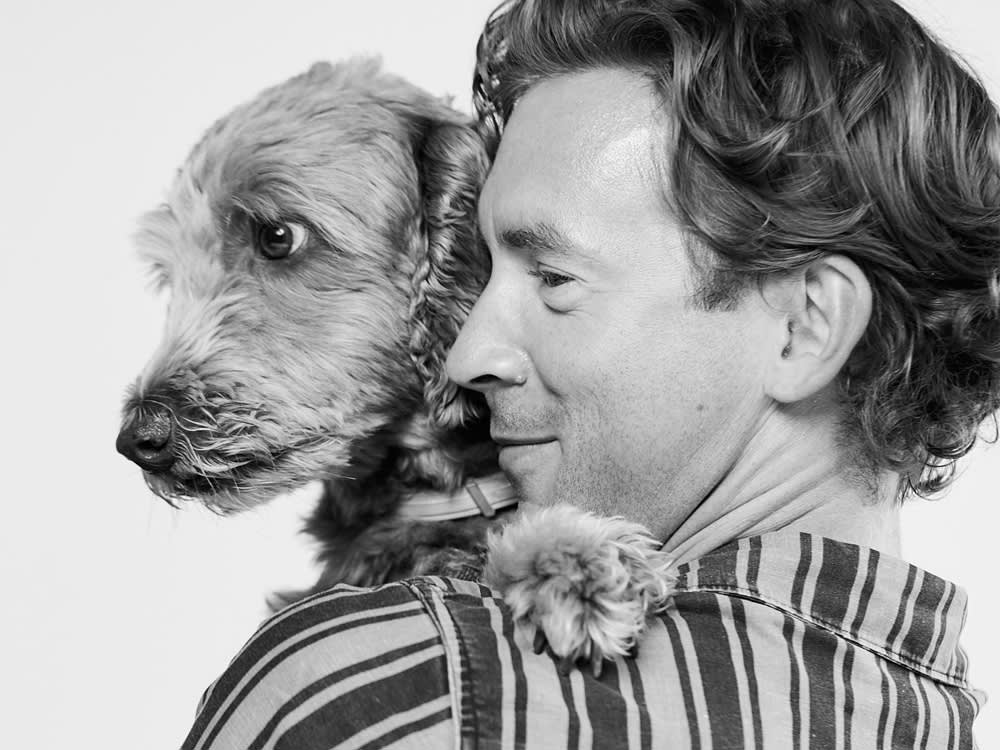
There is a certain kind of dog everyone envies: the one who trots into a crowded park, greets strangers like old friends, naps happily under an office desk, and seems constitutionally incapable of stress. It is tempting to chalk it up to a lucky temperament. Usually, it is something else. That easygoing adult was very likely built, on purpose, during a short and non-renewable window early in puppyhood.
Consider one well-documented example. When New York executive Kyle DeFord raised his Labradoodle, Alan, he leaned on the methods of veterinary behaviorist Dr. Ian Dunbar, and he was relentless about one thing in particular: in Alan’s first 30 days at home, the puppy was handled by roughly 50 different people. Any stranger who showed interest on the sidewalk got a puppy placed in their arms. It sounds excessive. The science says it was close to exactly right.
The window that decides a lot of your dog’s personality
The American Veterinary Society of Animal Behavior (AVSAB) identifies the period between roughly 3 and 14 weeks of age as the primary socialization window, the stretch when a puppy’s openness to the world outweighs their fear of it. Experiences a puppy has during those weeks, good or bad or simply absent, shape how they handle novelty for the rest of their life.
Miss the window and the cost is real. Incomplete or poor socialization is linked to a higher risk of fear, avoidance, and aggression in adulthood. AVSAB puts it starkly: more dogs under the age of three are lost to behavior problems than to infectious disease. In other words, the thing most likely to end badly for a young dog is not a virus. It is a personality that never got the chance to become confident.
That window closes whether or not you use it. A puppy who meets dozens of friendly people, hears the vacuum, walks on different surfaces, and learns that new means good is building a template for calm. You cannot go back and install that at eight months old, so those first weeks are some of the most valuable time you will ever spend on your dog.
Why “held by 50 people” actually works
The goal of all that handling is not to tire the puppy out. It is to make the category “new human” completely unremarkable. When a puppy meets people of every size, age, and appearance, over and over, paired with gentle handling and good outcomes, they stop treating strangers as a question to be nervous about. That is why a well-socialized adult can greet a delivery driver, a toddler, and a vet tech with the same relaxed friendliness.
The same principle extends past people. Different floor textures, car rides, city noise, elevators, other calm dogs, being touched on the paws and ears: each one, introduced positively, becomes one more thing your dog files under “normal.”
Do it early, and do it safely
A fair worry holds a lot of owners back: my puppy isn’t fully vaccinated, so shouldn’t they stay home? AVSAB’s answer is that the behavioral risk of waiting usually outweighs the infectious risk of starting, and it recommends beginning socialization as early as 7 to 8 weeks, after that first set of vaccines, in clean and controlled settings. A well-run puppy class is a good example: the other puppies are vaccinated and the environment is managed. The point is to start during the window, not to wait until it has already closed.
Positive reinforcement is the engine
The methods that make this work are not complicated, and they share a spine: reward the behavior you want and prevent bad habits before they form. Dr. Dunbar’s approach, which DeFord followed, centers on positive reinforcement, crate training, and steady, low-pressure exposure to new things, protecting a puppy from falling into fearful or reactive patterns in the first place. Pair every new person or place with a treat, praise, or play, and your puppy learns that the world reliably pays out. It is real work for the first year. The payoff is a good dog for the fifteen years after that.
Leave room for the dog to be the dog
One nuance is easy to miss. Socializing and training a puppy is not the same as programming them. Alan, notably, was never especially food-motivated, and his owner deliberately eased off the drilling so the dog’s own personality could come through. That is the right instinct. The aim is a confident, adaptable dog who is still fully themselves, not a flawlessly obedient one who has been polished into blandness. Confidence and character are supposed to coexist.
What current research reinforces
Recent work on structured early-socialization programs backs the deliberate approach: puppies run through organized exposure during the early window show measurable short- and long-term behavioral benefits compared with those left to chance. The modern veterinary-behavior consensus has moved firmly toward “start early, start safely,” treating the first three months as prime time rather than a period to wait out behind a closed door. The takeaway is the one DeFord acted on without a study in hand: fill those weeks with good experiences, and you are shaping the adult your puppy is going to be.
The bottom line
A friendly, unflappable dog is rarely an accident. Between about 3 and 14 weeks, a puppy is uniquely ready to decide that the world is safe. Use that time on purpose, with lots of people, gentle exposure, and rewards for curiosity, and you are doing the single highest-leverage thing available to you as a new dog owner.
Dr. Chen is a small-animal veterinarian who leads health and safety coverage at The Pet Times. She writes and reviews the bulk of our illness, condition, and safety content, translating clinical guidance into clear, practical advice owners can act on at home.
Meet our experts ↗Keep reading
 First DaysNighttime Crate-Training Usually Fails for One Reason: Bladder MathNina Vasquez · 8 min
 TrainingYour 'Dominant' Dog Isn't the Problem. Your Puppy Has No Brakes.Dr. Lena Park · 10 min
 TrainingYou're Probably Training Your Puppy Too Hard. Here's the 6-Month Plan That Works.Sasha Ford · 6 min
 First DaysEight Weeks Isn't a Feeding Milestone. It's a Behavior Deadline.Dr. Priya Nair · 9 min
 First DaysYour Puppy Isn't Regressing. They're in a Fear PeriodJordan Ellis · 8 min
 First DaysThe Only Puppy in the Litter Missed a Class. It Shows Up Years Later as a Bite.Dr. Nina Kohl · 9 min