


The Best Puppy Book in Years Isn't a Training Manual. It's a Coming-of-Age Story
In 'The Year of the Puppy,' dog-cognition scientist Alexandra Horowitz follows one dog from birth to her first birthday and quietly dismantles the idea that puppyhood is a single phase you train your way through. Here's why it belongs on a new owner's shelf.

Affiliate disclosure. This article contains affiliate links. We may earn a small commission if you buy through a link, at no extra cost to you. How we handle recommendations.
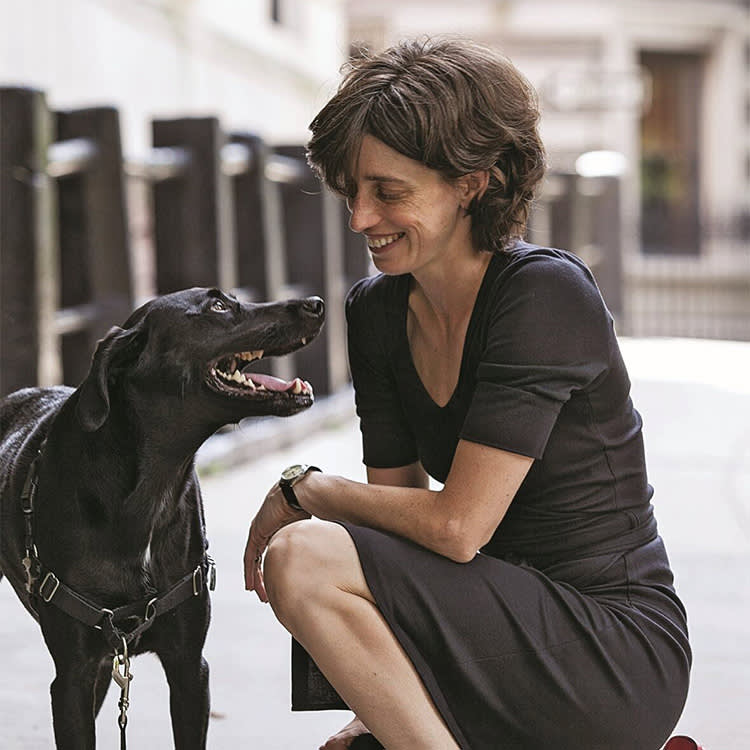
Most puppy books are instruction manuals dressed up as companionship: crate-train by Tuesday, sit by Friday, here’s your fixed dog. Alexandra Horowitz’s The Year of the Puppy is the rare one that does the opposite. It treats the first year not as a problem to be solved but as a person, sort of, becoming herself, and that reframe is exactly why it’s the puppy book worth reading if you read only one.
That matters because the instruction-manual model quietly sets new owners up to fail. It implies a puppy is a blank that gets “trained” into a finished dog, so when your eight-month-old suddenly forgets every cue and acts like a teenager, you assume you did something wrong. Horowitz’s book makes the better, science-grounded case: puppyhood is not one stage. It’s several, and knowing which one you’re in changes everything about how you respond.
Who’s writing this, and why it carries weight
Horowitz isn’t a celebrity trainer with a method to sell. She directs the Dog Cognition Lab at Barnard College, where, notably, dogs are brought in for the day by their own people rather than housed in cages, so researchers can watch how dogs actually perceive the world. She’s spent two decades on canine cognition and written a shelf of well-loved books, including the New York Times bestseller Inside of a Dog: What Dogs See, Smell, and Know, Being a Dog: Following the Dog into a World of Smell, and Our Dogs, Ourselves.
What she’d never done, by her own account, is know a dog from her very first days. Like most of us, she’d always met dogs months or years into their lives. So for The Year of the Puppy she found a litter to follow from birth, met her future dog Quiddity (Quid) right after she was born to a stray mom upstate, and brought her home to document the year in parallel with the science of early development. The result is part memoir, part field notebook.
The big idea: “puppyhood” is at least four different dogs
The book’s most useful through-line, and the thing a new owner can act on, is that the first year isn’t a single phase. Horowitz charts Quid through what amount to canine infancy, childhood, young adolescence, and full-blown teenager-hood, each with its own developmental tasks and its own baffling behaviors.
This is the part that rescues a struggling owner’s sanity. The “trained” puppy who regresses at seven or eight months hasn’t broken; she’s hit adolescence, a real neurological stage where impulse control dips and previously solid cues get flaky. If you know that’s coming, you read it as weather, not failure, and you stay patient instead of cranking up correction at the exact moment your dog needs more grace. That single reframe, dogs go through stages, and adolescence is one of them, is worth the price of the book.
What it changes about how you raise the dog
Horowitz’s science lands on a few practical shifts that separate her book from the average puppy guide:
Socialization is time-sensitive, and it’s about variety, not obedience. Young dogs need broad early exposure to people, animals, places, and surfaces so they don’t calcify into fear or reactivity later. Horowitz’s own pandemic-era experience, adopting a puppy precisely when the world shut down, drove home how much deliberate effort it takes to manufacture that variety when it isn’t handed to you. The takeaway for any new owner: front-load gentle, positive novelty in the early window, and don’t confuse a calm, well-exposed puppy with a “trained” one. They’re different projects.
Slow learning is normal, not defiance. Dogs are extraordinary readers of us and remarkably flexible, but learning to live inside a human household still takes real time. The common owner error, expecting a puppy to “just get it,” misreads developmental pace as stubbornness. Patience isn’t a personality trait here; it’s the correct response to the biology.
Knowing the dog beats commanding the dog. The book’s quiet ethic is that understanding who your particular dog is, her needs, her tempo, her quirks, is what lets you actually help her, and that we owe dogs that attention given how much they extend to us.
Who should buy it (and who shouldn’t)
Buy it if you’re about to bring home a puppy, are in the thick of a confusing adolescent phase, or simply love understanding the animal you live with. It’s empathetic, science-forward, and genuinely reassuring at the moments owners panic.
It is not a step-by-step training program, so if what you need this week is a literal house-training schedule or a leash-reactivity protocol, pair it with a hands-on trainer or a how-to guide. The Year of the Puppy gives you the map of the territory and the patience to cross it. That’s arguably more valuable, and far rarer, but it’s a different tool than a checklist. On a new owner’s shelf, it’s the book that keeps you sane while the checklists do the chores.
References
Sara Lim leads our Product Picks coverage, testing and comparing the things pets and their owners actually use. From everyday essentials to home-and-style finds, she focuses on honest, useful recommendations rather than hype.
Meet our experts ↗Keep reading
 Health & WellnessYour Puppy Was Probably Born With Worms. Here's the Schedule That Clears Them.Dr. Priya Nair · 6 min
 First DaysCleaning a Newborn Puppy: Why Warmth Matters More Than the MessDr. Lena Park · 7 min
 First DaysYour Puppy Isn't Regressing. They're in a Fear PeriodJordan Ellis · 8 min
 TrainingYou're Not Potty-Training the Puppy. You're Training Yourself.Dr. Priya Nair · 9 min
 Health & WellnessAnother Blue Ridge Beef Recall: Why This Keeps Happening to Raw-Fed PuppiesDr. Mara Chen · 4 min
 First DaysYour Puppy's First Vet Visit Is Won Before You Leave the HouseDr. Ravi Mehta · 8 min