


You're Not Potty-Training the Puppy. You're Training Yourself.
The secret to a house-trained puppy isn't discipline or clever tricks. It's a schedule you actually keep and eyes on the dog. Here's the full plan, age-by-age hold times, the bell method, and how to fix a puppy who backslides.

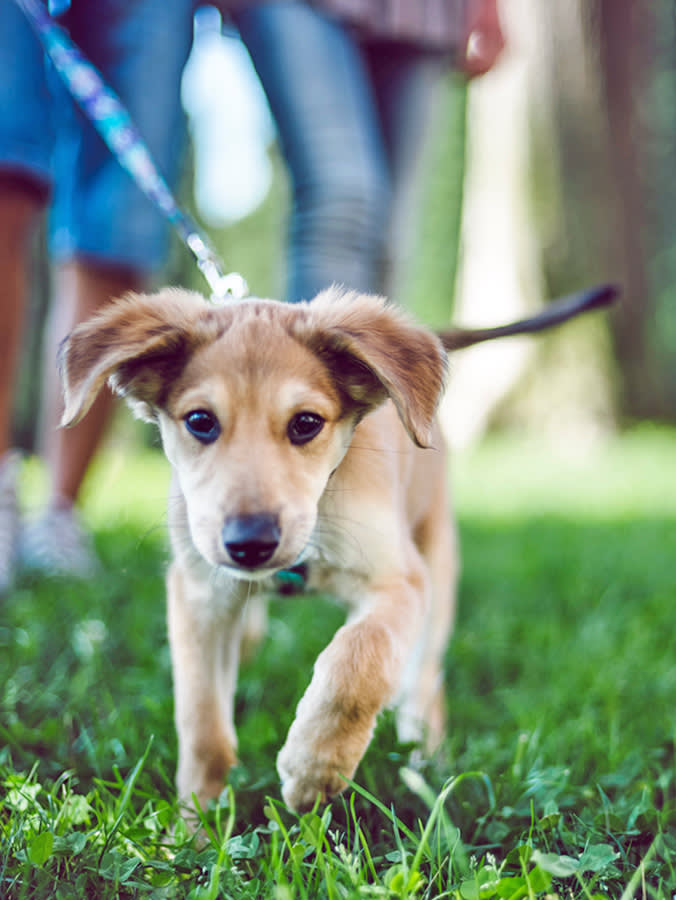
Here is the reframe that makes house-training click: your puppy is not the one with the job to do. You are. A young puppy has almost no bladder control and no idea that indoors and outdoors mean different things. What they have is a routine, and you are the one who builds it. Get the schedule and the supervision right, and your puppy barely gets a chance to fail. Get lazy about them, and no amount of scolding will paper over the gap. Potty training is less a puppy skill than a human discipline, and once you accept that, the whole thing gets easier.
Everything below serves that idea. The schedule is the engine, rewards are the fuel, and your attention is the steering.
The schedule is the whole game
If you take one thing from this, take the timer. A predictable rhythm prevents more accidents than any correction ever could. Your puppy needs to go out right after three things every single time: waking from a nap, finishing a meal, and wrapping up a play session. Between those, run a timer, and the moment your puppy pees, restart it so you always know roughly when the next break is due.
Distance matters too. In an apartment, or anywhere the door sits at the far end of a long hallway, scoop your puppy up and carry them out rather than betting they can hold it across the whole trip. And the schedule is only as good as the least consistent person in the house, so every adult and kid caring for the puppy has to run the same playbook.
Age changes the math. Younger puppies need out constantly; older ones can stretch. Use this as a starting point and adjust to your own dog, because size and how much they’ve eaten and drunk both move the numbers:
- New to training, or roughly two to three months: out every 30 minutes during active time; maximum hold about one hour.
- Three to four months: out every 45 minutes to an hour; maximum hold about two hours.
- Four to five months: out about every two hours; can hold roughly three to four hours.
- At five to six months: out about every three hours; can hold roughly five to six hours.
When your puppy is crated and home alone, a different guideline applies: they can generally hold it for their age in months plus one. So a two-month-old maxes out around three hours, a five-month-old around six. These are ceilings, not goals, and every puppy varies.
Reward the win, never punish the miss
The mechanics on the ground are simple, but the order matters. Wait until your puppy has completely finished, then reward immediately with praise and a genuinely good treat, one you save just for potty duty. Reach for the treat too early and you interrupt them; crinkle the bag mid-stream and you’ve taught them to stop before they’re empty.
Now the part people get wrong. Do not punish accidents. Scolding a puppy for peeing doesn’t teach them where to go, it teaches them that going in front of you is dangerous, so they start slipping off to do it out of sight, which is the opposite of what you want. If you actually catch them mid-accident, keep it light: a calm “oops,” then hustle them to the right spot and throw a party when they finish there. An accident you only discover later is water under the bridge. Clean it quietly and move on, because a puppy cannot connect your reaction to something they did minutes ago.
One cleaning detail that quietly undoes a lot of work: use an enzymatic cleaner and get all of it. Skip anything ammonia-based, because urine already contains ammonia, and an ammonia cleaner leaves the spot smelling like a bathroom to your dog, an open invitation to go there again.
Same spot, every time
When you head out, don’t wander. Go to one designated area and plant yourself there on leash while your puppy sniffs a small circle around you. Their own scent from last time is a powerful cue, and returning to it trains them to get down to business on arrival instead of touring the yard for the perfect blade of grass. Potty time is not play time. If your puppy tries to turn it into a game, just stand quietly and hold the leash until they focus.
This is also the fix for the maddening puppy who does nothing outside and then pees the instant they’re back on your rug. That almost always means they aren’t truly trained yet, not that they’re being sly. Keep the trips boring, consistent, and anchored to the same spot, reward heavily when they produce, and only give them free run of the house once you know they’re empty.
The bell: an optional upgrade worth the effort
Teaching a puppy to ring a bell to ask for the door is one of the most satisfying things you’ll train, because it hands them a way to tell you. Pick a bell they can actually operate, one they can bump with a nose or bat with a paw, and hang it where they can reach it by the door.
Train it in two stages. First, build the association: ring the bell yourself every time you open the door for a potty trip, so the sound and the door start to mean the same thing. Once your puppy is empty and settled, teach the bell as its own trick. Let them investigate it (no tugging), reward any interest, and shape it step by step, first for looking at it, then touching it, then nudging it hard enough to make noise. A timid puppy might start with just a glance in its direction. Keep rewarding until the ring is loud and reliable enough to hear from another room, then fold it back into your potty routine. The one caution: the bell means “I need to go,” not “I want to play outside,” so always answer a ring with a real, on-leash trip to the potty spot and nothing more, or a clever puppy will ring it just to get out the door.
Moving off pee pads and other real-world snags
Pads have their place, but every pad is an extra step you’ll eventually have to un-teach, because it tells the puppy that going indoors is sometimes fine. When you’re ready to move outside, lean on the routine first: take them out after meals, naps, and play, and many will simply go. For the puppy who struggles with all the new sights and smells outdoors, bring a used pad out and set it in your chosen spot, let them sniff and go on it, and reward. Repeat with a fresh pad, then with no pad at all. Give them a few minutes to work it out each time; to a puppy, removing the pad is a brand-new puzzle, and generalizing takes patience.
A few other situations that come up:
The “stubborn” puppy. Breed and size affect how quickly training sticks, but before you blame temperament, audit your own schedule. Slipping trips are the usual culprit, so tighten the intervals and make sure the whole household is aligned. Then make success loud: a real treat party with praise and petting every time they get it right.
Fear that blocks the pee. If your puppy freezes, crouches, goes stiff, keeps their ears pinned, or scans nervously from spot to spot, something outside may be scaring them enough to hold it. Watch their body language, and if a particular area spooks them, move to a calmer one.
Regression. A puppy who was doing well can backslide, usually after a change: a new food, an upset stomach, construction noise, or a shift in routine. Don’t panic. Go back a few steps, shorten the intervals again, and restart the rewards if you’d tapered them off.
Cold and snow. Training in winter is the same job, just chillier. Some dogs shrug off the cold; others need help. A jacket goes a long way, and for a very small, short-coated puppy in bitter weather, your vet may okay a temporary return to pads until it warms up. When in doubt on a tiny puppy, ask them.
Owners come to me convinced they have a slow puppy, and nine times out of ten the puppy is fine, the schedule slipped. Tighten the routine, contain the dog when you can’t watch them, and the accidents dry up on their own.
What newer research adds
One thing that quietly shapes your schedule is your dog’s size, and the science backs up what a lot of owners notice. Work led by a Cornell behavior researcher, who has now watched close to a thousand shelter dogs on walks, found that smaller dogs mark more often than larger ones, and that little males will hoist a leg absurdly high, sometimes nearly toppling over, apparently to fake a bigger body. The practical read for a new puppy parent is simple: if you’ve got a small breed, plan for more frequent trips than a big-dog owner would, and don’t read all that extra squatting as a training problem. It may just be a small dog doing small-dog things.
The honest timeline
House-training is not a perfect science, and it isn’t fast. With consistency, most puppies get reliable in four to six months, and a few take up to a year. The variable you actually control is you: the trips you don’t skip, the spot you keep constant, the accidents you clean instead of scold. Do that, and one day you’ll realize the timer has been quiet for a week. That’s the whole goal.
References
- McGuire, B., et al. “Scent marking in shelter dogs: Effects of body size.” Applied Animal Behaviour Science, 2018.
- American Veterinary Medical Association. “House-training your puppy.” Owner education resources, avma.org.
- American Society for the Prevention of Cruelty to Animals (ASPCA). “House-training your puppy.” aspca.org.
- Cornell University College of Agriculture and Life Sciences. “Small dogs aim high.” Research news, cals.cornell.edu.
Common questions
How long does it take to house-train a puppy?
Every puppy is different, and your own consistency matters as much as theirs. With steady routine, most puppies are reliably house-trained in four to six months, though some take closer to a year.
How long can a puppy hold their pee?
A rough rule is the puppy's age in months plus one. So a four-month-old can usually hold it about five hours. That does not apply right after waking, eating, or playing, when they need to go out immediately.
How do I use a puppy pad?
Put your puppy on the pad right after eating, playing, or waking, when they are most likely to go, and reward them the moment they finish. Restart your timer, and when it goes off, place them back on the pad. A leash can help keep them on it while you wait.
Is there a warning sign before a puppy goes?
Usually, yes. Learn your puppy's tell. Many circle, sniff hard, get restless, or start barking right before they go. Spotting it buys you the seconds you need to get outside.
Dr. Nair is a veterinarian focused on diet and feeding. She covers everyday nutrition, treats, and the many "can they eat this?" questions owners ask, grounding each answer in what is actually safe and sensible for dogs and cats.
Meet our experts ↗Keep reading
 First DaysThe Simple Math That Ends Puppy Potty AccidentsDr. Lena Park · 6 min
 TrainingA Stranger Held His Puppy 50 Times in a Month. The Science Says He Was Right.Dr. Mara Chen · 6 min
 First DaysYour Puppy Isn't Regressing. They're in a Fear PeriodJordan Ellis · 8 min
 First DaysThe Only Puppy in the Litter Missed a Class. It Shows Up Years Later as a Bite.Dr. Nina Kohl · 9 min
 First DaysEight Weeks Isn't a Feeding Milestone. It's a Behavior Deadline.Dr. Priya Nair · 9 min
 First DaysYour Puppy Isn't Manipulating You. Stop Letting Them Cry It Out.Dr. Nina Kohl · 6 min