


Your Fussy Cat Is Running a Chemistry Test at the Bowl. Here's What Passes
New research pinned down the flavors cats actually want, and it isn't fussiness driving those turned-up noses. It's chemistry. Here is what your cat is really grading, and how to use it.

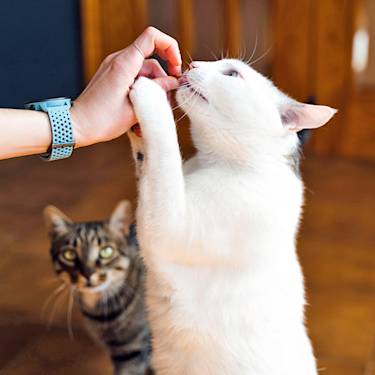
Every cat owner has met the stare. You set down a bowl, your cat leans in, sniffs, and walks away as if you have personally offended their ancestors. It is easy to file this under “cats are impossible.” The more accurate read, backed by a growing pile of research, is that your cat is not being difficult. They are running a fast, precise chemical test on the food, and most of what we call pickiness is that test coming back negative.
Scientists have gotten remarkably specific about what that test is measuring. And once you know what cats are actually grading, the whole standoff at the bowl starts to make sense.
What the taste-test study found
In a study published in 2024 in the Journal of Agricultural and Food Chemistry, researchers set out to identify, in real detail, which flavors cats prefer. They started with chicken livers, broke down the proteins into a set of fragrant sprays, and coated commercially available cat food with them before offering the options to a panel of ten adult cat taste-testers.
The pattern was clear. The cats ate more of the food carried by the sprays richest in free amino acids, the small building blocks left over when protein is broken apart. Those winning sprays skewed savory, fatty, and even mushroom-like. The sprays the cats snubbed leaned acidic and sweet. In other words, cats were not chasing “flavor” in the loose way we use the word. They were homing in on a specific chemical signature of broken-down meat protein.
Why sweet never had a chance
The rejected sweet sprays point at something baked into cat biology. Cats cannot taste sweetness at all. They carry a broken version of the gene that would build a working sweet-taste receptor, so sugar simply does not register as a reward the way it does for us. It fits their design perfectly: cats are obligate carnivores, animals that must eat meat to survive, and a sweet tooth would have bought their wild ancestors nothing. When your cat ignores a dab of frosting, they are not resisting temptation. There is no temptation there to resist.
The savory sense cats have that we don’t
What cats have instead of a sweet tooth is a supercharged sense for savory, the taste we call umami. And this is where newer work adds a layer the food study did not cover.
Research on the feline umami receptor found that cats detect savory differently than people do. Their receptor responds strongly to certain nucleotides, compounds concentrated in meat and fish, while individual amino acids act as amplifiers that crank the savory signal up when a nucleotide is present. The study also cracked a long-standing mystery: why cats are so wild for tuna. Tuna happens to be unusually high in both inosine monophosphate and the amino acid histidine, and together those two produce a powerful burst of umami that most other foods cannot match.
People hear ‘picky’ and think their cat is being dramatic, but the cat is actually being exact. They are built to detect the chemical fingerprint of fresh, protein-rich prey. When a food hits those savory and amino-acid notes, most so-called picky eaters suddenly are not picky at all.
Aroma is doing more work than taste
There is one more piece, and it is the one you can use tonight. A lot of what draws a cat to food is smell, not taste, and cats have an extraordinary nose, with far more scent receptors than we have. The amino-acid-rich foods in the study became more attractive partly because heating them released a fuller, more complex aroma. That is why a bowl that a cat rejected cold can suddenly become interesting after a few seconds of warming: the warmth is not changing the flavor so much as broadcasting the smell.
How to use this at the bowl
Put together, the science hands you a short, practical playbook for a reluctant eater. Warm the food slightly, to just below body temperature, to unlock its aroma; a splash of warm water or a few seconds of gentle heating is enough. Lean into savory, meaty, and fishy options rather than anything sweet or sharp, because those hit the receptors cats actually reward. And do not waste money or effort on sugary “treats,” which register as nothing to a cat.
One honest caveat matters here. A cat who suddenly stops eating is not making a flavor statement, it is a red flag, because cats who go off food for even a day or two can develop serious problems. Use these tricks to tempt a mildly fussy eater, but if your cat genuinely refuses food, call your vet rather than working through the spice rack.
What newer research adds
The direction of this research is quietly practical. Now that scientists can name the exact compounds cats respond to, food makers can build palatability into recipes on purpose rather than by trial and error, which is good news for the owners of finicky cats and for cats who need to eat a therapeutic diet they are not thrilled about. It also reframes an old assumption: the “picky cat” is looking less like a personality flaw and more like a sensory system doing precisely what it evolved to do. So the next time your cat sniffs and stalks off, take it less personally. They are not rejecting you. They just ran the numbers, and this batch did not pass.
References
- Wang, Q., et al. “Generation of Olfactory Compounds in Cat Food Attractants: Chicken Liver-Derived Protein Hydrolysates and Their Contribution to Enhancing Palatability.” Journal of Agricultural and Food Chemistry, 2024. pubs.acs.org
- McGrane, S.J., et al. “Umami taste perception and preferences of the domestic cat (Felis catus), an obligate carnivore.” Chemical Senses, 2023. academic.oup.com
- Li, X., et al. “Pseudogenization of a Sweet-Receptor Gene Accounts for Cats’ Indifference toward Sugar.” PLOS Genetics, 2005. journals.plos.org
- American Chemical Society. “Improving cat food flavors with the help of feline taste-testers.” ACS Press Release, 2024. acs.org
Not a substitute for your vet. Our guidance is educational. For urgent symptoms, contact a vet or emergency clinic right away. Editorial standards
Dr. Nair is a veterinarian focused on diet and feeding. She covers everyday nutrition, treats, and the many "can they eat this?" questions owners ask, grounding each answer in what is actually safe and sensible for dogs and cats.
Meet our experts ↗Keep reading
 TrainingYour Cat's Meow Isn't Their Voice. It's a Tool They Built for You.Dr. Nina Kohl · 7 min
 FoodYour Cat Is Slightly Dehydrated Right Now. Here's the Fix (Cocktail Optional)Dr. Amara Solis · 5 min
 FoodHigh Protein Isn't a Health Upgrade for Cats. It's a Prescription.Dr. Mara Chen · 7 min
 FoodThe Right Fiber for Your Cat's Problem: A Match-It GuideDr. Mara Chen · 9 min
 FoodIgnore the Cute Kitten on the Bag. One Line of Fine Print Settles the Cat-Food Question.Dr. Amara Solis · 7 min
 FoodThe Oldest Cat Ever Drank Wine and Coffee. Please Don't Copy Him.Dr. Ravi Mehta · 7 min