


Your Cat Is Slightly Dehydrated Right Now. Here's the Fix (Cocktail Optional)
Cats are built to run dry, and it quietly threatens their urinary health. A veterinary nutritionist ranks the hydration hacks that work, from wet food to a viral 'cat cocktail.'

Affiliate disclosure. This article contains affiliate links. We may earn a small commission if you buy through a link, at no extra cost to you. How we handle recommendations.
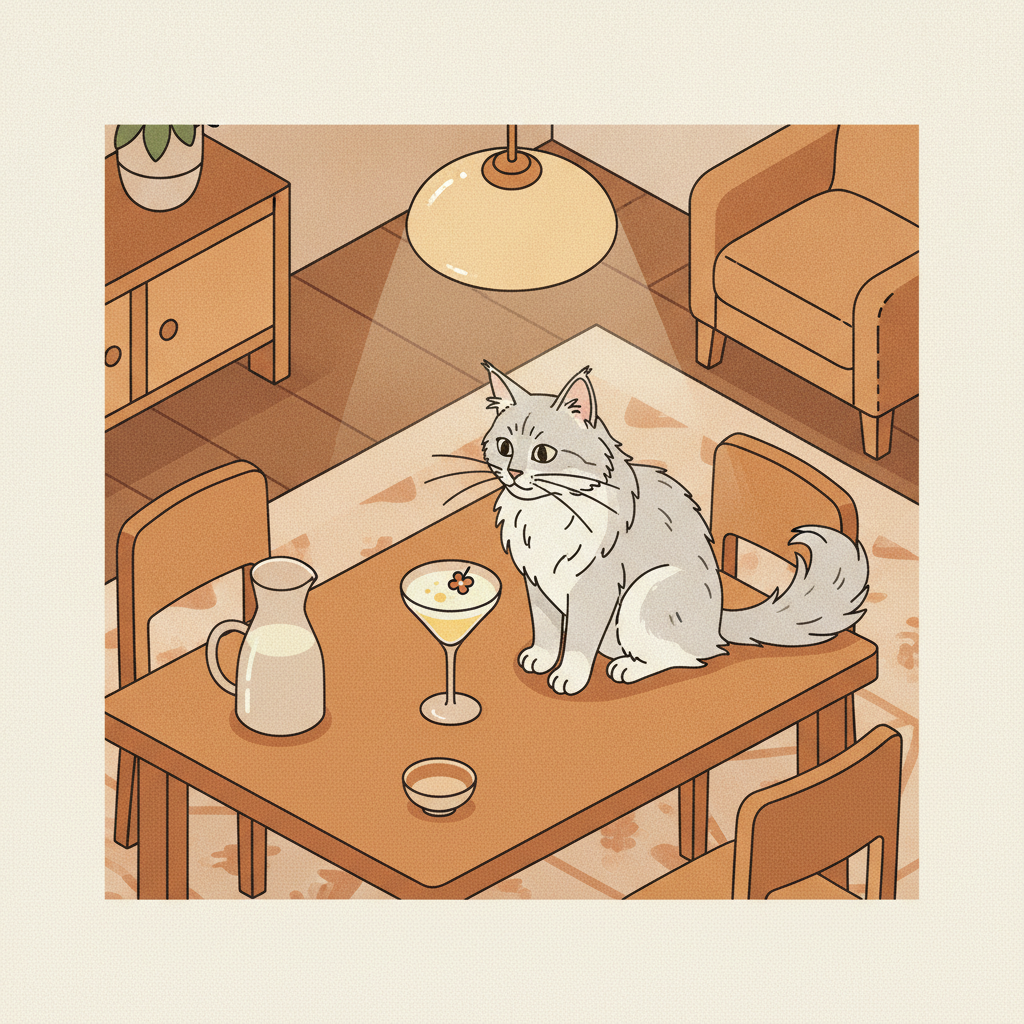
A mixologist couple went viral a while back for making a tiny “cocktail” for their three-legged cat, a mix of one part milk to six parts water in a mini martini glass, and the internet melted. It is a charming bit. It is also, buried under the whimsy, a fix for a real and underappreciated problem: your cat is probably a little dehydrated right now, and it is not their fault. It is their design. Before we get to the fun drink, it is worth understanding why cats are wired to run dry, because that is the thing actually worth solving.
Why cats don’t drink enough
Cats descended from desert wildcats in Africa, animals that got almost all their water from the prey they ate and rarely needed to seek out a water source.
A cat’s thirst signal barely registers; they are famously weak drinkers by design. It is an evolutionary holdover. Their ancestors were built to extract moisture from food, not from a bowl, so the internal ‘I’m thirsty’ alarm is set very late.
How late? Research on feline hydration suggests cats may not show a thirst response until they are already around 4 percent dehydrated, a threshold at which a person would feel distinctly unwell. Now layer on modern life: most house cats do not hunt, and many eat dry kibble, which is only about 10 percent water compared with the roughly 70 percent moisture of prey or canned food. The result is a cat quietly living in low-grade water debt.
That debt has a specific, painful downside.
“When a cat is chronically under-hydrated, the urine becomes concentrated, and concentrated urine is where crystals and stones form,” Dr. Solis says. “Those can cause blockages, which are true emergencies, especially in male cats, and even the milder cases make urinating painful enough that cats start avoiding the litter box.”
The goal, then, is more total water in, from every source combined. A commonly cited target is roughly 50 to 70 milliliters of water per kilogram of body weight per day, counting the moisture in food. Here is how to hit it, ranked from the biggest lever to the smallest.
The hydration toolkit, most to least effective
1. Feed wet food. This is not close. Switching some or all of a cat’s diet to canned or pouched food is the single most evidence-backed way to raise water intake, because it delivers moisture invisibly, no persuasion required.
“The easiest fix by far is wet food,” Dr. Solis says. “You are not coaxing water into them, they are eating it. If your cat is committed to kibble, the next best move is simply adding warm water to the dry food and letting it soak.”
2. Rethink the water station itself. Small changes to the bowl drive real gains. Many cats drink more from fresh, moving water, which is why fountains have caught on, and cats often avoid drinking near their food or litter, so a separate, clean water spot in a quiet area can meaningfully boost intake. Use wide, shallow bowls to avoid “whisker fatigue,” and refresh the water daily.
3. Add an electrolyte or moisture supplement. For cats who need extra help, an electrolyte concentrate like NaturVet Pet Electrolyte Concentrate can be added to food or water to replenish electrolytes and nudge up hydration.
4. And yes, the cat cocktail. This is the fun capstone, not the foundation, but it works because it makes water appealing. The trick is choosing cat-safe ingredients and experimenting to find what yours likes.
How to build a safe cat cocktail
Start with the viral base: a small amount of milk (which most cats digest fine when heavily diluted) in a lot of water. Or build around canned fish juice from tuna or salmon, or a broth. Then respect three hard rules:
Watch the sodium. “Sodium itself is not the villain here,” Dr. Solis says. “But most cats already get plenty from their food, and too much adds strain on the heart and kidneys.” Skip the salty stuff.
No alliums, ever. Garlic, onions, and anything else in the allium family are toxic and potentially deadly to cats. This is why you either buy a broth made specifically for cats, like The Honest Kitchen Daily Boosters Beef Broth, or make your own, since nearly every human broth is seasoned with onion or garlic.
Skip the sweet. Cats cannot taste sweetness, so fruit juices are wasted effort.
From there, play. Froth the milk-and-water “martini” with a little whipped egg white or aquafaba. Add a splash of wheatgrass juice if your cat likes to chew it. Rim the glass with a lickable purée like Churu and dip it in crushed kibble for a feline salted rim. Or refill the plain water bowl and see if your cat prefers that; some will. The point is not the theater, it is getting more moisture in however your particular cat will accept it.
So make the cocktail if it is fun. Just know that the wet food and the well-placed water fountain are doing the real work of keeping your desert-adapted little predator out of the emergency room. And, obviously, pour yourself something too. It would be rude to let your cat drink alone.
References
- Buckley, C.M.F., et al. “Effect of dietary water intake on urinary output, specific gravity and relative supersaturation for calcium oxalate and struvite in the cat.” British Journal of Nutrition, 2011. https://www.cambridge.org/core/journals/british-journal-of-nutrition/article/effect-of-dietary-water-intake-on-urinary-output-specific-gravity-and-relative-supersaturation-for-calcium-oxalate-and-struvite-in-the-cat/7FF71DDA2706FDCDA3BA961C3D8DB46F
- Cornell Feline Health Center. “Feline Lower Urinary Tract Disease.” Cornell University College of Veterinary Medicine. https://www.vet.cornell.edu/departments-centers-and-institutes/cornell-feline-health-center/health-information/feline-health-topics/feline-lower-urinary-tract-disease
- ASPCA Animal Poison Control Center. “People Foods to Avoid Feeding Your Pets.” https://www.aspca.org/pet-care/animal-poison-control/people-foods-avoid-feeding-your-pets
Not a substitute for your vet. Our guidance is educational. For urgent symptoms, contact a vet or emergency clinic right away. Editorial standards
Dr. Solis is a board-certified veterinary dermatologist with over twelve years of clinical experience. She advises on skin conditions, allergies, and grooming practices that affect coat and skin health. All dermatology and allergy content at The Pet Times is reviewed by her team before publication.
Meet our experts ↗Keep reading
 FoodWet vs. Dry Cat Food: The Moisture Question Settles Most of ItDr. Mara Chen · 6 min
 FoodWet Cat Food and the 2-Hour Rule: The Clock Starts the Second You Open the CanDr. Amara Solis · 7 min
 FoodPeas Off Your Plate Are Fine for Cats. Peas in the Bag Are the Ones to Read AboutDr. Amara Solis · 6 min
 FoodA Kitten Can Eat Wet Food at Four Weeks. That Doesn't Mean They Can Leave.Dr. Amara Solis · 10 min
 FoodGrain-Free Cat Food Solves a Problem Your Cat Doesn't HaveDr. Priya Nair · 7 min
 FoodThe 'Natural' Raw Diet Is Failing Cats on Two FrontsDr. Amara Solis · 7 min