


Ignore the Cute Kitten on the Bag. One Line of Fine Print Settles the Cat-Food Question.
Canned, raw, grain-free, high-protein: the cat-food aisle is built to overwhelm you. A veterinary nutritionist's approach ignores the marketing and starts with a single AAFCO statement.

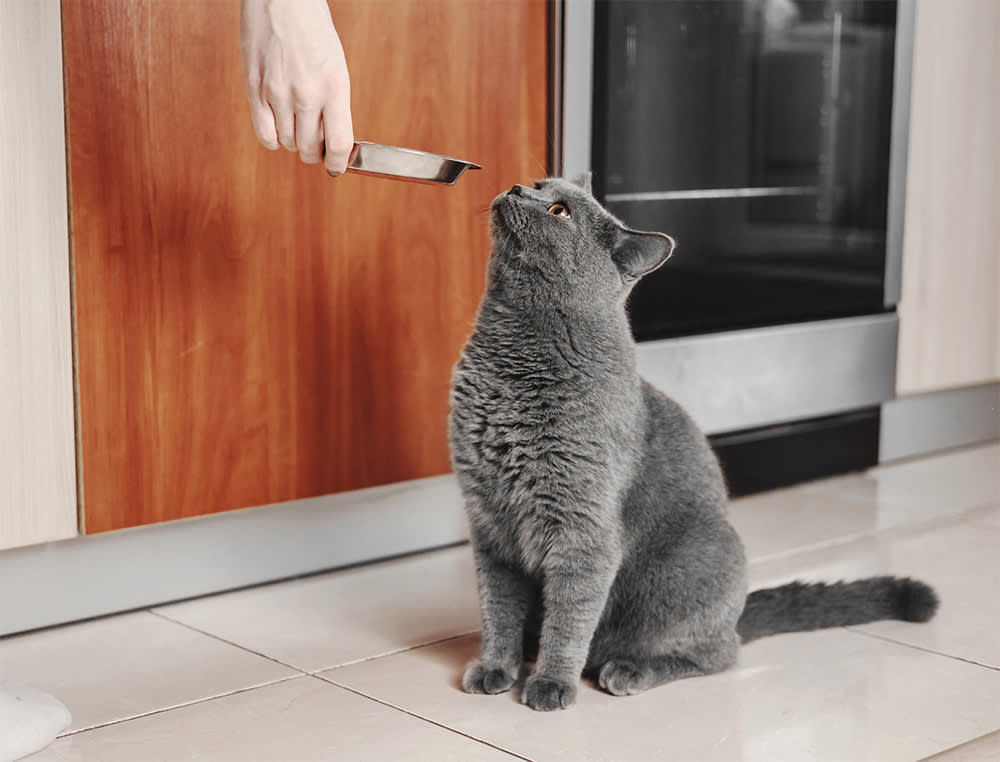
Standing in the cat-food aisle is its own small ordeal. Kibble, wet, freeze-dried, raw, high-protein, grain-free, sensitive-stomach. Every bag promises to solve a problem you did not know your cat had, and the fussiest eater on earth is waiting at home to reject whatever you choose. The temptation is to pick the bag with the cutest kitten on it and hope.
Resist that, and the whole decision gets dramatically simpler. Most of the noise on the front of the package is marketing. The information that actually matters is in the fine print on the back, and once you know where to look, one line does most of the work.
Start with the AAFCO statement
Somewhere on the label, usually in small type, is a nutritional adequacy statement from the Association of American Feed Control Officials, or AAFCO. A food that carries it meets established minimums for a complete and balanced diet, which is your baseline confidence that this food will actually nourish your cat rather than just feed it. Reading labels in the store is genuinely frustrating, so make this the first filter: no AAFCO complete-and-balanced statement, back on the shelf.
While you are reading the fine print, glance at the ingredient list, too. Some diets run thirty to fifty ingredients deep. As a rule of thumb, a shorter, simpler list is easier for a cat to digest and absorb.
If a client only remembers one thing from our conversation, I want it to be this: turn the bag over and find the AAFCO statement before you read anything on the front. The picture and the buzzwords are for you, not your cat. That one line tells me whether a food is a real, balanced diet or a nicely designed bag of question marks.
Match the food to the life stage
Cats need protein, fat, and carbohydrates across their whole lives, but the amounts shift as they age. Kittens need food formulated for growth so they get the nutrients they need, in the right proportions, until about their first birthday. The catch most owners miss is what happens at spay or neuter: regardless of age, an altered cat’s metabolic rate drops by roughly 25 to 30 percent. Keep feeding calorie-dense kitten food past that point and the weight piles on, which is no small thing in a country where an estimated 60 percent of cats are overweight.
Once your kitten reaches a healthy adult weight, move to an adult maintenance diet. A senior formula is available around the time the muzzle starts to grey, near age eleven, but it is optional: the nutrient profiles of most adult and senior cat foods are not meaningfully different.
Wet, dry, raw: mostly a matter of palate (with one asterisk)
The kibble-versus-canned debate is largely about preference. As long as the food is complete and balanced for your cat’s life stage, whether you scoop dry or spoon wet comes down to what your cat will happily eat (wet food does carry a hydration bonus that matters for some cats).
Raw, dehydrated, and freeze-dried diets are more complicated. Cats are obligate carnivores, built to run on meat-heavy food, and “biologically appropriate” raw diets are designed to mirror an ancestral menu of meat, organs, and bone. Fans report shinier coats, cleaner teeth, better weight, and fewer allergy issues. But raw feeding is genuinely controversial, largely because of the bacterial risk, E. coli and salmonella, to both the cat and the humans handling the food. Cats’ digestive systems are relatively hardy, and freeze-dried options reduce that risk compared with fully raw, but this is a category to research carefully and discuss with your vet rather than adopt on vibes.
Read the claims skeptically
The front-of-bag adjectives deserve the same scrutiny you would give any grocery label.
High-protein does not always mean more protein; some “high-protein” foods contain about the same as standard ones. And protein is not a more-is-better nutrient, once a food meets the requirement for a complete and balanced diet, piling on extra protein does not add benefit.
High-fiber food often really does contain more fiber, which can ease constipation and help hairballs move through the gut. The trade-off is potentially looser stools and more litterbox time.
Grain-free is as much a trend in cat food as in human food, and it is mostly a swap: familiar grains such as corn, rice, and wheat get swapped for lentils, sweet potatoes, or tapioca. Grain-free is not low-carb; it is a different carb. Genuine grain allergies in cats are extraordinarily rare, and there are no proven general health benefits to grain-free diets, so weigh the research and talk to your vet before assuming it is the healthier pick. (You may have heard that carbohydrates “feed” cancer and that cats with cancer should avoid them; that idea is oversimplified and the evidence is limited, so treat any cancer-diet decision as a conversation with your vet, not a rule.)
When in doubt, the vet is the shortcut
If you are struggling to choose because your cat has a health issue, book the vet rather than shopping harder. Foods marketed for everything from urinary problems to sensitive stomachs to immune support are no substitute for ruling out an underlying condition first. An accurate diagnosis often is the answer: a diabetic cat, for instance, can benefit from a prescription diet, typically higher in protein and lower in carbohydrate, that releases glucose slowly instead of spiking blood sugar after meals. Nutrition really is the cornerstone of health; the right food can move an animal from surviving to thriving.
One honest caveat: cat nutrition is a field where thoughtful experts sometimes disagree, because every cat is an individual. Use this as a framework, not gospel, and make the final call with your own vet.
What’s new since this was written
The biggest development is a cautionary tale about following diet trends ahead of evidence. The FDA’s long-running investigation into a possible link between grain-free, legume-heavy diets and dilated cardiomyopathy, mostly reported in dogs, has not produced a clean answer; the agency stopped issuing regular public updates at the end of 2022, saying the adverse-event reports alone could not establish cause, while independent researchers continue to probe the role of peas, lentils, and other pulses. The practical lesson for cat owners is unchanged and worth repeating: pick foods based on a complete-and-balanced AAFCO label and your vet’s input, not on whichever ingredient the internet is currently for or against. Major veterinary nutrition bodies like the WSAVA now publish plain-language guides to vetting a pet-food company (Does it employ a qualified nutritionist? Does it run feeding trials?), and those questions will serve your cat far better than the claims on the front of the bag.
References
- U.S. Food and Drug Administration. “FDA Investigation into Potential Link between Certain Diets and Canine Dilated Cardiomyopathy.” www.fda.gov
- Association of American Feed Control Officials. “Understanding Pet Food Labels.” www.aafco.org
- World Small Animal Veterinary Association. “Guidelines on Selecting Pet Foods.” wsava.org
Common questions
Should I switch my senior cat to senior food?
It is optional. When you look at the actual nutrient analyses, there are no significant differences between most adult and senior cat diets. A healthy older cat can stay on a quality adult maintenance food; switch only if your vet recommends it for a specific health reason.
Not a substitute for your vet. Our guidance is educational. For urgent symptoms, contact a vet or emergency clinic right away. Editorial standards
Dr. Solis is a board-certified veterinary dermatologist with over twelve years of clinical experience. She advises on skin conditions, allergies, and grooming practices that affect coat and skin health. All dermatology and allergy content at The Pet Times is reviewed by her team before publication.
Meet our experts ↗Keep reading
 Health & WellnessWet Food Rarely Gives a Cat Diarrhea. The Way You Switched It Usually DoesDr. Mara Chen · 9 min
 FoodForget the Clock: Build Your Cat's Feeding Schedule From Calories, Not Meal TimesDr. Mara Chen · 7 min
 FoodWet Food Beats Kibble. That Doesn't Mean All-You-Can-Eat.Dr. Mara Chen · 6 min
 FoodYour Cat Isn't Picky. The Bowl Is Just Boring.Dr. Priya Nair · 7 min
 FoodYour Cat Isn't Hungry. Unless These Three Things Are Also True.Dr. Priya Nair · 10 min
 FoodWet vs. Dry Cat Food: The Moisture Question Settles Most of ItDr. Mara Chen · 6 min