


Your Cat Isn't Being Bad. They're Under-Hunted.
Most of what looks like feline misbehavior, the 3 a.m. yowling, the ankle ambushes, the counter-surfing, traces back to one unmet need. Here are nine signs your cat is starving for play, and what to do about it.

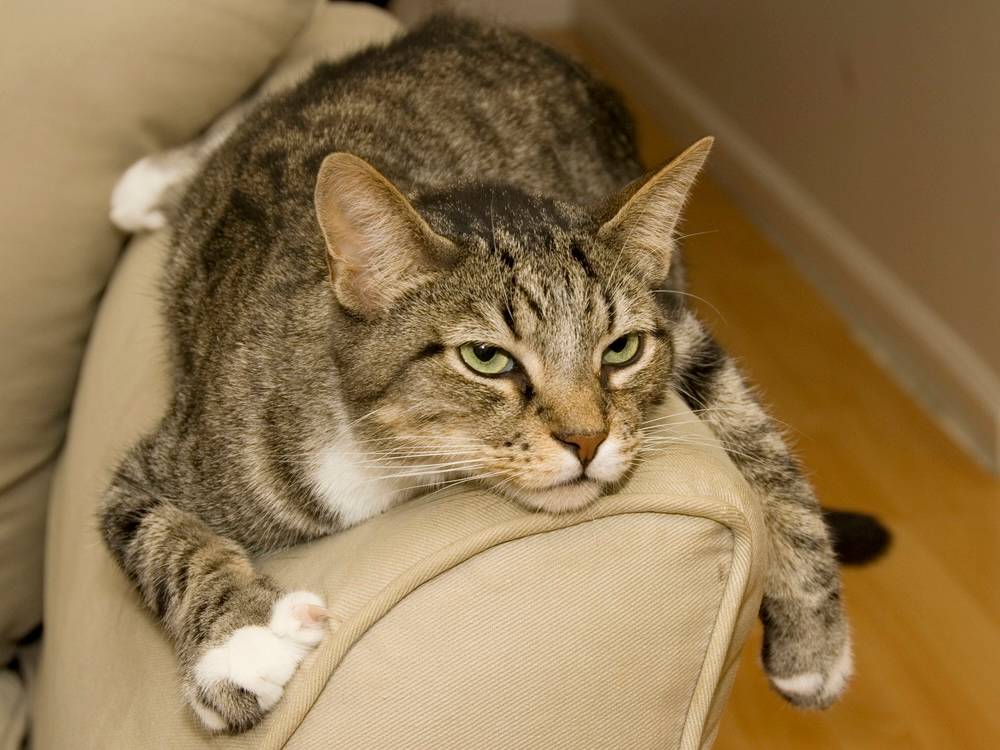
We have sold ourselves a convenient myth about cats: that they are low-maintenance roommates who ask for nothing but a full bowl and the occasional chin scratch. They purr, we relax, and we tell ourselves everyone is content. But there is usually a hole in that picture, and the hole is play. Not a little. A lot, and almost certainly more than your cat is getting right now.
Here is the reframe that changes everything. A cat is a hunter wearing a house pet’s body. Stalking, chasing, pouncing, and “killing” are not optional entertainment for them; they are core drives, as real indoors as they would be in a field. When a cat has no outlet for that predatory engine, the energy does not evaporate. It comes out sideways, as the exact behaviors we label naughty. So before you decide your cat is spiteful, stubborn, or broken, consider that they may simply be under-hunted. Nearly every “behavior problem” on the list below is a hunting need with nowhere to go.
When people describe a cat who is suddenly destructive or clingy or up all night, my first question is almost never medical, it’s how much real play that cat gets. Give a bored predator a proper outlet and a startling number of these so-called problems just dissolve.
1. They wake you at 3 a.m.
The yowling that drags you out of sleep is not your cat being cruel. A predator with unspent energy hunts on its own schedule, and at 2 a.m. that schedule is you. A solid play session in the evening, close to bedtime, gives them somewhere to spend that drive before the house goes dark. The goal is not to exhaust them; it is to leave them satisfied enough that they do not come looking for stimulation while you sleep.
2. They ambush your ankles
If your cat lies in wait and springs at your feet as you pass, you have become the mouse. In the absence of anything better to chase, a bored cat casts you in the role, and your yelp and quick retreat only make the “prey” more convincing. It can sting on the receiving end, but the message underneath is simple: there is predator energy here with no proper target. Give it one.
3. They get the zoomies
The sudden sprint from one end of the house to the other, ricocheting off the furniture, is a pressure valve. It is a cat with more fuel than outlet, burning it the only way available. When the zoomies hit, that is your cue, not to wait them out, but to reach for a wand toy and run a focused five-to-fifteen-minute hunt until the tank empties.
4. They colonize the counters and the “off-limits” shelves
Cats do not recognize your rules about where they should and should not go. A bored cat goes exploring wherever something interesting might be, and the kitchen counter is prime real estate. Worse, we often train the habit in by accident: any attention when they jump up, even an annoyed “get down,” reads as engagement to an under-stimulated cat. Fill the boredom and the appeal of forbidden territory fades.
5. They narrate everything
Some cats are simply talkers. But a noticeable jump in chattiness, especially the insistent kind aimed squarely at you, is often a request. Cats are quick studies, and if yowling reliably gets you to do something, they will keep yowling. The fix is not to jump up the instant they cry, which just reinforces it, but to build predictable play into the day so the demand quiets on its own.
6. They gnaw on things they shouldn’t
Chewing cardboard, paper, plastic, a phone cord, is not only an oral quirk. Often it is what a cat does with pent-up energy and nothing to aim it at. When there is nowhere to go and nothing to hunt, they gnaw whatever is within reach. Reliable play gives the restlessness a better destination.
7. They stage dramatic little disasters
You know the move: the slow, deliberate paw that nudges a pen off the edge of the table while making eye contact. That is theater, and you are the audience. Your cat has learned that objects hitting the floor summon you. It is a bid for engagement dressed up as vandalism, and it usually fades once the cat is getting real attention through play instead.
8. They fall into repetitive loops
Watch for a new, oddly repetitive habit, batting at the same door frame for the hundredth time, pacing a set route, over-grooming a patch of fur. Repetitive behavior can be a cat trying to fill empty time. Introduce structured play and, more often than not, the loop loses its grip. If it does not, that is your signal to see the vet, because compulsive behavior can also have a medical root.
9. They spiral into genuinely destructive behavior
At the deeper end are the behaviors that really disrupt a household: shredding furniture, or eliminating outside the box. It is worth saying clearly that a cat peeing on your bed is not plotting revenge; they do not experience it the way you do. These are distress signals, cries for help rather than acts of spite. Not every one traces back to play, but a chronic lack of it sits underneath a remarkable share of the destructive and anxious behavior that behavior professionals get called about. If your cat is acting out this way, an honest audit of how much you actually play with them is the right first move, alongside a vet visit to rule out pain or illness.
How much play, and what kind
The short answer is more than you think, in shorter bursts than you would expect. Two to four sessions a day, roughly five to fifteen minutes apiece, works for most cats, scaled to age and energy: a young cat may want long, vigorous hunts, while a seventeen-year-old might prefer six three-minute sessions. Do not force a marathon to “tire them out,” because holding a cat’s focus that long is hard and the tactic backfires. Several short, satisfying hunts beat one grinding one.
Timing helps, too. Play right before meals to honor the natural hunt-then-eat rhythm, and follow a good session with a treat so the sequence lands the way a real kill would. And resist the urge to outsource the whole job to a gadget. Automatic toys have their place, but no gadget mimics live prey the way your own hand does, holding a plain wand toy with a bit of patience. Your cat does not simply need play; they need to hunt with you on the other end of the string.
What newer research adds
If you needed proof that play is more than enrichment fluff, a 2021 study from the University of Exeter, published in Current Biology, offers a striking one. Across 355 cats in 219 households, just five to ten minutes of daily object play, owners moving a feather wand so the cat could stalk and pounce, then handing over a toy to “catch,” cut the number of prey animals the cats brought home by about a quarter.
The takeaway for indoor households is bigger than the wildlife angle. That short daily hunt genuinely scratches the predatory itch. When the drive gets a real outlet, it stops leaking out in all the other directions, which is exactly what pet parents see when they finally commit to a play routine. A few minutes with a wand toy is not a chore you owe your cat. It is the single most effective tool you have for a calmer, happier one.
References
- Cecchetti, Martina, et al. “Provision of High Meat Content Food and Object Play Reduce Predation of Wild Animals by Domestic Cats Felis catus.” Current Biology, vol. 31, no. 5, 2021, pp. 1107–1111.
- Delgado, Mikel, and Julia Hecht. “A Review of the Development and Functions of Cat Play, with Future Research Considerations.” Applied Animal Behaviour Science, vol. 214, 2019, pp. 1–17.
- American Association of Feline Practitioners. “Feline Environmental Needs Guidelines.”
Common questions
How much should I play with my cat each day?
Aim for two to four short sessions, roughly five to fifteen minutes each, adjusted for your cat's age and energy. Several short hunts beat one marathon session, and a kitten or a senior will want very different amounts.
Will an automatic toy replace playing with my cat myself?
Not really. A self-play toy is fine as a supplement, but nothing mimics live prey like a wand toy in a human hand. The mental engagement of hunting something that reacts to them is most of the point.
Should I play with my cat the moment they start yowling for it?
Try not to reward the yowl directly, or you teach them to yowl more. Wait for a calm moment, then start a session soon and on a predictable schedule so they stop feeling desperate about it.
Dr. Chen is a small-animal veterinarian who leads health and safety coverage at The Pet Times. She writes and reviews the bulk of our illness, condition, and safety content, translating clinical guidance into clear, practical advice owners can act on at home.
Meet our experts ↗Keep reading
 TrainingYour Sleeping Cat Is Twitching. Dream, or Something to Worry About?Dr. Priya Nair · 6 min
 TrainingPawmistry Is Nonsense. But the Urge Behind It Just Got a Real AnswerSasha Ford · 5 min
 TrainingYour Cat Isn't Being Naughty. The Chewing Is a MessageDr. Nina Kohl · 9 min
 TrainingYour Cat Isn't Ignoring You. The Research Says They're Choosing YouDr. Lena Park · 5 min
 LivingHating Cats Doesn't Make You a Narcissist. The Rush to Diagnose Says More.Claire Sutton · 6 min
 TrainingYour Cat's Trust Isn't Affection. It's a Threat Assessment You Keep Passing.Dr. Lena Park · 8 min