


Pawmistry Is Nonsense. But the Urge Behind It Just Got a Real Answer
Reading your cat's toe beans for personality is pure fun and zero science. The interesting part is why we keep trying to read animals off their bodies, and what 2025 genetics actually revealed.

Affiliate disclosure. This article contains affiliate links. We may earn a small commission if you buy through a link, at no extra cost to you. How we handle recommendations.
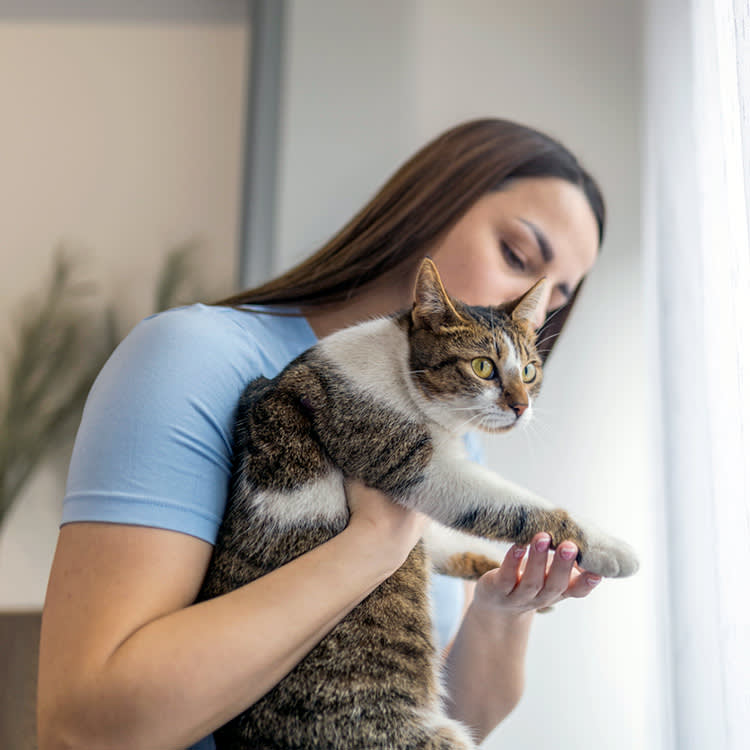
Let’s get the verdict out of the way, because you deserve honesty before fun: your cat’s toe beans cannot tell you their personality. Not the shape, not the color, not the claw length. Pawmistry is astrology for paws, and it has exactly as much predictive power.
But “it’s nonsense” is a boring place to stop, and it misses the genuinely interesting thing. Pawmistry is just the latest costume worn by a very old human habit: the deep, stubborn urge to read an animal’s inner life off the outside of their body. We’ve always done it. And in 2025, real science handed us the perfect test case for why that urge keeps misfiring, involving, of all things, orange cats. So enjoy the paw-reading, then stick around for the part where actual genetics weighs in.
A quick anatomy lesson, because the beans are real even if the readings aren’t
The paw itself is legitimately worth knowing. Cats, like dogs, kangaroos, and rodents, are digitigrade, meaning they walk on their toes with their heels lifted. And like us, cats often have a dominant paw, the one they favor for reaching or for covering business in the litter box. That’s the paw pawmistry says to “read.” (The non-dominant paw, per tradition, lies. You’re a truth-seeker, so ignore its filthy deceptions.)
A typical front paw has seven soft, hairless pads we’ll lovingly call beans. The metacarpal bean is the big squishy one in the middle. The four digital beans are the rough equivalents of fingers. The dewclaw bean, found only on front paws, is roughly a thumb. And the carpal bean, set a little higher up the leg, is a clawless pad that adds traction when a cat stops short or heads down a slope. All true, all charming, and all completely silent on the question of whether your cat is an introvert.
The paw-reading canon (enjoy responsibly)
Most online pawmistry obsesses over the metacarpal bean, and much of it traces back, or claims to, to a Japanese fortune teller who goes by Mr. Akatsuki. By his system, the bean’s shape reveals one of five personality types. Heart-shaped means cuddlebug. Rounded means adventurous and social. Flat-topped means demure and solitary. A slight divot means aloof. A pointy bean means your cat is, let’s say, eccentric.
Naturally, rival guides carve it up differently. One popular version claims to be ninety-nine percent accurate, offers zero evidence, and uses six categories instead of five; a TikTok explaining it has topped four million views. The creator credits Japanese researchers who supposedly studied over 2,000 cats, but there are no names, no citations, and no findable study, most likely because none exists.
Then there’s Megan Lynn Kott, who wrote a whole book on the mystical art of cat decoding, Pawmistry: Unlocking the Secrets of the Universe with Cats. It’s a delight and scientifically complete nonsense, which it cheerfully knows. Per Kott, left-paw-dominant cats are emotional and easily rattled; right-paw-dominant cats are relaxed and affectionate. Freckled beans mean creative. Black beans mean mystical, possibly a witch’s familiar. Pink beans mean egotistical hedonist. Brown beans mean down-to-earth (because dirt is brown). Gray beans mean wise (a gentle way of saying old). Even claws get a reading: long claws mean lazy, short claws mean fastidious, and clawless cats are “unlucky in love and friendship.” You can say that again.
Why we can’t stop reading bodies for souls
Here’s the through-line the fun obscures. Pawmistry isn’t a random modern silliness. It’s the toe-bean edition of something humans have done for centuries, and often for much worse. Phrenology, reading skull bumps to judge character and intelligence, was treated as serious science in the 1800s and was used to prop up racism and other prejudices. Physiognomy did the same with faces. The template is always identical: pick a visible physical trait, assign it a personality meaning, and act like you’ve discovered a law of nature.
The reason it’s so seductive is that it feels like it works. We’re pattern-matchers who love a shortcut, and every one of us can point to the one grumpy tortie or one goofy orange tabby who “proves” the rule. That’s not evidence, it’s a stopped clock being right twice a day. The pattern is in our heads, not in the paw.
Enter the orange cat, where real science finally weighed in
Which brings us to the best real-world test of this whole impulse. The single most popular coat-color personality claim, that orange cats are uniquely friendly and share “one brain cell,” got a genuine scientific spotlight in 2025, and the result is a small masterclass in the difference between a bean reading and biology.
That May, two independent teams, one at Stanford and one at Kyushu University, published back-to-back papers in Current Biology solving a decades-old mystery: what actually makes orange cats orange. The answer is a tiny deletion near a gene called ARHGAP36 on the X chromosome, which ramps up the gene’s activity in pigment cells and shifts fur toward orange. It elegantly explains why most orange cats are male and why females usually turn out calico or tortoiseshell instead.
Now, here’s the part pawmistry fans should sit with. ARHGAP36 is also active in the brain and hormonal glands, so you might think, aha, maybe coat color and temperament really are linked. The scientists were explicitly, carefully unwilling to make that leap. They said they couldn’t fully rule out some behavioral effect in tissue they hadn’t tested, but their honest read was that the “friendly orange cat” reputation is better explained by most orange cats being male than by their color, and they flatly noted there are barely any real studies of orange-cat personality. In other words: even when a real gene ties directly to coat color, working scientists refuse to hand you a personality from a physical trait. They demand evidence the trait doesn’t provide.
So when we asked whether a cat’s anatomy encodes character, that’s the standard the answer has to meet.
It really doesn’t. Paw pads exist for traction, protection, and scent-marking. The idea that they encode temperament is, scientifically, pretty far out there, and the same goes for coat color. People love ‘tortitude’ and the orange-cat brain-cell meme, but personality comes down to the individual cat, their genetics, and their experiences, not their markings or their beans.
So should you play along?
Absolutely, as long as you know what you’re playing. Pawmistry is harmless fun, free of the ugly history that made phrenology dangerous, and there’s real joy in flipping over a warm paw and pretending the beans hold secrets. Just hold the readings the way the scientists hold the orange-cat gene: as a fun observation, not a verdict. You won’t love your cat one ounce less when you find out their pointy pink metacarpal beans mark a textbook narcissist. And if you want to actually know your cat, skip the paw and watch how they move through your house. That’s where the real personality is written.
References
Sasha Ford is a certified cat behaviour consultant who has worked with shelters, catteries, and private clients across the country. They review all feline behaviour content at The Pet Times, with expertise in multi-cat households, indoor enrichment, and stress-related disorders.
Meet our experts ↗Keep reading
 TrainingYour Cat Didn't Choose You. You're Just the Safe One.Dr. Nina Kohl · 6 min
 TrainingYour Cats Don't Hate Each Other. They Just Don't Smell Like a Family Yet.Dr. Amara Solis · 9 min
 TrainingThat Sound Isn't a Meow. And It Isn't Good News.Dr. Lena Park · 8 min
 LivingHating Cats Doesn't Make You a Narcissist. The Rush to Diagnose Says More.Claire Sutton · 6 min
 TrainingYour Cat Isn't Sorry. It's Reading the Room.Dr. Priya Nair · 5 min
 TrainingYour Cat Isn't Getting 'Brain Rot' From That Video. It Thinks It's HuntingDr. Ravi Mehta · 5 min