


Your Cat's Trust Isn't Affection. It's a Threat Assessment You Keep Passing.
Twelve signs your cat has decided you're safe, and why reading them as love is the mistake that makes people neglect what cats actually need.

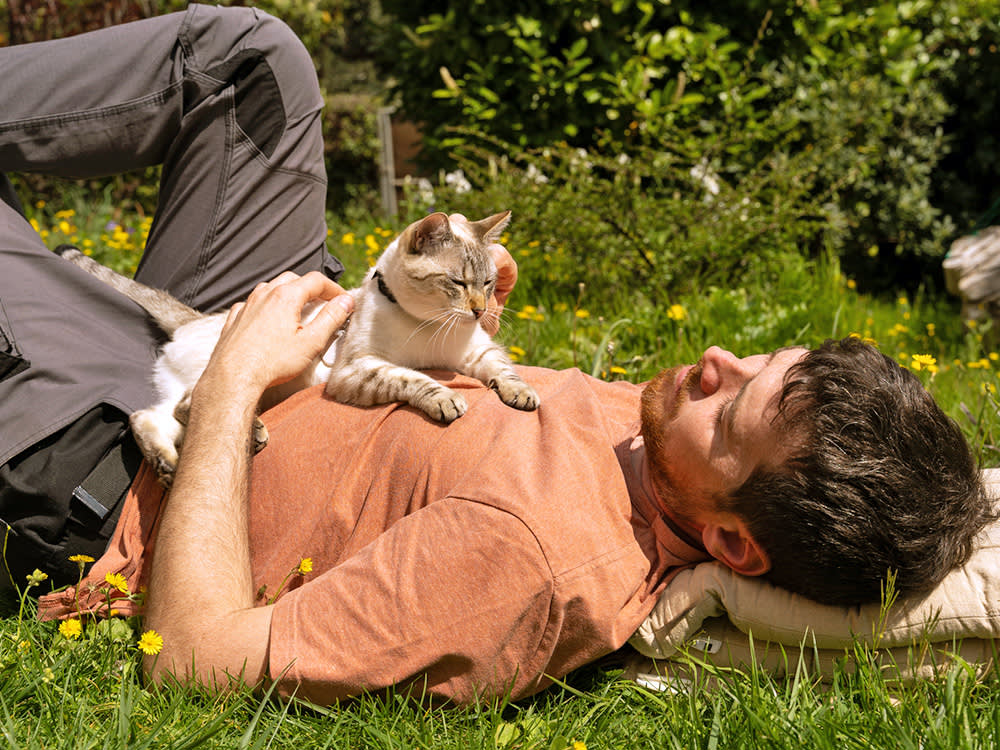
We would all like to believe that when a cat curls up against us, they are experiencing something like love.
Here is the less flattering, more useful version. To a cat, trust is a safety calculation, and the question running in the background is not do I adore this person. It is closer to: is this thing dangerous? Does it hunt? Will it hurt me if I stop watching it?
That sounds cold. It is actually the most practical thing you can know about your cat, and it changes what you do next.
Why the distinction matters
Human trust is a sprawling, complicated thing. We ask whether someone will keep our secrets, embarrass us, hurt our feelings, or mishandle our money. It is emotional, social, psychological, and financial all at once.
A cat’s version is narrower. It is about physical safety and physical comfort, and whether you supply those things in the way and the amount they need.
The temptation is to project the human version onto them, and it feels generous to do so. It isn’t. When you decide your cat’s needs are as complex and emotional as yours, you start meeting imagined needs instead of real ones. You buy them a companion cat they never wanted. You interpret hiding as sulking rather than as a request for a safer space. You take a swipe personally instead of asking what you did a second before it.
Read them as a small animal running a continuous risk assessment, and the whole relationship gets easier to manage.
Cats do not withhold affection to punish you. They withdraw because something in the environment stopped feeling safe. If you go looking for the offense you caused, you will miss the thing that actually scared them.
Twelve signs you have passed the assessment
Not every cat does all of these. The mix depends on personality and history, and a cat who has been badly handled will show fewer of them for longer.
Read them in tiers. The first group costs the cat almost nothing and comes cheap. The last group costs them everything they have, and is the real verdict.
Tier one: they’ve stopped bracing
1. They relax their body around you. A loaf. Ears forward. Muscles, fur, and whiskers loose. A cat at ease has stopped scanning the room, and a cat who has stopped scanning has stopped counting you as a variable.
2. They eat in front of you. Badly underrated, and one of the earliest things a new or nervous cat will offer. Eating means head down and attention committed, which is a poor tactical position. A cat who does it while you are standing there has concluded you will not take advantage.
3. They trail after you from room to room. Wanting to be in your vicinity and wanting anything from you are separate desires, and plenty of cats have the first without the second. Proximity chosen freely is its own statement, even from an animal who would prefer your hands stayed exactly where they were. (Yes, they may also have worked out that trailing you produces snacks. In which case they trust the system, which still counts.)
Tier two: they’re asking you for things
4. They ask. Usually by meowing, which is quietly extraordinary when you think about it, because adult cats barely bother meowing at one another. The meow is a thing kittens aim at their mother, the source of food and warmth and protection, and your cat has simply never stopped aiming it at you. Some cats never meow and instead tap you with a paw or shove their weight against your shin. The dialect varies. The request underneath it does not, and requesting is trust.
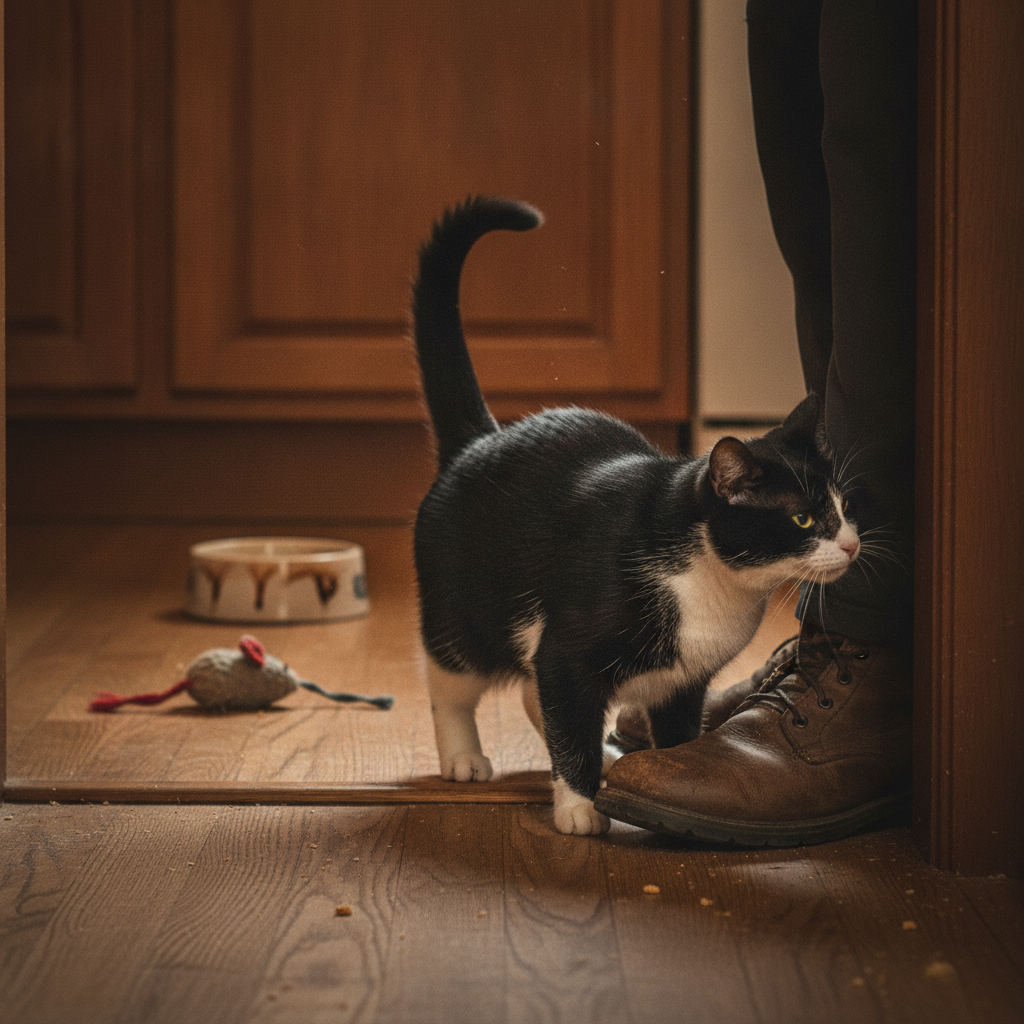
5. They mark you. Scent glands sit on the head, the paws, the ears, and the base of the tail, and the headbutts and cheek-rubs are how those glands get emptied onto you. They will also scent the bags and coats you carry in and out. This is not ownership. It is a small animal making you smell like the safe place.
6. They slow-blink. The long, lazy, half-lidded blink is a deliberate declaration that nothing here needs guarding against. It is also the one line of their language you can speak back, and you should.
Tier three: they’re surrendering an advantage
7. They touch you, or allow it. Every contact between a cat and a person costs the cat something in exposure. Initiating it, or permitting it, means they have run the numbers and accepted the bill.
8. They let you do the unforgivable things. Nail trims. Being lifted off the ground. Emerging from under the bed for you and nobody else. This one is close to conclusive.
9. They groom you, or let you. Mutual grooming is a within-family behavior. Being admitted to it means you have been reclassified from large unpredictable animal I share a building with to family.
10. They show you the belly. With the caveat in the FAQ above: it can be a profound statement of trust and it can be a fighting stance with four sets of claws loaded. Read the ears and the pupils before you read the belly.
Tier four: the verdict
11. They come to you when they are frightened. Behind your legs when strangers arrive. Face buried in your shoulder on the exam table. A cat who runs toward the large animal when something scares them has filed you under safety, and that is not a small piece of filing.
12. They sleep where you can see them. Deep sleep is the most defenseless a cat ever is, and the location is chosen deliberately, every time. A cat asleep in the open, in the room you happen to be occupying, has made the largest statement available to them with the smallest possible gesture.
Five ways to build more of it
Be boring, on purpose. What settles a cat is knowing what happens next. That matters less than people assume at the level of feeding on the dot, and far more at the level of you: a household with a steady temperature, and a person whose reactions do not lurch.
Stop using fear to manage behavior. Yelling at a cat, using a spray bottle, or startling them to interrupt something teaches exactly one lesson, which is that you become dangerous without warning. That is the opposite of what you are trying to build. Cats do not do things to upset you. They react to their circumstances, and if you dislike the reaction, the job is to find the cause and address it calmly.
Respect a no. If your cat says no to being touched, that is the end of the conversation. Let them end play and grooming when they choose to. Counterintuitively, a cat who knows they can walk away from something is far more likely to participate in it.
Play gently, and stop early. If your cat starts to look defensive or overwhelmed during play, back off before they escalate to teeth or claws. You want to end sessions while they are still enjoying themselves.
Slow down before the hard stuff. Before the carrier, the nail trim, or the medication, put in the groundwork. Treats. A stroke, if they like it. Quiet the room. Take your time and accept that it takes as long as it takes. Cats are dramatically more cooperative when you let them arrive at it themselves, and every rushed carrier session is a withdrawal from an account you are trying to fill.
What newer research adds
The most significant recent work here concerns attachment. Studies applying the same “secure base” test used with human infants and with dogs have found that cats form attachment bonds to their humans in comparable proportions, with a majority classified as securely attached, meaning they use their person as a base from which to explore an unfamiliar environment and are reassured when that person returns.
That does not contradict the safety framing. It confirms it, and gives it a mechanism. Being a cat’s secure base is being the thing in the room they have assessed as safe. The attachment is real; it just runs on threat assessment rather than sentiment, and the practical implication is that you build it by being reliably non-threatening rather than by being demonstrably affectionate.
The slow blink also holds up. Controlled work has found that cats are more likely to slow-blink back at a human who slow-blinks at them, and are more likely to approach an unfamiliar person’s outstretched hand after that exchange. It is one of the very few pieces of interspecies communication where we know the signal transmits in both directions.
The bottom line
Your cat is not deciding whether they love you. They are deciding, continuously and quietly, whether you are safe.
The good news is that this is a test you can actually study for. Be predictable, never frighten them on purpose, take no for an answer, and let them come to you. Do that for long enough and you get all twelve signs, which is not a smaller thing than love.
It is just a cat’s version of it.
References
- Vitale, K. R., Behnke, A. C., & Udell, M. A. R. “Attachment bonds between domestic cats and humans.” Current Biology, vol. 29, no. 18, 2019, pp. R864–R865.
- Humphrey, T., et al. “The role of cat eye narrowing movements in cat–human communication.” Scientific Reports, vol. 10, 2020.
- Vitale Shreve, K. R., & Udell, M. A. R. “What’s inside your cat’s head? A review of cat cognition research.” Animal Cognition, vol. 18, 2015, pp. 1195–1206.
- American Association of Feline Practitioners. “Feline-friendly handling guidelines.”
Common questions
Does a cat who won't let me touch them not trust me?
Not necessarily. Some cats are simply more protective of their personal space than others, and tolerance for handling is a separate trait from trust. A cat who won't be picked up but sleeps in the same room, eats in front of you, and asks you for things has already decided you're safe.
Is a cat showing their belly asking for a belly rub?
Usually not. It can mean they trust you enough to expose their most vulnerable side, but rolling over also puts all four sets of claws and their teeth in play, so it can be defensive. Read the rest: ears back, dilated pupils, or raised fur means keep your hand away.
How long does it take a cat to trust you?
Days for a confident, well-socialized cat. Months for a fearful or under-socialized one, and sometimes longer. The variable isn't time, it's predictability. A cat learns you're safe by accumulating evidence, and you can only add evidence at the rate they'll accept it.
Do cats slow-blink to show trust?
Yes, and unusually for cat body language, it's a signal you can send back. A slow blink is a deliberate signal that a cat is relaxed and doesn't perceive a threat. Narrowing your own eyes slowly at a cat, then looking away, is one of the few pieces of their language you can actually speak.
Dr. Park is a board-certified emergency and critical care specialist. She reviews our health and safety content for clinical accuracy and contributes guides on recognising urgent conditions. Her focus is helping owners act quickly and correctly when it matters most.
Meet our experts ↗Keep reading
 TrainingYour Cat Isn't Kissing You. Watch What Happens Three Seconds Later.Dr. Mara Chen · 7 min
 TrainingCat Behavior Has a Photo Problem. Someone Finally Drew Their Way Out of It.Dr. Mara Chen · 7 min
 LivingMy Cat Has Never Once Felt Awkward. I'm Taking Notes.Sasha Ford · 5 min
 LivingYour Cat Didn't 'Imprint' on You Like a Duckling. What Actually Happened Is BetterDr. Nina Kohl · 7 min
 TrainingYour Cat Rubbing Your Legs Isn't a Hug. It's a Deposit.Dr. Priya Nair · 7 min
 LivingYour Cat Isn't Watching You Cook. He's Reading the Room.Dr. Mara Chen · 7 min