


That 'Would Your Dog Recognize You' Trend Isn't a Love Test. It's a Vision Lesson
The viral clip where you walk past your own dog feels like a referendum on how much they love you. It isn't. It's a live demo of how dogs actually identify their person, and why the aloof ones aren't cold at all.

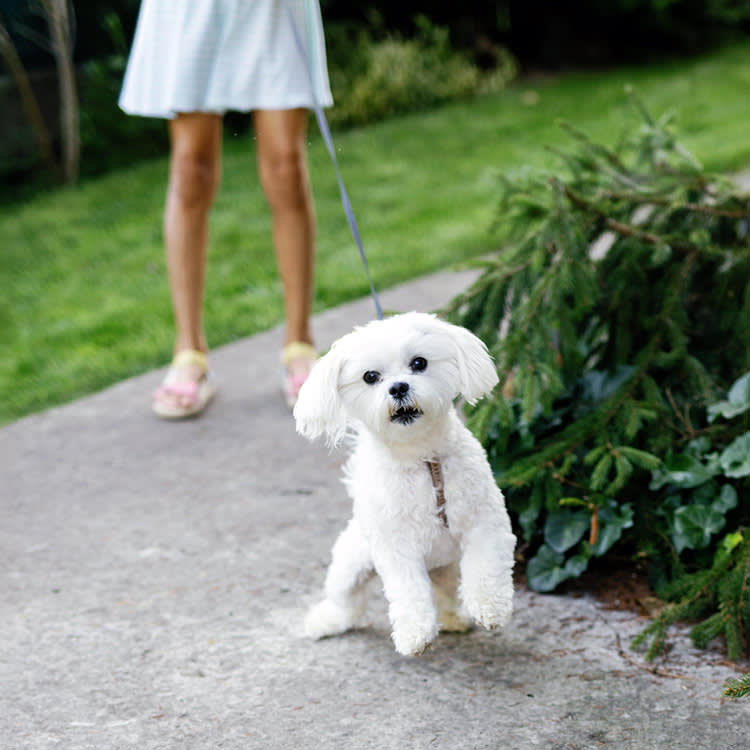
There’s a challenge that keeps resurfacing where a dog is held on a sidewalk while their person strolls past like a stranger, and everyone waits to see whether the dog notices. Most do, eventually, and lose their minds with joy. A few glance up, shrug, and carry on. The comments treat the second group as a quiet heartbreak, proof the dog doesn’t care. That reading is wrong, and understanding why turns a cute trend into a genuinely useful window on how a dog’s mind puts you together.
The dog is running a checklist, not consulting a photo
The mistake is imagining recognition works the way it does for us: a clear look at a face, instant match, done. Dogs don’t lead with faces, mostly because they can’t. Their visual acuity is far coarser than ours, roughly on the order of 20/75, meaning what you can see sharply from 75 feet away, a dog needs to be about 20 feet from to see with the same clarity. From down the block, your face is a soft blur to your dog. What isn’t a blur is your overall shape.
So the first cue a dog reaches for is silhouette: your height, your outline, your general build against the background. A tall person’s dog clocks “tall figure that might be my human” long before any facial detail resolves. That’s step one of the checklist, a rough shape that could be their person, and it’s why the reactions in these videos so often come in stages.
Watch for the double take, because that’s the checklist working
Not every dog is the confident type that barrels straight over. Far more common is the delayed reaction, the almost visible moment of processing, and then the switch flips and they lunge toward their person. That pause isn’t confusion about whether they love you. It’s the dog gathering a second and third piece of evidence to confirm a suspicion the silhouette raised.
Those extra pieces are scent, sound, and movement. Once a dog closes the distance, smell becomes decisive, since every person carries a distinct odor a dog can pick out even in a crowded, smell-saturated environment. They also read voice, and not just the words but the cadence of it, plus the specific rhythm of how you walk. Interestingly, a dog may struggle a little more if you pass by talking in your ordinary voice rather than the sing-song register you reserve for them, because you’ve handed them one fewer familiar cue to match.
What people read as a slow or unloving reaction is actually a dog being thorough. They catch a shape that might be you, then confirm it with a sniff, your voice, the way you move. The dogs who take a beat to turn around aren’t loving you less. You’re watching them do real cognitive work in real time, and then choose you.
Put simply: a dog might catch one clue first, then stack the others on top until the picture snaps into focus. The U-turn you see in so many of these clips is the moment the stack tips over into certainty.
The dogs who don’t react, explained
Then there’s the third group, the pup who trots right past their person without a flicker, off to enjoy their walk. Before you take it personally, consider what might be missing from that dog’s checklist. Flat-faced breeds often have a weaker nose, which leaves them a cue short. A dog with reduced vision is short a cue on the other end. And plenty of dogs are simply absorbed, nose deep in an interesting scent, mentally elsewhere, the same way a person glued to their phone can walk right past a friend without registering them.
Attention and focus shape what any animal notices, dogs included. A distracted dog isn’t a cold dog. Some dogs are just more independent, or express their attachment in less demonstrative ways, and that tends to describe a well-adjusted animal rather than an aloof one. The dog who ignored you on the sidewalk very likely adores you and was, at that exact moment, thinking hard about a squirrel or the route home to their dinner.
So what does your dog’s reaction actually mean?
Mostly, it means less than the internet wants it to. The confident sprinter, the thoughtful double-taker, and the oblivious wanderer are three normal personalities, not three tiers of love. If you want a takeaway you can use, it’s this: your dog identifies you through a blend of shape, scent, sound, and motion, not a single glance, so the way to be maximally recognizable is to be your full, familiar self, moving and sounding the way you always do.
And if your dog is a daydreamer who’d fail the challenge every time? That’s not a verdict on the relationship. It’s just a dog living contentedly inside their own head, which is one of the more charming things dogs do.
What newer research adds
Work on canine perception keeps reinforcing the multi-cue picture. Studies confirm dogs are dichromatic, seeing the world in blues and yellows with reds and greens muted, and that their strength is detecting motion and functioning in low light rather than resolving fine detail, exactly the profile that makes silhouette and movement such important recognition cues. Research on canine scent has repeatedly shown dogs can distinguish individual human odors, and newer behavioral work suggests dogs integrate several senses at once rather than relying on any single one, which is precisely what these sidewalk videos capture by accident. The science lands on a warm conclusion: your dog knows you by a whole signature, not a face, and the ones who take their time to notice are simply being careful about the evidence.
Dr. Kohl is a board-certified veterinary dentist with a particular interest in preventive oral care. She reviews all dental health content at The Pet Times and contributes practical guides on home dental routines, professional cleaning, and oral disease prevention.
Meet our experts ↗Keep reading
 LivingYour Dog Is Not Your TherapistDr. Ravi Mehta · 7 min
 Living'Will My Dog Ever Love Me?' Is the Wrong Question. Watch What They Choose.Dr. Priya Nair · 9 min
 LivingYou Can't Fix the Jerk at the Dog Park. Here's What Actually Works.Tom Hadley · 9 min
 TrainingYour Dog Knows You're Coming Home. It's Smelling Time Pass.Dr. Mara Chen · 5 min
 LivingScientists Ranked Which Dogs 'Smile' Most. Your Beagle Is Not Winning.Dr. Nina Kohl · 5 min
 LivingEvery 'Service Dog Registry' Is a Scam. Here's What Actually Makes One Legal.James Okafor · 9 min