


You Can't Fix the Jerk at the Dog Park. Here's What Actually Works.
The rude owner won't pick up the poop, their dog plays too rough, and confronting them made it worse. Why the usual approach backfires, and the three moves that actually protect you and your dog.

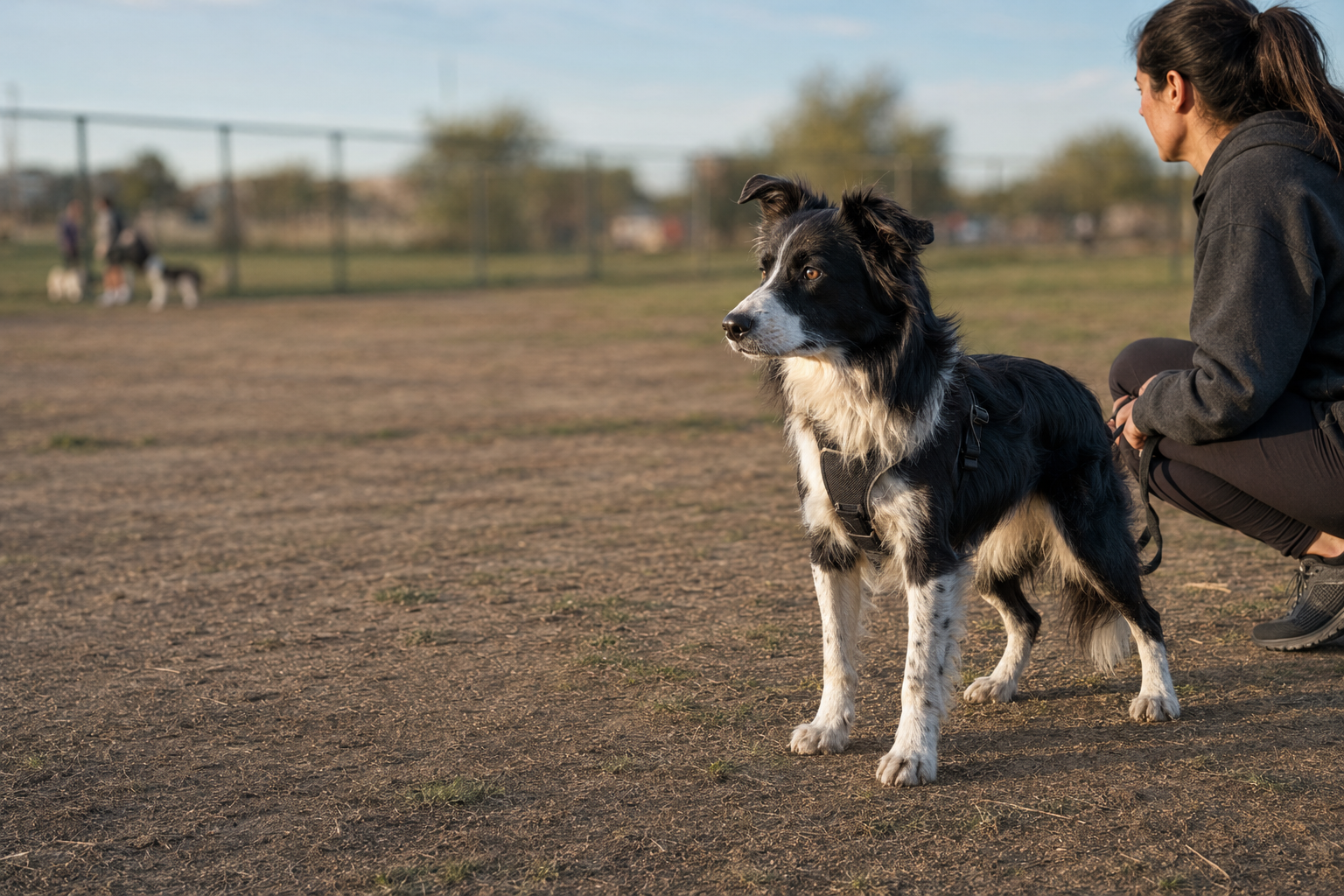
The dog park is where dog people bond, and it’s also where they blow up at each other. The same fenced acre that produces spontaneous playdates and lifelong friendships turns tense the instant one dog gets too rough or one owner doesn’t like how something was handled. Emotions run high, because people are as protective of their dogs as parents are of their kids. Tell someone their dog is playing too hard and you may as well have criticized their parenting; the defensiveness is immediate.
So here’s the reframe that makes the dog park survivable: you almost never have the power to change the other person or their dog directly. What you do control is three things, the relationship you build before there’s a problem, your own dog’s recall, and your willingness to leave. Master those and the “jerk at the park” stops being a crisis you have to win and becomes a situation you can manage. Let’s take them in order.
Build the relationship before you need it
The instinct after an incident is to march over and say your piece. It’s also the surest way to get nowhere. Feedback only lands when it comes from someone the other person already knows and likes at least a little. A stranger’s criticism, however fair, reads as an attack and gets rejected on contact. In other words, you have to earn the standing to be heard before you try to use it, and that standing is built quietly, over time, in ordinary friendliness.
That means the groundwork is small talk, shared laughs, remembering their dog’s name, the ordinary friendliness of being regulars at the same park. Once there’s a baseline rapport, which might take five minutes or five months depending on the people, you have something to work with. When you do raise an issue, first ask whether they’re open to feedback at all. If they are, frame it as your problem that you need their help understanding, not their failing that they need to fix. Language that blames or points fingers is guaranteed to trigger defensiveness, so keep your tone, body language, and word choice calm and un-escalating. And don’t expect a particular reaction on the spot; you may not get the response you wanted in the moment, but a seed gets planted, and people often reconsider once the initial emotional flare has passed.
Figure out whose problem it actually is
Before you take anything on, ask an honest question: whose problem is this really? Harriet Lerner’s The Dance of Anger argues that whoever is bothered by a situation is the one on the hook for resolving it. You can’t march up with a catalog of complaints and expect someone to rearrange how they behave to suit you, not when you’re right, not when a whole crowd would side with you, not even when they’re flouting some posted or unspoken park rule.
Would you rather your dog not get humped? Call your dog away. Does the abandoned poop get under your skin? Hand the owner a bag, and if they wave it off, either scoop it yourself or shrug and move on. In a space this lightly governed, those are often your only realistic choices when the goal is to sidestep a fight. It isn’t fair. It is faster.
Know what the rules can and can’t do
Part of what makes this so maddening is that the posted rules usually carry no weight. At most public parks, the signage is advisory, not law. A local ordinance might back it up, and a violation could in theory earn a fine, but usually only if someone with real authority happens to witness it; short of that, any follow-through lands on you, collecting evidence, giving statements, filing reports, and chasing it to a resolution. Parks inside gated communities work differently, because their rules can be enforced through the community’s own bylaws, with penalties that run as far as revoking a member’s access. Even then, making it happen is real work.
If that’s work you’re willing to do, go ahead. Often, though, the more efficient route is the relationship one, and if you do decide to give someone feedback, deliver it in private if you safely can. Being scolded in front of a crowd is embarrassing, and an embarrassed person gets defensive fast, so a quiet word lands better than a public callout.
Handle the fallout with grace
Even when you handle it perfectly, the other person may bristle and snap back. If they do, a sincere apology costs little and defuses a lot: say you’re sorry to have upset them, admit the feedback wasn’t easy to receive and that you’d find it tough in their shoes, and make plain you weren’t looking to start something. If they stay furious, disengage and leave. Nothing outranks your safety and your dog’s, full stop.
That’s a bitter one to swallow when the issue is safety itself, a dog that’s genuinely hurting others and putting yours at risk. In that case the realistic move is usually to pull your dog out of it, maybe for good. Yes, that may mean giving up this park, even if it’s the closest to home, even if it’s the only time of day you can go, even if your dog loves their friends there. Protecting your dog outranks convenience and routine every time.
If a dog gets attacked, here’s the playbook
It is not your fault if a stranger’s dog shows up and attacks yours, or if a normally friendly dog suddenly turns and sends yours to the vet. Broadly, the owner of the attacking dog is legally responsible for their dog’s actions, which can include your vet bills and other damages, and the same applies if a dog bites a person. Some states impose strict liability, California’s dog-bite statute, for instance, makes owners liable no matter what the dog had done before or what the owner knew about it, while other states apply different standards, so it’s worth learning the specific laws where you live.
Actually collecting on that liability can be difficult, so weigh whether it’s worth the trouble; serious injuries and significant medical bills usually justify it, minor scrapes with a cooperative owner usually don’t. If you do pursue it, a reasonable sequence is: document the incident with photos, videos, and witness statements; get and keep any medical or veterinary records; after treatment, report the bite to local animal control or law enforcement; reach out to the other owner to try to settle it directly; and, if it comes to that, either open an insurance claim or talk to a personal-injury lawyer. (This is general information, not legal advice, laws and the right steps vary by state.)
Getting someone’s contact information right after an incident is its own challenge, so keep it gentle: “Can we swap contact info so I can follow up about this later?” works better than a demand. When the vet bill comes, a non-accusatory framing lands best, something like explaining that since their dog bit yours, you see them as bearing some responsibility for the cost, and asking how they see it. Taking ownership of your own expectations, rather than leading with “you should,” makes people far more receptive. Be ready to negotiate; maybe they’ll cover part rather than all. And remember that a first “no” is often not a final answer, so it’s fine to say you’d appreciate them thinking it over and to leave the door open. People change their minds when given the space to.
Your real superpower: recall
Here’s the reassuring part. There are very few actual jerks in the world. Most people are simply unaware of a situation or unskilled at handling it, and you’ll get better results if you start from that assumption instead of the worst one. Meanwhile, the single most powerful tool you have at any off-leash park has nothing to do with other people: it’s a rock-solid recall. A dog who returns to you promptly when called can be pulled out of a bad situation before it becomes a fight, a vet bill, or a confrontation. Keeping that cue sharp is worth more than winning any argument, because in the end, keeping your dog safe is what all of this is really about.
What’s changed: you might not need the crowded park at all
One shift worth knowing is that the busy public dog park is no longer the only option. A growing number of trainers now steer under-socialized or reactive dogs away from crowded parks entirely, where a single bad encounter can undo months of work, and toward calmer alternatives. Chief among them are private, rentable spaces, apps like Sniffspot let you book a fenced yard or field by the hour with no other dogs present, so your dog gets to run and sniff freely without rolling the dice on strangers and their pets. For dogs who find the free-for-all stressful, or for owners tired of park drama altogether, renting a private slot can deliver the exercise and enrichment without the conflict. It won’t suit every dog or budget, but it’s a real answer to a problem that used to have only one setting.
References
- Lerner, Harriet. The Dance of Anger: A Woman’s Guide to Changing the Patterns of Intimate Relationships. Harper & Row, 1985.
- American Veterinary Medical Association. “Dog bite prevention.” avma.org.
- California Legislative Information. “Civil Code Section 3342 (dog-bite liability).” leginfo.legislature.ca.gov.
- American Kennel Club. “Dog Park Etiquette and Safety.” akc.org.
Tom Hadley writes about training and behavior, helping owners understand what their pets are trying to tell them. His work covers everyday manners, decoding common behaviors, and the small changes at home that make dogs and cats easier to live with.
Meet our experts ↗Keep reading
 TrainingYour Dog Isn't Reading Your Face. They're Reading Your Hand on the Leash.Dr. Lena Park · 8 min
 LivingADHD Doesn't Make You a Bad Dog Parent. Your Reminder App Does.Leila Torres · 8 min
 TrainingPlaytime Is Secretly Training. 6 Dog Games That Teach While You Both Have FunSasha Ford · 8 min
 Training'Spin' Looks Impressive. It's the Easiest Trick You'll Ever Teach.Sasha Ford · 5 min
 TrainingNo, You Don't Need a Show Dog to Compete in ObedienceTom Hadley · 7 min
 TrainingYour Dog Doesn't Fail at Restaurants. They Fail in the First 90 Seconds.Dr. Nina Kohl · 7 min