


Is Your Puppy Growing Too Fast? The Window Is Smaller Than You Think
Growing too fast and growing too slow are both problems. Here is how veterinary growth charts work, what the curves are telling you, and the simple weigh-in habit that catches trouble early.

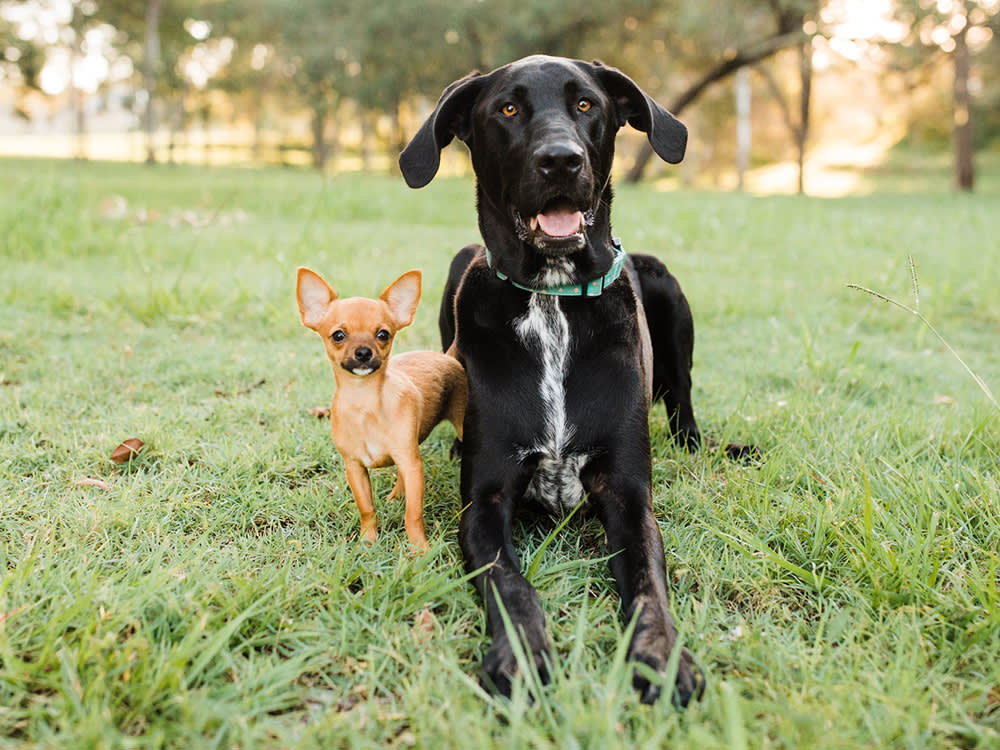
If a button existed to freeze your puppy or kitten in that wobbly, big-eyed baby stage, a lot of us would at least hover over it. Growth, unfortunately, is not optional, and the speed of it carries real health consequences. Too fast causes one set of problems. Too slow signals another. The healthy window is narrower than most new owners assume, and an eyeball check from across the room will not tell you whether your pet is in it.
The good news is that the same tool pediatricians use for children works for pets, and you do not need anything fancy to benefit from it. Here is how growth charts actually read, and the low-effort habit that turns them into an early-warning system.
A growth chart is a map of normal, not a verdict
Veterinary growth charts look and work much like the ones for kids. They use the same kind of mathematical modeling that underlies the World Health Organization’s human growth charts, and each chart carries a set of curves, usually nine, called centile lines. Those lines describe the range of healthy growth across a whole population of puppies or kittens.
The single most useful idea is this: a healthy pet tends to stay close to the same centile line through the whole growth period. It is not about landing on the “best” line. A small dog on a low line and a big dog on a high line can both be perfectly healthy. What you are watching for is drift across lines.
Parents always want to know if their puppy is on the right curve, and the honest answer is that there isn’t one right curve. What I care about is consistency. A pet that keeps pace with its own line is usually doing fine. A pet that suddenly jumps up or slides down is the one I want to see.
Why the direction of the drift matters
Both directions carry meaning, and they point at different things.
Sliding into lower centiles can mean a pet is lagging behind expected development, and slow growth is sometimes an early flag for underlying illness. Climbing into higher centiles means weight is piling on faster than the body is ready for. In medium and large-breed dogs especially, growing too fast loads developing bones and joints, which is linked to lifelong conditions like osteochondrosis and hip dysplasia. And across all puppies and kittens, gaining faster than the frame can handle sets up an obesity risk that is far harder to undo later than to prevent.
That prevention point is not a small one. Roughly half of all adult dogs and cats already carry more weight than is healthy for them, and those extra pounds are not harmless padding. Excess weight contributes to arthritis, breathing problems, diabetes, a lower quality of life, and even a shorter lifespan. Preventing obesity is dramatically easier than reversing it, which is exactly what makes early tracking worth the few minutes a month.
The habit: weigh monthly, plot it, and look at the line
The whole system runs on consistent weigh-ins. During the growth period, aim for once every four weeks. Home or clinic is fine, whichever you will actually do. Record each weight against your pet’s age, and after a few entries a curve takes shape and the trajectory becomes visible.
A blip off the expected line is not an automatic emergency, and it is also not your cue to start changing food amounts on your own. Most of the time it is simply a reason to call your veterinarian. Together you can look at the full context, overall health, appetite, any other symptoms, and decide whether anything actually needs adjusting.
The payoff does not stop at adulthood. Gradual weight change over months or years is nearly invisible in person but obvious on a graph. A practical rule from the clinic: keep weighing every three months for life. If you are measuring food carefully and your dog is still gaining, you are feeding too much; if he is losing, too little. Catching that drift early, before it becomes a weight problem, is the entire point.
If you want a head start, ask your veterinarian for the growth chart that fits your pet’s breed or species at your next visit, and start logging. For more on keeping a new pet on track, see our Preventive Care guides.
Dr. Mehta is a board-certified veterinary nutritionist who evaluates pet food formulations, ingredient quality, and the science behind dietary trends. He writes and reviews all nutrition content at The Pet Times, including our food rankings and feeding guides.
Meet our experts ↗Keep reading
 First DaysYour Kitten's First Year Is a Series of Doors That CloseDr. Lena Park · 8 min
 Health & WellnessA Kitten Sneeze Is Cute Once. Here's the Line It Shouldn't Cross.Dr. Mara Chen · 8 min
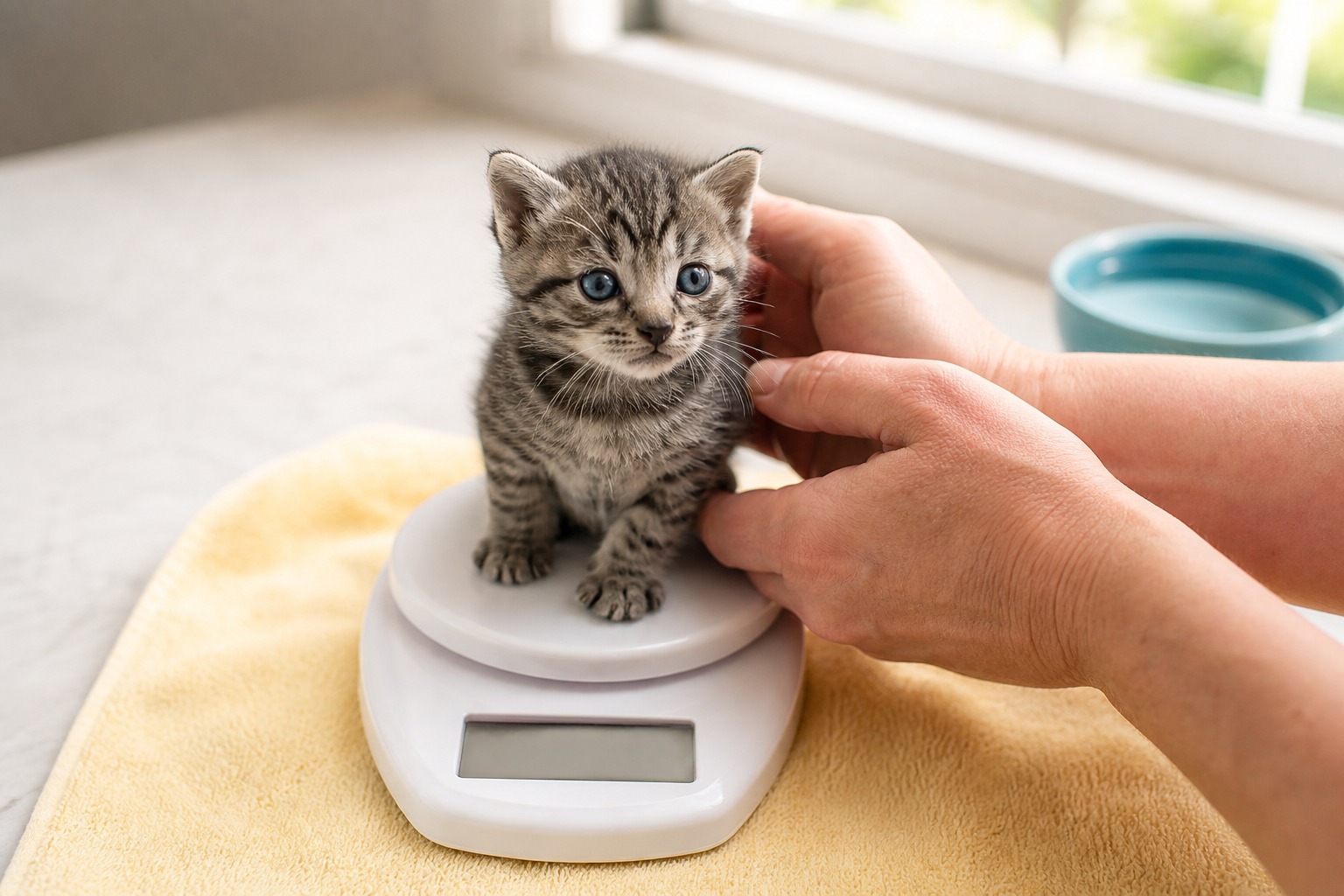 First DaysYour Kitten's Scale Is the Best Early-Warning System You Have. Here's How to Read It.Dr. Amara Solis · 6 min
 Health & WellnessYour Vet Injects Your Kitten in the Leg for a Reason. It Isn't Convenience.Dr. Priya Nair · 9 min
 First DaysOrphaned Kittens Can't Poop on Their Own. Miss This and They Crash Fast.Dr. Priya Nair · 8 min
 First DaysEight Weeks Is a Shelter Deadline, Not a Kitten's Biology. The Data Says 14.Dr. Priya Nair · 9 min