


Orphaned Kittens Can't Poop on Their Own. Miss This and They Crash Fast.
A newborn kitten with no mom relies on you for one job most first-time fosters forget: making them pee and poop. Here's the exact technique, the 24-hour red line, and how to keep a fragile kitten out of trouble.

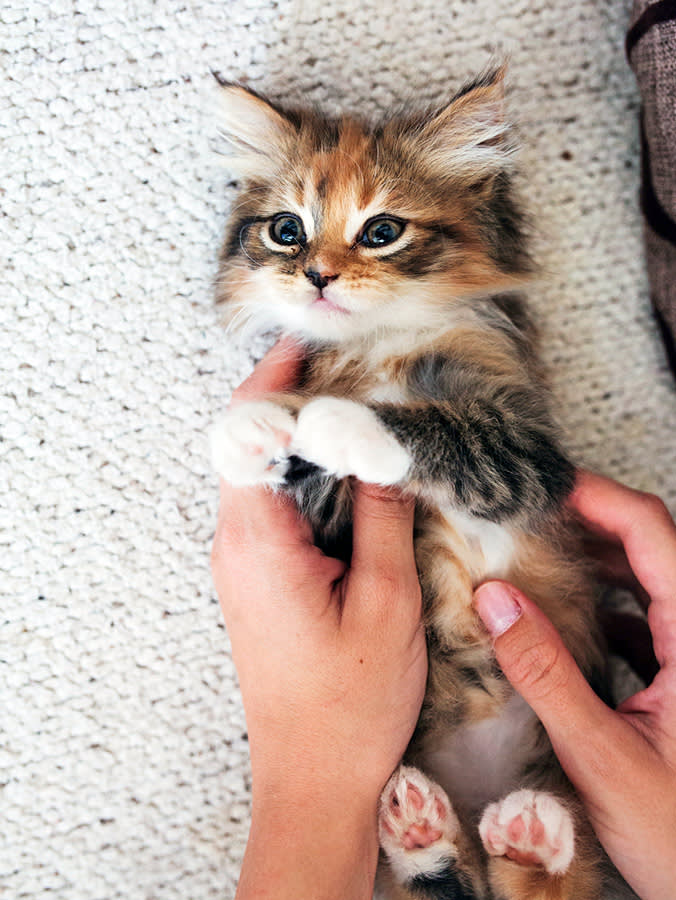
If you have never bottle-raised a kitten, here is the fact that surprises almost everyone: a newborn kitten cannot pee or poop by itself. Not “prefers not to.” Cannot. That job normally belongs to the mother cat, who licks her babies to trigger elimination and keep the nest clean. When a kitten is orphaned or separated before about four weeks old, that job becomes yours, and it is not optional. Skip it and a fragile kitten can slide from uncomfortable to genuinely sick in a day.
It is also, once you learn it, one of the simplest parts of neonatal care. This is the piece first-time fosters most often overlook, so let’s make it the piece you get right.
Why a newborn kitten needs your help at all
Kittens are what biologists call altricial, meaning they are born deeply underdeveloped. In the first weeks their eyes and ears are still sealed, they cannot regulate their own body heat, and their nervous system has not yet wired up the muscle control needed to empty a bladder or bowel on their own. They navigate by smell, stay glued to their mother for warmth, and depend on her tongue to get things moving several times a day.
Their development moves fast. Eyes and ears open within the first two weeks, and control over peeing and pooping usually arrives between three and four weeks. Until then, an orphan needs a stand-in mom on a strict schedule. If a kitten is not eliminating even with your help, a few things are usually behind it:
- Technique. The stimulation may be too infrequent or not quite working. If you are unsure, ask a vet or an experienced fosterer to show you in person; it is much easier to learn by watching once.
- Dehydration. A kitten not taking in enough formula makes less urine and stool. Weigh the kitten daily on a kitchen scale that reads in grams so you catch small losses before they become a crisis.
- The wrong food. Orphans need a proper kitten milk replacer, full stop. Cow’s milk and homemade recipes cause digestive upset, nutritional gaps, and, in the worst cases, are fatal.
- A medical problem. Parasites, infection, or a congenital issue in the digestive tract can all interfere. Persistent trouble eliminating is a reason to see a vet, not to push harder at home.
The technique, step by step
You are mimicking a mother cat’s tongue with a warm, damp cotton ball. Gentleness is the whole game.
The steps are laid out in the how-to box above, but the short version: gather cotton balls, warm water, and a pee pad; hold the kitten belly-down in a natural upright posture; lift the tail and lightly dab the perineal area and lower belly; and keep the pressure feather-light, because you will be doing this many times a day and the skin chafes easily. If nothing happens with dabbing, you can try trickling a thin stream of warm (never hot) water over the area. Finish by drying the kitten thoroughly and returning them to a warm, clean nest.
The mistake I see in new fosters isn’t clumsy technique, it’s waiting too long to worry. A neonate who hasn’t passed stool in a day and goes off their food doesn’t have time on their side. When in doubt, stimulate again, and if nothing changes, call, don’t watch and hope.
One habit pays off more than any other: keep a log. Write down each feeding in milliliters, each pee and poop, and the daily weight. When you are sleep-deprived from 2 a.m. feedings, you will not reliably remember when a kitten last pooped, and that record is exactly what tells you, and your vet, whether things are on track.
The red flags that mean stop and call
Because neonates are so fragile, catching a problem early is often the difference between a quick fix and an emergency. Watch for:
- A poor or refused appetite. A kitten who needs to go may feel too full to eat. Try stimulating, wait a few minutes, then offer the bottle again.
- A swollen or bloated belly. Often it simply means they need to eliminate; stimulate and see if it eases.
- Straining or crying after meals. Discomfort that lingers after a feeding is worth another gentle stimulation.
- No bowel movement for more than 24 hours. This is the hard line. Keep a close eye once a kitten passes the 24-hour mark, and call your vet if it stretches beyond that.
- Restlessness or persistent meowing. Plenty of causes exist, but an easy one to rule out is that they simply needed to go again.
Left unaddressed, a backed-up kitten can develop severe constipation, which is painful and drags down appetite, growth, and hydration until it becomes life-threatening. Frequent stimulation can also irritate that delicate skin, so check for redness or swelling every session and loop in your vet at the first sign of a sore.
Keeping things moving in the first place
Prevention is mostly about hydration, portion control, and a clean setup:
- Feed enough, often enough. Follow milk-replacer guidelines for the kitten’s age and weight. Pale urine is a rough sign of good hydration; dark urine means ask your vet about adding a little water to feeds.
- Don’t overfeed. Enthusiastic eaters can be overfed into constipation. Stick to the recommended amounts.
- Right formula only. Kitten milk replacer, never cow’s milk or human formula.
- Keep small objects out of reach. Clumping litter and other tiny particles can be swallowed and cause blockages. Kittens still being stimulated don’t need a litter box at all; if you want to introduce one, line it with paper or a pee pad.
What’s new since this was written
The core routine has not changed, but the support around orphan kittens has. Updated neonatal guidance in the Merck Veterinary Manual continues to stress daily weight tracking in grams as the single most sensitive early warning that a kitten is fading, often before any other sign appears. And each spring, “kitten season” floods shelters with orphans who need exactly this care, which is why rescue groups like the National Kitten Coalition now run free online tutorials and mentorship for new bottle-feeders. If you find yourself with a neonate and no roadmap, you are no longer on your own; a short video call with an experienced fosterer can save a life, and a vet visit within the first day or two is always the safest opening move.
References
- Davidson, A., et al. “Management of the Neonate in Dogs and Cats.” Merck Veterinary Manual, modified April 2025. https://www.merckvetmanual.com/
- Veronesi, M. C., et al. “Feline neonatology: From birth to commencement of weaning — what to know for successful management.” Journal of Feline Medicine and Surgery, vol. 24, no. 3, 2022, pp. 232–242. https://doi.org/10.1177/1098612X221079708
- National Kitten Coalition. “Understanding the causes and treatment for constipation in kittens.” June 6, 2023. https://www.kittencoalition.org/
Common questions
At what age can a kitten pee and poop on its own?
Most kittens gain control of elimination between three and four weeks of age. Around that point they also start using a shallow litter tray, and the stimulation routine can taper off.
When should I call the vet?
Call if the kitten hasn't pooped in 24 hours, is losing weight, refuses to eat, has a swollen belly, or develops redness or swelling around the genitals. In a neonate, these can turn serious quickly, so don't wait it out.
Dr. Nair is a veterinarian focused on diet and feeding. She covers everyday nutrition, treats, and the many "can they eat this?" questions owners ask, grounding each answer in what is actually safe and sensible for dogs and cats.
Meet our experts ↗Keep reading
 First DaysYour Kitten's Scale Is the Best Early-Warning System You Have. Here's How to Read It.Dr. Amara Solis · 6 min
 Health & WellnessA Kitten Sneeze Is Cute Once. Here's the Line It Shouldn't Cross.Dr. Mara Chen · 8 min
 Health & WellnessYour Vet Injects Your Kitten in the Leg for a Reason. It Isn't Convenience.Dr. Priya Nair · 9 min
 First DaysA Kitten Landed in Your Lap and Can't Eat on Its Own. Here's the Playbook.Dr. Priya Nair · 10 min
 First DaysYour Kitten's First Year Is a Series of Doors That CloseDr. Lena Park · 8 min
 First DaysEight Weeks Is a Shelter Deadline, Not a Kitten's Biology. The Data Says 14.Dr. Priya Nair · 9 min