


Your Kitten's First Year Is a Series of Doors That Close
A kitten's first year isn't just a parade of cute phases. It's a sequence of biological windows, and several of them shut for good. Here's the calendar that actually matters.

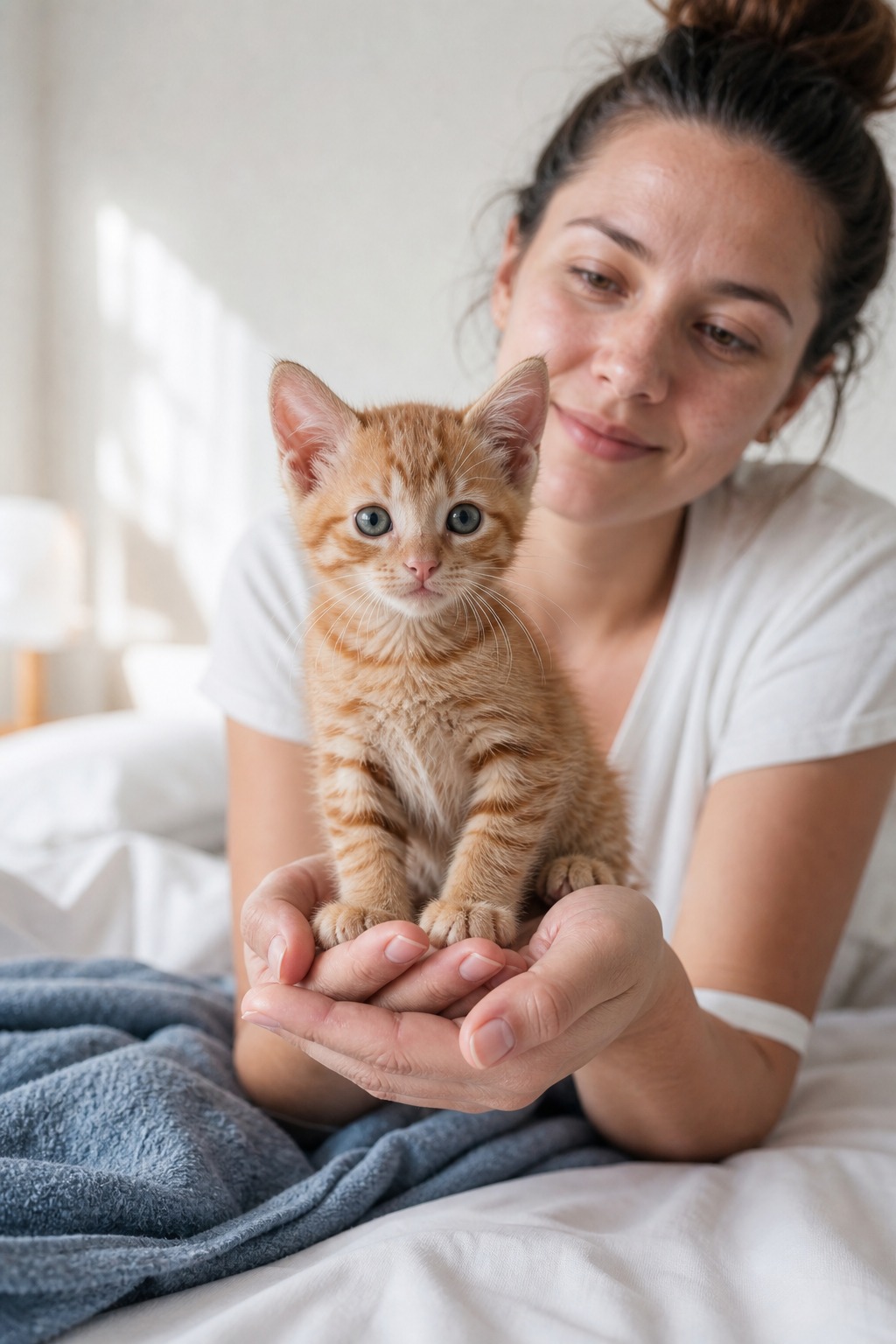
Most kitten guides read like a highlight reel: the eyes open, the teeth come in, the zoomies arrive. All true, all adorable. But it misses the single most useful thing about a kitten’s first year, which is that a lot of it runs on a clock you can’t reset.
A kitten’s development is a sequence of windows. Some of them, like the reach for adult size, stay open for months and forgive a slow start. Others slam shut. The hours for absorbing a mother’s antibodies, the weeks for learning that humans are safe, the narrow band for getting ahead of an unplanned litter: miss those and there is no going back for a do-over. So instead of a scrapbook of phases, think of the first sixteen months as a series of deadlines. Here is what each one is for, and what you actually need to do before it closes.
The antibody window: the first two days
Newborn kittens arrive almost defenseless. Their immune systems haven’t yet learned to fight the everyday germs waiting for them, which is where their mother’s first milk comes in. Colostrum, produced in the hours right after birth, is dense with both nutrition and antibodies. When a newborn nurses, those antibodies pass into their bloodstream and hand them a borrowed, temporary immunity against pathogens their mother has already survived.
The catch is timing. Colostrum’s antibody levels peak in the first twelve hours and fall off over the next few days, and a newborn’s gut can only absorb those antibodies for a short stretch before the door effectively shuts. A kitten who misses colostrum starts life a step behind one who didn’t. This is the first window, and it is the shortest.
Weeks zero to two: the neonate stage
Newborns arrive toothless, with eyes and ears sealed shut. They navigate by scent and touch, wriggling toward warmth, and they depend on their mother for absolutely everything: food, warmth, and even the stimulation they need to go to the bathroom. Most of their day is nursing or sleeping. That stub of umbilical cord you might notice at birth dries up and drops off within the first week.
Your job here is mostly to watch and not interfere. The queen (the mother cat) is doing the heavy lifting, so keep a close eye on both her and the litter to be sure everyone is thriving. Call your vet if a kitten won’t or can’t nurse, or if mom seems uninterested in caring for them. Your vet may recommend daily weight checks, because a kitten should roughly double their birth weight in these two weeks. They fit in your palm, but handling should stay minimal for now.
Weeks two to four: the transition stage
Now things move fast. The eyes open, though vision stays blurry compared to an adult’s sharp gaze. The ear canals open and the ears unfold. The first baby teeth push through, tiny incisors and needle-fine canines. Kittens start to stand and stagger around on a wide, wobbly stance, rarely going far. And somewhere in here, most of them start to purr.
This is where your window of influence cracks open. Gentle, positive handling during these weeks has lasting effects on how a cat relates to people for the rest of their life, so make a good first impression. This is also the moment for introductions: a small, low-sided litter box that’s easy to climb in and out of, a few toys for enrichment beyond their littermates, and a first vet visit for a checkup and their first dewormer. Around three to four weeks, you can offer soft, mushy food to begin the weaning process.
Weeks four to twelve: the socialization stage
If there is one window worth circling on the calendar, it’s this one. Between four and twelve weeks, a kitten decides, more or less permanently, how the world feels. Their senses sharpen, they grow surer of themselves and more curious, and they begin forming social bonds with littermates, with you, and with any other animals in the home. Their eye color shifts from newborn gray to whatever their genes had planned. By eight weeks they have a full set of baby teeth, weaning is wrapping up, they start grooming themselves, and in males the testicles begin to descend.
Personality is being set here, and it’s part nature, part nurture. A kitten may mirror a calm, confident parent, or, if a parent was fearful or reactive, that wiring can surface too, even in a parent who isn’t around. What you do about the nurture half matters enormously. Keep new experiences positive and paced: go slow with anything that could overwhelm, like loud noises, car rides, or grooming, but don’t skip deliberate, gentle handling. Touch the ears and paws, open the mouth, and pair it all with treats so it reads as safe rather than scary.
Health-wise, this stage is busy. Early on, a kitten’s immune protection is in flux, with some of mom’s antibodies lingering but fading, which is exactly when a vaccine may not yet take. So keep kittens away from unvaccinated animals and high-traffic spots like pet stores that can harbor pathogens. Expect frequent deworming here, and this is when flea and tick prevention should begin. Kittens get their first FVRCP vaccine, the core shot against feline herpesvirus, calicivirus, and panleukopenia (feline distemper). Around twelve weeks, most are ready for their first rabies vaccine, and it’s the moment to talk with your vet about a spay or neuter plan. You can adopt or foster a kitten as early as eight weeks, once weaned, though many shelters wait until ten to twelve weeks for better socialization and a first round of vaccines.
Months three to six: the juvenile stage
Now you have a growing, wired, gravity-defying explorer. Juvenile kittens climb, wedge into impossible gaps, and turn into expert hunters of toys and, if you let them, toes. (Don’t let them. You’ll regret it.) They also start reading the hierarchy of the household and testing where they fit in it.
Your task is damage control. Kitten-proof in earnest: this is when a curious kitten scales the screen door, gnaws an electrical cord, swats the breakables, and summits your tallest bookshelf. Move hazards out of reach, confirm your houseplants are non-toxic to cats, and pour energy into approved outlets with plenty of toys and reward for the behavior you want.
Months six to sixteen: the adolescent stage
The last stretch is a slow settling. Most owners never find a single lost baby tooth, but by six to seven months the full set of adult teeth is in. A kitten reaches roughly 80 percent of adult size by the eight-month mark and fills out to full size around twelve months, after which they’ll add muscle, and, without attention to diet and exercise, some fat.
If a kitten isn’t yet spayed or neutered, puberty arrives here. Females go into their first heat, males may start looking for a way out and a way to a mate, and territorial habits, urine spraying and cheek-rubbing scent marks, can begin. This is the window to lock in lifelong good habits rather than fight bad ones later. Build a routine around it:
- Be predictable. Cats thrive on routine. Steady meal, grooming, and cuddle times give a young cat confidence.
- Be clean. Scoop often and keep litter boxes fresh so your kitten doesn’t go looking for a better bathroom.
- Be proactive about teeth. Start gentle brushing now, with cat-safe toothpaste only, so the sensation becomes normal.
- Be food-conscious. Transition from a growth (kitten) diet to a maintenance diet at twelve months, and adjust portions to your individual cat while watching for weight creep.
- Be playful. Cats are hunters. Daily physical and mental workouts keep them happy and out of trouble.
What newer guidance adds
Two things have firmed up since the old advice was written, and both are worth knowing. The first is timing on spay and neuter. A coalition of major veterinary groups, including the AVMA, the American Animal Hospital Association, the Association of Shelter Veterinarians, and the American Association of Feline Practitioners, now backs sterilizing cats by five months of age, an approach nicknamed “Fix by Five.” The logic is simple and a little urgent: cats can reach sexual maturity and get pregnant by around five months, so the old default of waiting until six months or later can quietly produce an accidental litter. Spaying a female before that point also sharply lowers her lifetime risk of mammary tumors.
The second is vaccines. Current AAHA and AAFP guidance treats the FVRCP series and rabies as core for every kitten, and adds the feline leukemia (FeLV) vaccine as core for cats under a year old, because young cats are especially susceptible. If you’re building a schedule with your vet, those are the non-negotiables, layered on top of an individual risk assessment for anything else.
None of this replaces your vet, who knows your specific kitten. But it does reframe the first year: the cuteness is the reward, and the calendar is the assignment.
People think of these stages as a photo album, but I think of them as deadlines. The socialization weeks and the fix-by-five window especially, once they pass, you’re managing the outcome instead of shaping it. The good news is the calendar is short and the to-do list is clear.
References
- 2020 AAHA/AAFP Feline Vaccination Guidelines
- 2021 AAHA/AAFP Feline Life Stage Guidelines
- The “Fix by Five” Initiative: Feline Spay/Neuter by 5 Months of Age (AAHA Trends)
- Association of Shelter Veterinarians: Position Statement on Early-Age (Pediatric) Spay/Neuter
- Cornell Feline Health Center: Feline Vaccines and Kitten Care
Dr. Park is a board-certified emergency and critical care specialist. She reviews our health and safety content for clinical accuracy and contributes guides on recognising urgent conditions. Her focus is helping owners act quickly and correctly when it matters most.
Meet our experts ↗Keep reading
 Health & WellnessYour Vet Injects Your Kitten in the Leg for a Reason. It Isn't Convenience.Dr. Priya Nair · 9 min
 First DaysA Kitten's Body Keeps a Calendar. Here's How to Read It.Dr. Priya Nair · 5 min
 First DaysThere's No 'Best' Kitten Dewormer. Why the Schedule Beats the BrandDr. Mara Chen · 7 min
 Health & WellnessA Kitten Sneeze Is Cute Once. Here's the Line It Shouldn't Cross.Dr. Mara Chen · 8 min
 First DaysThe Kitten Nursing Clock Is a Lie. Watch the Milestones InsteadDr. Priya Nair · 6 min
 First DaysYour Kitten's Scale Is the Best Early-Warning System You Have. Here's How to Read It.Dr. Amara Solis · 6 min