


Booping the Snoot Feels Great. You're Poking Your Dog's Most Powerful Organ.
That irresistible nose you keep tapping isn't just cute, it's the single most sensitive, information-rich tool your dog owns. Here's what a boop actually feels like from the other end, and how to tell if your dog hates it.

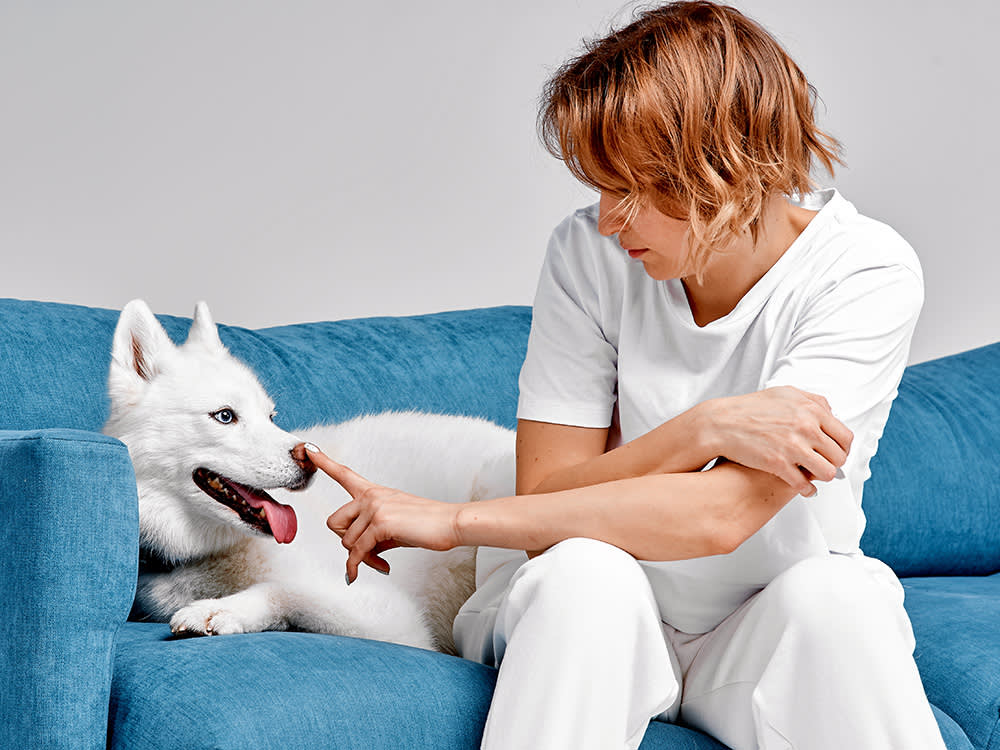
You know the feeling. You’re minding your own business, your dog is minding theirs, and then you catch sight of it: the nose. Wet, glistening, sitting there below those big soft eyes, apparently begging to be tapped. The pressure builds until you have to release it, so you say “boop” in your highest, silliest voice and touch the tip. Sweet relief.
For you. The question nobody stops to ask mid-boop is what the experience is like on the other end, and the honest answer is that you’re poking the most powerful instrument your dog owns.
First, what a boop is
Booping is exactly what it sounds like: lightly tapping or touching the tip of your dog’s nose, usually paired with the word “boop” and an involuntary grin. It’s a genuine gesture of affection and a pressure valve for the overwhelming love a dog inspires. The intent is pure. The target is the problem.
Why the nose is the worst place to pick
Of all the spots on a dog, the nose is arguably the most sensitive, so even gentle contact can register as a lot. Some dogs also carry physical reasons it’s unpleasant, from allergies to old injuries, and a dog with any bad history around its face or muzzle may brace hard against being touched there.
But the deeper reason is what that nose is. A dog’s nose isn’t just a sensitive patch of skin, it’s the front end of a sensory system that dwarfs our own. Depending on the breed, dogs carry somewhere between roughly 125 million and nearly 300 million scent receptors, against about 6 million in humans, and the portion of their brain devoted to processing smell is many times larger than ours in relative terms. Their nostrils even work independently, and the brain stitches the two streams into a single three-dimensional “scent picture,” much the way our brain builds one image from two eyes.
The wet part matters too. That layer of moisture on the nose traps scent particles, sharpening the incoming information. So when you tap it, you’re not tickling a cute button, you’re jostling the lens on a camera that’s actively taking a picture. It’s disorienting in a way that has no real human equivalent, except maybe someone flicking your eye while you’re trying to read.
How to read whether your dog minds
If you’ve booped your dog before, you probably already have your answer, you just have to be honest about it. The tells are in the body language. A dog that’s genuinely fine with it stays loose and leans in or re-approaches after the boop. A dog that dislikes it freezes, stiffens, turns its head or whole body away, backs off, or licks its lips and looks elsewhere. If your dog moves toward the finger, carry on. If it shuts down or turns its back, that’s a clear no, and repeating it anyway has a cost.
That cost is trust. A dog booped over and over despite obvious discomfort can start avoiding the person doing it, growing wary of interaction, even resorting to a snap or a growl, which are self-protective signals, not “bad behavior.” You’re not injuring the dog. You’re quietly chipping at how safe it feels around you, which is a strange price to pay for a two-second bit.
Think of the nose as a working instrument, not a button. You wouldn’t tap someone’s open eye to show affection. The nose is doing similar sensory work for a dog, and a tap lands as a jolt, not a compliment. If your dog leans away, believe them the first time.
Never boop a dog you don’t know
Whatever leeway your own dog gives you, a strange dog gives you none. A dog might tolerate the occasional nose tap from its trusted person and find the identical move from a stranger genuinely threatening. Reaching for an unfamiliar dog’s face is also a fast way to get bitten, and around the muzzle and eyes, a bite can be serious. Flip it around: you’d object to a stranger poking you in a sensitive spot uninvited, and you’d be within your rights to. So would the dog.
Better ways to release the boop energy
If you’re bursting with affection, aim it somewhere your dog actually enjoys. Most dogs love a scratch behind the ears, under the chin, or on the chest. Plenty enjoy a gentle back stroke, a butt scratch, a belly rub if they’re into those, praise, or a small treat. You already know your dog’s favorites, so lead with one of those instead of defaulting to the nose.
And if the urge to boop something becomes unbearable, there’s a foolproof release: point your own finger at your own nose and give it a poke. I can nearly promise you won’t enjoy it, which is the whole lesson in one move. The impulse passes, and your dog’s most important organ gets to keep doing its job in peace.
References
- Craven, B. A., et al. “The fluid dynamics of canine olfaction.” Journal of the Royal Society Interface, summarized in canine olfaction reviews. pmc.ncbi.nlm.nih.gov
- “Canine Olfaction: Physiology, Behavior, and Possibilities for Practical Applications.” PMC (2021). pmc.ncbi.nlm.nih.gov
- ASPCA. “Understanding Dog Body Language.” aspca.org
Dr. Park is a board-certified emergency and critical care specialist. She reviews our health and safety content for clinical accuracy and contributes guides on recognising urgent conditions. Her focus is helping owners act quickly and correctly when it matters most.
Meet our experts ↗Keep reading
 TrainingIt's Not Why Your Dog Licks Your Legs. It's How Long.Dr. Mara Chen · 7 min
 TrainingThe Dog Park Sells Socialization. It Often Delivers the Opposite.Dr. Nina Kohl · 7 min
 Health & WellnessPaw Chewing Is a Loop, Not a Habit. Breaking It Takes Two Moves.Dr. Amara Solis · 8 min
 TrainingYour Dog's Sad Face Is a Muscle Wolves Don't Have. It Evolved to Work on You.Dr. Ravi Mehta · 8 min
 LivingA Wolfdog Is Not a Fluffier Husky. Nobody Can Tell You What You Actually Own.Dr. Ravi Mehta · 8 min
 TrainingYour Dog Licking Itself Is Normal. Until One Spot Becomes a Full-Time Job.Dr. Amara Solis · 7 min