


Your Cat Snubbing a Toy Is Data. Here's How to Read It
A cat ignoring the felt mouse isn't being fussy. They're telling you what kind of prey they're wired to hunt. Learn to read the snub and match the toy to your cat's inner hunter.

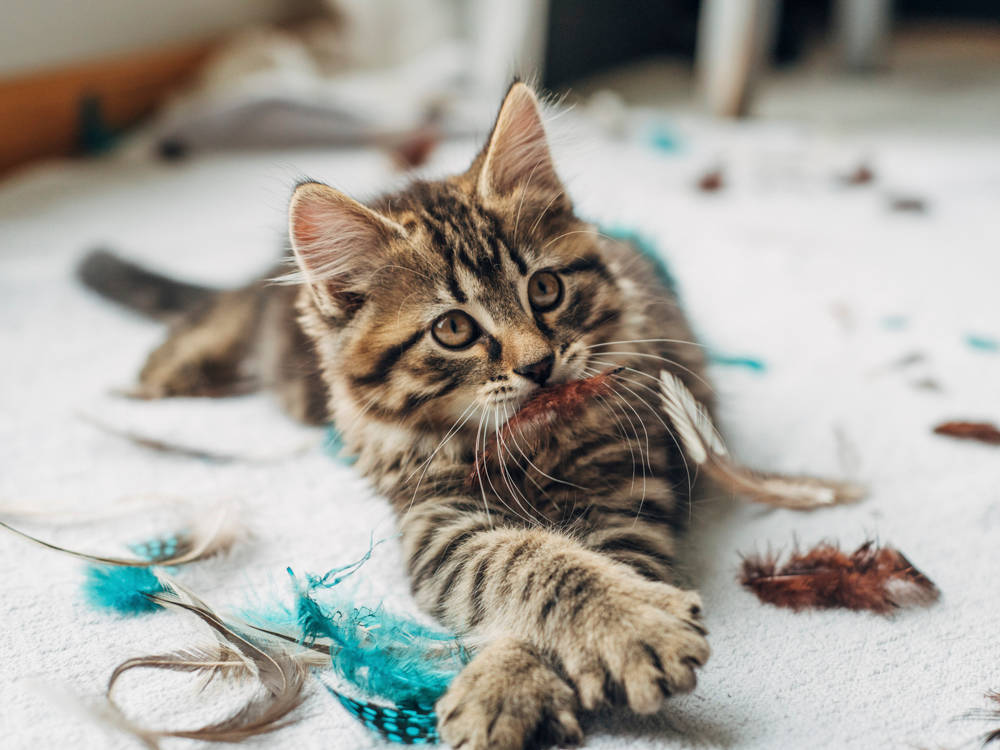
You hand your cat a perfectly nice felt mouse and get a look that suggests you’ve insulted several generations of their family. Ten minutes later they ambush a feather lure like it owes them rent. The usual explanation is that cats are picky. That’s the wrong word, and it sends you shopping in the wrong direction.
Here’s the reframe worth adopting: a toy your cat ignores is not a failure, it’s information. Every snub and every pounce is your cat telling you what kind of prey their particular hunting brain is tuned to. Learn to read that, and you stop buying random toys and hoping. You start buying the ones your specific cat is built to love.
Play isn’t a hobby, it’s hunting with the volume down
To read the signal, you have to know what the toy is standing in for. House cats don’t need to catch dinner anymore, but the machinery to do it never switched off.
Every cat carries the full drive to hunt, and play is just that drive pointed at a toy instead of prey. So when a toy leaves your cat cold, it usually isn’t pickiness. The toy failed to look, move, or sound enough like prey to trip the instinct. Read it that way and the snub becomes useful.
That single shift explains the felt-mouse problem instantly. A felt mouse just lies there.
“A motionless toy gives the predator brain nothing to lock onto,” Dr. Park explains. “Felt mice are inanimate, essentially already caught. A kitten or an especially playful cat might bat one for a minute, but most cats file it under ‘dead’ and lose interest fast.”
Cats specialize: figure out your cat’s prey type
Here’s the piece most toy-buying advice skips. Wild cats don’t hunt one generic “prey.” Individual cats develop preferences, a leaning toward birds, or ground animals like mice, or insects, and researchers who study indoor enrichment treat identifying a cat’s prey preference as the key to unlocking play. Your cat’s toy reactions are the cheapest prey-preference test there is. Watch which of these lights them up:
- The bird hunter. Lights up for things that move through the air: feather wands, toys that flutter, dart, and swoop above their head, anything that flies erratically and then “lands.” If your cat leaps and bats upward, buy for the sky.
- The ground hunter. Locks onto things that skitter along the floor: small furry toys dragged low, a mouse-shaped toy on a string, motion close to the ground. If your cat crouches, wiggles, and pounces down and forward, buy for the floor.
- The bug hunter. Fixates on tiny, fast, twitchy movement: a string flicked in short jerks, small toys that vibrate or scuttle, quick erratic motion. If your cat’s pupils blow wide at little quick things, buy small and jittery.
Most cats have a dominant lean and a secondary one, and the point is to stop fighting it. A dedicated bird hunter will keep ignoring the mouse on the floor no matter how nice it is, and that’s not stubbornness, it’s specialization.
The three levers that actually trigger a cat
Once you know the prey type, three properties decide whether any given toy works:
Movement. This is the big one. Most cats respond far better to interactive toys and wand toys you control, because you can make them dart and pause the way real prey does. A toy that only moves when your cat moves it, and then goes limp, reads as dead. You bring the life.
Texture and shape. Fur, feathers, a tail, a silhouette that suggests a bird or a mouse, these cues matter. “Anything with plumage, a pelt-like feel, or a prey silhouette speaks the cat’s native language,” Dr. Park notes.
Sound. Nearly every cat perks up at the right noise. “Rustling sounds and small movements are powerful triggers, and they often kick off stalking,” she says. One caution: some battery-powered toys are clunky or loud, and a toy that startles a cat gets avoided, not chased. Loud is not the same as engaging.
When the snub is about the cat, not the toy
Sometimes the toy is fine and the cat has simply changed. Age, health, energy level, and plain personality all shape play. An older, lower-energy, or arthritic cat is unlikely to launch after a high, fast feather wand, and pushing a young-cat toy on a senior reads as another “no.” Match the intensity to the animal in front of you, not the kitten they used to be. And respect genuine preference. As Dr. Park puts it, cats really do have favorite kinds of toys, and those preferences are worth honoring rather than overriding.
And then there’s the cat who prefers a cardboard tube
Some cats skip the toy aisle entirely for paper balls and toilet paper rolls, neither designed for cats, both clearly superior in their expert opinion. If yours will never become a fan of the motorized fish, take the win, trim the budget, and upcycle a cardboard tube. Or cheat a little: sprinkle catnip on, or tuck it inside, a toy you’re not ready to give up on. The catnip can override a lukewarm response and give a “dead” toy just enough interest to matter.
The through-line is simple. Stop reading rejection as fussiness. Read it as your cat handing you their hunting profile, then shop that profile.
References
Dr. Park is a board-certified emergency and critical care specialist. She reviews our health and safety content for clinical accuracy and contributes guides on recognising urgent conditions. Her focus is helping owners act quickly and correctly when it matters most.
Meet our experts ↗Keep reading
 TrainingYour Cat Keeps a Separate Setting for Every Person. Men Get the Loud OneDr. Mara Chen · 4 min
 TrainingYour Cat Isn't Kissing You. Watch What Happens Three Seconds Later.Dr. Mara Chen · 7 min
 TrainingYour Cat Notices the Suitcase. Here's What They Actually Feel.Dr. Nina Kohl · 5 min
 TrainingYour Cat Isn't Seeing Ghosts. They're Seeing What You Can't.Nina Vasquez · 5 min
 TrainingYour Cat Keeps Running Off. The Fix Is to Chase LessLeila Torres · 8 min
 TrainingThat Exposed Belly Is Not an Invitation. It's a Chemical Weapon.Dr. Amara Solis · 8 min