


Nobody Designed Your Mutt. That's Their Superpower.
Purebred dogs are engineered for a look. Mixed-breed dogs are assembled by chance, and that randomness quietly hands them some real advantages, from a deeper gene pool to a personality that's genuinely one of a kind. Eight honest reasons to adopt a mutt.
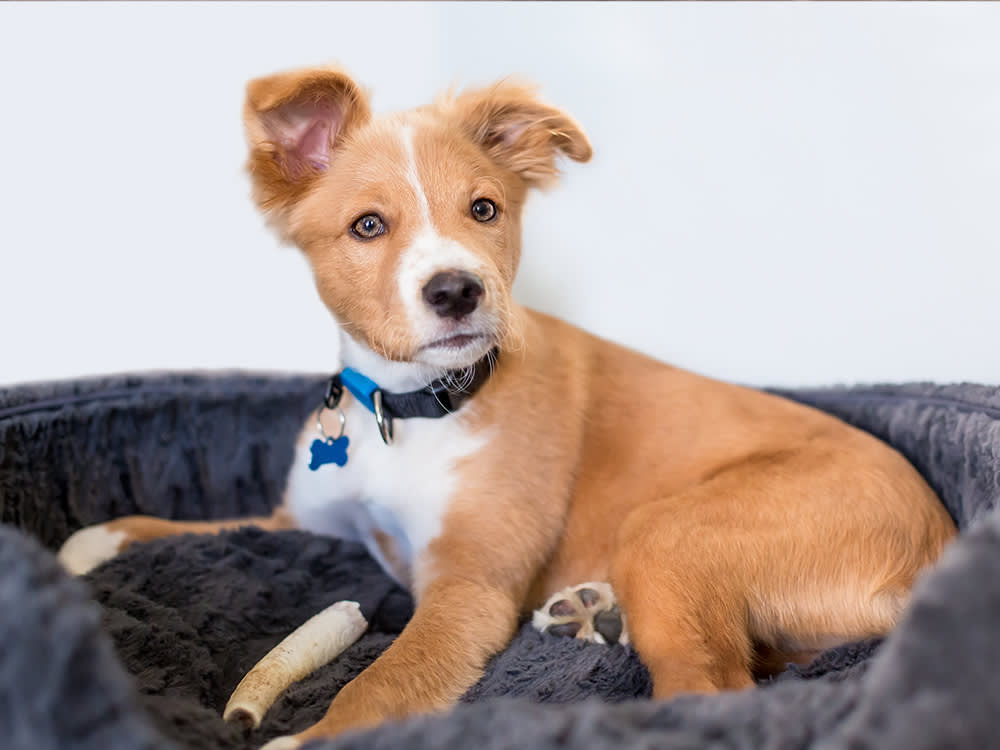
A purebred dog is a design brief. Someone decided, generations ago, exactly what that dog should look like and do, and then bred toward it, narrowing the gene pool a little more with every litter to lock the look in place. A mutt is the opposite. Nobody drew up a spec. Their DNA is a shuffle of whoever happened to meet whom, and that lack of a plan, the thing that makes their history a mystery, is exactly where their advantages come from.
We tend to talk about adopting a mixed-breed dog as the charitable choice, the slightly lesser option you feel good about. It’s the other way around. The randomness is a feature. Here are eight reasons the un-designed dog is often the better dog, with the honest caveats where they belong.
1. A wider gene pool can mean fewer built-in problems
When you breed for a narrow standard, you also concentrate whatever genetic faults ride along with it. That’s why so many purebreds come with a predictable list of breed-specific troubles: certain cancers, hip and knee problems, spinal disease, heart conditions. A mutt draws from a broader mix, so they are statistically less likely to inherit any single breed’s signature flaw. This isn’t a health guarantee, and mixed-breed dogs still get sick, so keep up with vet visits. But as a starting hand, a wider genetic deal tends to be a sturdier one.
2. That diversity often buys extra years
Genetic variety doesn’t just dodge specific diseases, it seems to add time. Large analyses of pet records have found mixed-breed dogs living, on average, a bit longer than purebreds, with a survival edge measured in months to a year or more depending on the population studied. When you adopt a mutt, the odds lean gently toward more years with your best friend, which is the only dividend anyone actually wants.
3. You adopt one dog and free up room for another
This is the quiet math of rescue. Every mutt who leaves a shelter for your couch also opens the kennel behind them for the next dog to be pulled in and cared for. With millions of dogs entering shelters every year in the U.S. alone, that ripple is real: one adoption, two lives changed. It also shifts a little demand away from puppy mills, which stay in business only as long as buying stays more popular than adopting.
4. It costs a fraction of a breeder price, with the essentials done
A purebred puppy from a breeder can run into the thousands. A shelter adoption fee usually lands somewhere between $100 and $500, and that number typically already includes the vaccinations, the microchip, and the spay or neuter surgery you would otherwise pay for separately. Time it right and it can be free: shelters around the country run fee-waived adoption events throughout the year, often under the “Clear the Shelters” banner, when the whole cost drops to zero.
5. They’re often the more adaptable student
Purebreds were frequently bred to be very good at one job, which can mean a nervous system tuned to extremes: the herder who must chase, the terrier who must dig, the hound who must follow a nose off a cliff. A mutt is less likely to be a specialist, which in day-to-day life reads as flexibility. They tend not to fixate as hard on one hardwired behavior, and many pick up cues, from a basic “shake” to genuinely advanced work, without a breed’s built-in obsession fighting you. Mixed breeds serve as service dogs and police dogs all the time, so “just a mutt” has never meant “less capable.”
6. No two of them exist
The varied lineage that makes a mutt healthy also makes them unrepeatable. Their ears, their coat, the specific way their personality is wired, none of it was mass-produced, and you will never meet the exact same dog twice. A purebred is, by design, one of many built to match. A mutt is a genuine original, and there is a particular joy in loving a dog nobody could special-order.
7. The looks are half the fun
Let’s be honest, the combinations are delightful. A Golden Retriever crossed with a Dachshund, a Corgi with a Husky’s mask, a face that seems to be arguing with itself. Part of the pleasure is the vocabulary alone, the Chiweenies and Morkies and Aussiedoodles of the world. When someone stops you on the sidewalk to ask “what is he?”, the honest answer, “we’re not totally sure,” is usually the start of a better conversation than any breed name.
8. The bond has a particular depth
Every dog is a loyal dog, so take this one as affection rather than science. Still, people who adopt from shelters describe a specific kind of attachment, a sense that the dog understood the assignment. Whether or not a rescue dog “knows” they were rescued, the relationship you build from that first uncertain walk around the block tends to run deep, and it’s the part no pedigree can print on a certificate.
What newer research adds
The “mutts are just healthier” line is mostly true, but the science is more interesting than the bumper sticker, and it’s worth knowing where the edges are. The longevity and health advantages show up clearly in big datasets, yet researchers stress they depend heavily on which breeds are common in a given place and how inbred those purebred lines are. Where a purebred population is large and carefully bred, the gap narrows.
There’s also a wrinkle for the doodle era. The benefit scientists call “hybrid vigor” is strongest in a true first cross, the immediate mix of two unrelated lines. Breed two designer crossbreeds together for a few generations and the inbreeding creeps back in, and studies of popular crosses like Labradoodles and cockapoos have found their overall health looks a lot like their purebred parents’. In other words, the magic isn’t the trendy label, it’s the genuine genetic distance, which a shelter mutt of unknown, wildly mixed origins usually has in spades.
“I tell people not to treat a mixed-breed background as a health guarantee, because it isn’t one, but the general principle holds up,” says Dr. Mara Chen. “A dog assembled from a broad, genuinely varied gene pool is simply playing with a stronger deck. You still screen, you still keep up with wellness care, but you’re often starting from a healthier baseline than a heavily line-bred purebred, and that’s a real head start.”
The un-designed dog, it turns out, was onto something. Nobody planned them, nobody optimized them for a ribbon, and that’s precisely why they so often end up being exactly the dog you needed.
References
- Bellumori, Thomas P., et al. “Prevalence of Inherited Disorders among Mixed-Breed and Purebred Dogs.” Journal of the American Veterinary Medical Association, vol. 242, no. 11, 2013, pp. 1549–1555, avmajournals.avma.org.
- Kraus, Cornelia, et al. “The size–life span trade-off decomposed: why large dogs die young.” The American Naturalist, 2013, journals.uchicago.edu.
- McMillan, Kirsten M., et al. “Longevity of companion dog breeds: those at risk from early death.” Scientific Reports, vol. 14, 2024, nature.com.
- The Animal Medical Center. “Are Mutts Really Healthier than Purebred Dogs? The Science Behind Hybrid Vigor.” 2025, amcny.org.
Nina Vasquez writes about life at home with pets and the relationships at the heart of it. Her work covers day-to-day living, people-and-pet stories, and the products that fit into a real household, with a warm, grounded take on everyday pet ownership.
Meet our experts ↗Keep reading
 LivingThe 'Best Family Dog Breed' Is a Myth. Here's What Actually Predicts a Great OneClaire Sutton · 6 min
 LivingMissouri Tops the 'Horrible Hundred' for a 14th Year. The 2026 Report Is Grim.Nina Vasquez · 6 min
 LivingYou Want a Lapdog, Your Partner Wants a Mount. The Dog You Fight Over Is Rarely the One You GetLeila Torres · 8 min
 LivingThe Artist Who Couldn't Draw Herself Found a Workaround: an 8-Pound ChihuahuaLeila Torres · 5 min
 LivingSome States Once Banned Black Families From Owning Dogs. A Yale Scholar on Why That Still Echoes.Leila Torres · 6 min
 LivingThis Illustrator Doesn't Draw Pets. She Draws Familiars.Leila Torres · 7 min