


Before You Panic About a Gagging Cat, Figure Out If It's Even Gagging
Gagging, coughing, and vomiting look alike and mean very different things. Learn to tell them apart first, then the real causes of feline gagging and the exact signs that turn it from a shrug into a vet trip.


The sound is unmistakable and awful: a horrible retching from the next room that sends you running. But before the panic takes over, the most useful thing you can do is answer a narrower question than “why is my cat gagging?” It is “is this actually gagging, or is it coughing or vomiting?” Those three look and sound alike to a worried owner, they have almost entirely different causes, and they carry very different levels of urgency. Sort that out first, and the rest of this gets much simpler.
Step 1: Gagging, coughing, or vomiting?
| What you see | Where it comes from | What comes up | Typical posture |
|---|---|---|---|
| Gagging | Throat and mouth (a retch or heave) | Often a hairball, sometimes nothing | Head lowered, neck extended, tongue out |
| Coughing | Chest and airways (a sharp expulsion of air) | Nothing | Crouched low, elbows out, neck stretched forward |
| Vomiting | Stomach (active abdominal heaving) | Food, bile, or fluid | Braced, belly pumping |
The distinction matters because coughing points toward the lungs and heart (asthma, bronchitis, heart disease, parasites), gagging points toward the mouth, throat, and upper GI tract, and vomiting points toward the stomach and beyond. Cats are notorious for refusing to perform the worrying behavior once they reach the clinic, so record it on your phone. A ten-second video of the episode, showing the posture and whether anything comes up, is genuinely the most helpful diagnostic aid you can hand your vet.
Step 2: The real causes of gagging
Once you are confident it is gagging, here is what is usually behind it, roughly from most to least common.
Hairballs. The classic. Cats swallow loose fur while grooming; most passes through, but some wads into a ball the cat gags up (and you locate later with a bare foot). More common in longhaired cats and in cats with intestinal issues like inflammatory bowel disease. Regular brushing cuts down the fur they swallow. If your cat grooms excessively, ask your vet to rule out a skin problem, because over-grooming often has an itchy or anxious cause.
Eating too much, too fast. The cat that harasses you for food, inhales it, then hacks it back up. Wolfing triggers gagging, regurgitation, and vomiting. Slow-feeder bowls, puzzle feeders, or smaller, more frequent meals fix many of these cats. If a cat is territorial around other pets, a private feeding spot eases the mealtime tension driving it.
Oral irritation. Severe dental disease causes pain, gum swelling, mouth ulcers, and discharge below the gumline, all of which make eating uncomfortable and can trigger gagging and drooling. Licking or chewing caustic substances (cleaning chemicals, irritating houseplants) does the same and can inflame the esophagus.
A nasopharyngeal polyp. A benign mass in the middle ear or the back of the throat. As it grows into the nasopharynx, it can cause nasal discharge, sneezing, gagging, and trouble swallowing. Removal under sedation or anesthesia usually brings fast relief.
Swallowed foreign material. This is the one to take seriously. Cats go after stringy things (thread, floss, tinsel, yarn), and these can cause a linear foreign body, where a string anchors somewhere in the GI tract while the intestines bunch up around it. It is a surgical emergency. If you see string trailing from your cat’s mouth or rear, do not pull it. Get to a vet.
Nausea. A vague but real cause that can also make a cat drool or refuse food, driven by anything from dietary indiscretion to organ disease or infection.
Step 3: The when-to-call-the-vet threshold
This is the part worth keeping on the fridge. An occasional hairball is not an emergency. Move fast if the gagging comes with any of the following:
- Open-mouth or labored breathing, or panting at rest. This suggests the airway or lungs, not a hairball, and needs same-day care.
- Repeated unproductive retching (heaving over and over with nothing coming up).
- Visible string at the mouth or anus, or a known swallowed object.
- Cannot swallow, heavy drooling, or pawing at the mouth, which can mean an oral obstruction or injury.
- Weakness, collapse, or pale or bluish gums.
- Hairballs more than once or twice a month, or gagging paired with appetite loss, weight loss, vomiting, constipation, or lethargy.
When a cat comes in for gagging, my first job is to figure out which system we are actually dealing with, because “gagging” from an owner might turn out to be a cough from asthma or a regurgitation from an esophageal problem. I want to look deep in the mouth for dental disease, foreign objects, or polyps, which often means brief sedation, and I frequently take chest and abdominal radiographs and run blood work. The cause can be as minor as a hairball or as serious as a linear foreign body that needs surgery, so a proper look is always worth it. And bring the video. It saves us both a lot of guessing.
What has improved recently
Care for the conditions behind chronic gagging keeps getting better. Full-mouth dental radiographs are now more routine in general practice, catching the painful dental disease that drives some gagging and would otherwise stay hidden below the gumline. And for cats whose real problem turns out to be asthma or bronchitis masquerading as hairball gagging, feline-specific inhaler chambers have become a standard, well-tolerated way to deliver medication at home, sparing many cats repeated oral dosing.
References
Common questions
When is a gagging cat an emergency?
Treat it as urgent if your cat is gagging with open-mouth or labored breathing, is retching repeatedly without producing anything, has swallowed or is trailing string, cannot swallow or is drooling heavily, or seems weak, collapsed, or blue-gummed. These point to obstruction or a breathing problem, not a hairball.
How often is too often for hairballs?
More than once or twice a month is worth a vet conversation, especially if it comes with appetite loss, vomiting, constipation, or lethargy. Frequent hairballs can signal over-grooming, a skin problem, or gastrointestinal disease rather than just long fur.
Not a substitute for your vet. Our guidance is educational. For urgent symptoms, contact a vet or emergency clinic right away. Editorial standards
Dr. Nair is a veterinarian focused on diet and feeding. She covers everyday nutrition, treats, and the many "can they eat this?" questions owners ask, grounding each answer in what is actually safe and sensible for dogs and cats.
Meet our experts ↗Keep reading
 Health & WellnessAn Actor Said Steroids Made His Cat 'Jacked.' It Explains the Most Misunderstood Drug in the CabinetDr. Nina Kohl · 6 min
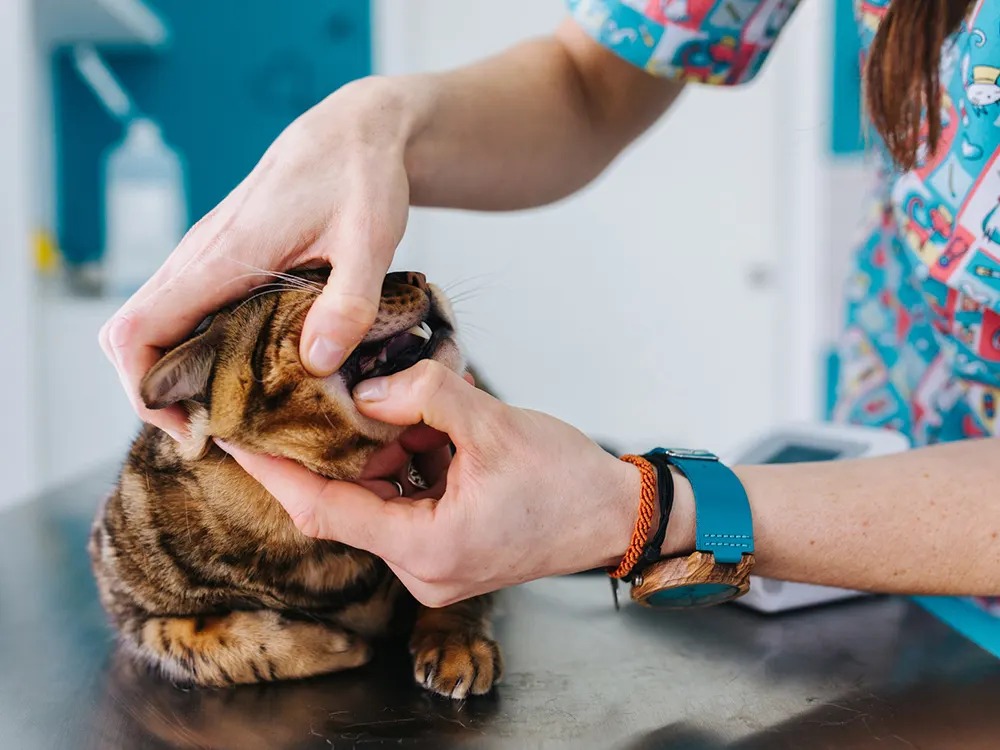 Health & WellnessThat Sore in Your Cat's Mouth Isn't Nothing. Here's How to Read ItDr. Ravi Mehta · 6 min
 Health & WellnessYour Cat's Tears Are a Symptom, Not a MoodDr. Lena Park · 7 min
 Health & WellnessIf Your Kitten Hasn't Pooped in 48 Hours, Treat It as an EmergencyDr. Lena Park · 6 min
 Health & WellnessWet Food Rarely Gives a Cat Diarrhea. The Way You Switched It Usually DoesDr. Mara Chen · 9 min
 FoodHigh-Calorie Cat Food Isn't an Upgrade. It's a Prescription.Dr. Lena Park · 6 min