


That Sore in Your Cat's Mouth Isn't Nothing. Here's How to Read It
A sore in your cat's mouth can be a bad tooth, an immune flare, or something serious. Learn what mouth ulcers in cats look like, what causes them, and when to move fast.

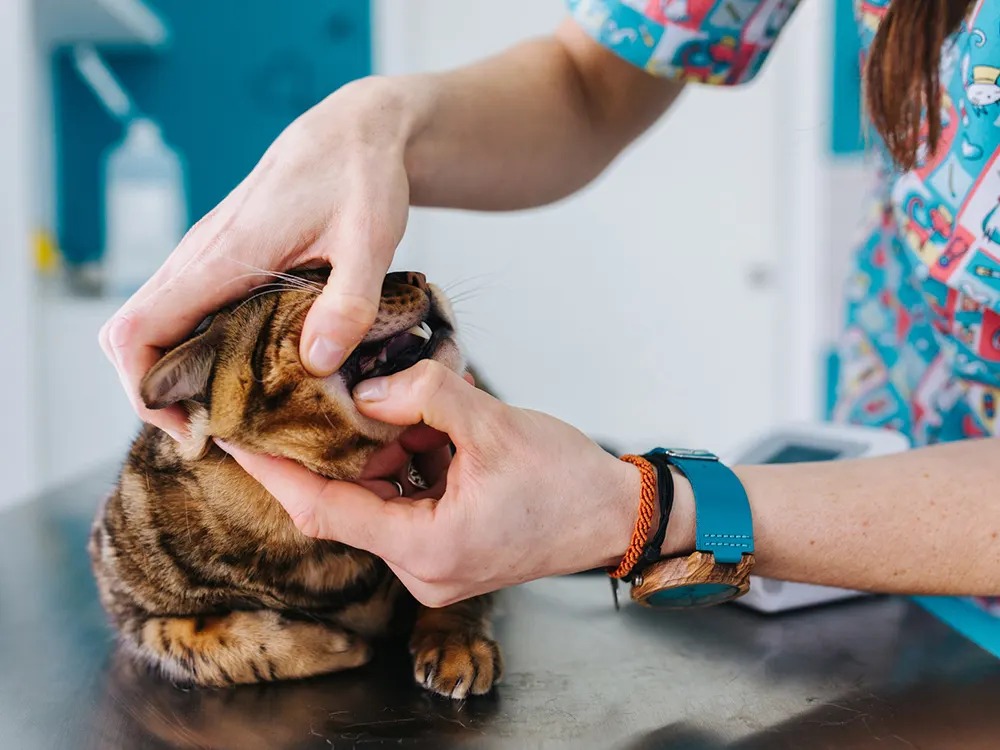
Most of us never look inside our cat’s mouth, and most cats would like to keep it that way. So a sore in there usually announces itself another way: breath that suddenly turns rancid, a cat that eats on one side or drops food, or a strange raw patch you glimpse mid-yawn. The instinct is to wait and see. With mouth ulcers, that instinct is the problem.
Here is the through-line for this whole piece: a mouth ulcer is a symptom, not a diagnosis. The same raw spot can come from a bad tooth, an immune system attacking the mouth, a virus, a kidney in trouble, or a tumor. Those causes could not be more different in how urgent they are, and you cannot tell them apart by looking. What you can do is learn to spot an ulcer early and take it seriously, because the cheapest version of almost every one of these problems is the one you catch first.
What an ulcer actually is
An ulcer is a break in the surface, whether that is skin or the moist lining of the mouth, where the normal top layer of tissue has been lost. The surface breaks down, and a small patch of tissue in that spot dies off. In a cat’s mouth, the three causes that account for most ulcers are dental disease, oral inflammation, and cancer. Everything else is less common, but worth knowing about, because a few of the rarer causes are the dangerous ones.
The signs, before you ever see the sore
Cats are experts at hiding pain, so the ulcer itself is often the last thing you notice. The earlier clues live in behavior. Watch for bad breath that is worse or different than usual, pawing at the mouth, eating more slowly or carefully than normal, or a cat who approaches the bowl hungry and then backs off. Drooling, especially drool tinged with blood, is a louder signal. So is weight loss, or a formerly fastidious cat who suddenly looks unkempt because grooming has started to hurt.
The tell I trust most is a cat who wants to eat but cannot commit to it. They come to the bowl, take a bite, and flinch away. That gap between appetite and action is mouth pain until proven otherwise, and it is worth a same-week appointment rather than a wait-and-see.
Some cats show nothing at all until the problem is advanced. That is not a reason to panic at every yawn, but it is a reason to make a real oral look part of your annual vet visit rather than something you only do in a crisis.
The common, non-cancerous causes
Dental disease is the top cause of oral ulcers in cats, full stop. Severe gingivitis can leave the gums inflamed and ulcerated, and plaque-covered teeth can press against the tongue or gums to create raw kissing lesions. A full dental evaluation and cleaning, plus ongoing home dental care, usually resolves these.
Feline caudal stomatitis (FCS) is its own beast. It causes widespread inflammation and painful ulcers throughout the mouth, and unlike ordinary dental disease it extends well beyond the tissue that touches the teeth. The cause is not fully understood; it may be an overzealous immune response to oral bacteria, to the viruses behind upper respiratory infections, or to feline leukemia or feline immunodeficiency virus (FeLV/FIV). When viral testing does not explain it, the most reliable fix is surgical: removing all or most of the teeth, and some of the surrounding bone. That sounds drastic, and it is a big surgery, but it can spare a cat a lifetime of chronic pain. Cats who cannot have the surgery, or who do not fully respond, may need lifelong medication to suppress the immune response.
The less common non-cancerous causes are worth a mention because they look alarming or hide something systemic. An eosinophilic granuloma, sometimes called a rodent ulcer, is an inappropriate allergic response that shows up as a raised, yellow-pink mass on the lip or in the mouth. Nastier strains of calicivirus can cause painful oral ulcers alongside respiratory signs. Licking caustic substances, like household cleaners, can burn ulcers into the tongue and gums. And cats with severe kidney disease can develop uremic ulcers in the mouth, which means the sore in the mouth is really a flag for a much larger problem.
The cancerous causes, and why speed matters
Squamous cell carcinoma (SCC) is the most common oral tumor in cats, turning up in roughly 75 percent of oral growths that get investigated. It tends to appear at the base of the tongue or along the gum margin, though it can show up anywhere in the mouth, usually as a large ulcerated mass. These tumors spread readily to the lymph nodes or lungs. The hard truth is that the local damage, the difficulty eating, drinking, and breathing, often wrecks a cat’s quality of life before the spread does. Surgery offers the best shot at a definitive cure, but it must be approached carefully, because cats tolerate facial-bone surgery poorly and often need feeding tubes and extended supportive care afterward. Even so, fewer than 10 percent of cats survive a year after an SCC diagnosis.
The other common oral cancer, fibrosarcoma, tends to form smoother, less ulcerated masses. It still calls for aggressive surgery that removes bone, but the long-term outlook is generally better than for SCC.
The reason to move quickly on any non-healing sore is not that most of them are cancer. Most are not. It is that the treatable causes get cheaper and kinder the earlier you catch them, and the serious ones get their best odds the same way.
What to actually do
If you see an ulcer, or your cat is showing the behavioral signs above, book a veterinary exam rather than watching it for weeks. Your vet may need to sedate your cat to examine the mouth fully and to take samples from any lesion, because a raw spot from a bad tooth and a raw spot from a tumor can look identical to the naked eye. Treatment then follows the cause, whether that is a dental cleaning, extractions, medication, or a cancer workup. A real diagnosis is the whole game here.
What newer research adds
Two developments are worth knowing if your cat is facing stomatitis. First, the numbers behind full-mouth extraction are more encouraging than the “remove all the teeth” description makes it sound. In one of the larger studies, following extraction about 39 percent of cats had substantial improvement and another 28 percent had complete resolution, meaning roughly two-thirds got a genuinely good outcome, though many of those needed a stretch of additional medication to get there. Catching stomatitis and treating it surgically earlier, rather than managing it with medication for years first, is linked to better results.
Second, for the stubborn cases that do not respond to extraction, researchers have been studying stem cell therapy using the cat’s own fat-derived cells, and early trials have shown meaningful improvement in a portion of these hard-to-treat cats. It is not a routine first-line treatment, but if your cat has refractory stomatitis, it is a real avenue worth asking a veterinary dentist about.
Frequently asked questions
Are mouth ulcers in cats an emergency? Not usually in the first hour, but they are always a reason to book a vet visit soon. A cat that has stopped eating, is drooling blood, or cannot swallow needs to be seen quickly, because that combination points to pain severe enough to threaten hydration and nutrition.
Can a bad tooth really cause an ulcer? Yes. Dental disease is the single most common cause of mouth ulcers in cats. Plaque-covered teeth can rub against the gums or tongue and create raw, ulcerated spots called kissing lesions, which often heal once the underlying dental problem is treated.
Is a mouth ulcer a sign of cancer in cats? It can be, which is exactly why a sore that does not heal deserves a look. Squamous cell carcinoma is the most common oral cancer in cats and often shows up as an ulcerated mass. Most mouth ulcers are not cancer, but only a vet exam and sometimes a biopsy can tell the difference.
References
- Jennings, Michelle W., et al. “Effect of tooth extraction on stomatitis in cats: 95 cases (2000–2013).” Journal of the American Veterinary Medical Association, vol. 246, no. 6, 2015, pp. 654–660. https://pubmed.ncbi.nlm.nih.gov/25719848/
- Bilgic, O., et al. “Feline Oral Squamous Cell Carcinoma: Clinical Manifestations and Literature Review.” Journal of Veterinary Dentistry, vol. 32, no. 1, 2015. https://pubmed.ncbi.nlm.nih.gov/26197688/
- Arzi, B., et al. “Therapeutic Efficacy of Fresh, Autologous Mesenchymal Stem Cells for Severe Refractory Feline Chronic Gingivostomatitis.” Stem Cells Translational Medicine, 2016. https://www.ncbi.nlm.nih.gov/pmc/articles/PMC4835245/
- American Veterinary Dental College. “Feline Stomatitis.” https://afd.avdc.org/feline-stomatitis/
Not a substitute for your vet. Our guidance is educational. For urgent symptoms, contact a vet or emergency clinic right away. Editorial standards
Dr. Mehta is a board-certified veterinary nutritionist who evaluates pet food formulations, ingredient quality, and the science behind dietary trends. He writes and reviews all nutrition content at The Pet Times, including our food rankings and feeding guides.
Meet our experts ↗Keep reading
 First DaysYour Kitten Is Losing Teeth Right Now and You'll Probably Never See It HappenDr. Priya Nair · 6 min
 Health & WellnessYour Cat's Bad Tooth Doesn't Stay in the MouthDr. Amara Solis · 6 min
 Health & WellnessMost Cats Have Dental Disease by Age Three. The Realistic Home Routine, RankedDr. Mara Chen · 6 min
 Health & WellnessThat Weird Jaw Jitter? Your Cat Is Hunting an Animal They'll Never Catch.Dr. Lena Park · 5 min
 Health & WellnessBrushing a Cat's Teeth Sounds Impossible. The Trick Is to Not Brush at FirstDr. Mara Chen · 9 min
 Health & WellnessYour Cat Needs the Vet More Than Once a YearDr. Lena Park · 7 min