


Your Cat's Bad Tooth Doesn't Stay in the Mouth
More than half of cats over three have dental disease, and the infection rarely stops at the gums. Here is why feline dental care is really whole-body care, and what actually prevents the damage.

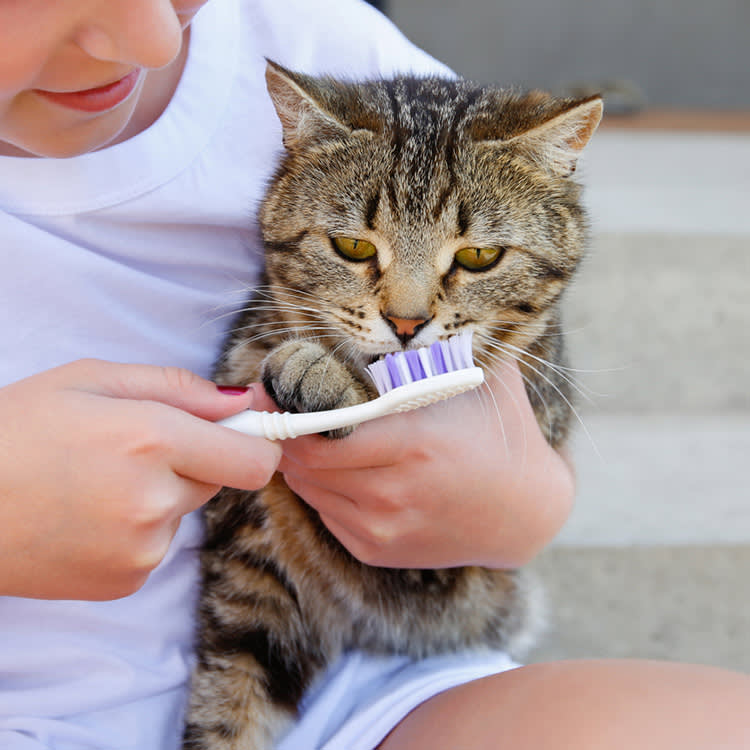
We tend to think of a cat’s teeth as low-maintenance. They are not chewing sugary snacks, they are not grinding down decades of wear like ours, so it is easy to assume their mouths quietly take care of themselves. They do not. And the reason to care is bigger than bad breath or a sore gum. A diseased tooth is not a local problem. It is an open door.
That is the framing worth holding onto: the mouth is the on-ramp. Chronic infection and inflammation that start with the teeth and gums do not politely stay put. They can travel, and where they go is the part most people never hear about until it is late.
Owners hear ‘dental’ and picture a cosmetic fix, a whiter smile. The truth is that a mouth full of chronic infection is a slow drip of bacteria and inflammation into the rest of the body. When I push cats toward dental care, I am not thinking about their teeth. I am thinking about their kidneys and their heart.
How common this actually is
Dental disease in cats is not an edge case; it is closer to the default. More than half of cats over three years old already show signs of it, and it can appear surprisingly young. The most common problems are feline tooth resorption, a progressive breakdown and loss of the tooth itself, along with periodontal disease, inflammatory conditions, fractured teeth, and oral masses. Cats being cats, they hide all of it well.
Why “it stays in the mouth” is the dangerous myth
Left alone, diseased teeth keep hurting and keep causing trouble, and the trouble does not respect boundaries. Chronic, untreated dental disease can extend infection and inflammation beyond the mouth into other body systems, including the heart, kidneys, and liver. That is the whole argument for taking this seriously. A rotten tooth is uncomfortable on its own, but it is also a source of bacteria with somewhere to go.
This is the part that reframes the whole subject. Feeding, litter habits, weight, and mood all get careful attention from good cat owners. The mouth deserves the same watchfulness, because it is quietly connected to the systems you are already worried about.
What genuinely prevents the damage
The most effective move is also the least dramatic: professional cleanings done before anything looks wrong. The old approach was to wait until teeth “looked dirty” and then act. Current thinking flips that, because the full extent of feline dental disease only becomes visible with dental X-rays taken under anesthesia. By the time the surface looks bad, the story under the gumline is often further along. Costs for cleanings vary by location, so that is a conversation to have with your own vet.
At home, the supporting cast helps too. Brushing with a toothpaste made specifically for cats is the gold standard, paired with dental treats and toys that cut down on plaque and tartar, and a balanced diet that supports oral health.
And if your cat would sooner leap into a cold bath than tolerate a toothbrush, you are not out of options. Daily maintenance products your vet recommends, from oral supplements to water additives, can do real work for the many cats who treat a toothbrush as a personal insult.
When a tooth has to come out
Extraction should be a last resort, not a first move. But when a tooth genuinely needs to go, pulling it can be a turning point for a cat. Plenty of cats hurt less and eat with more enthusiasm within days of the procedure, and owners frequently describe a pet that comes back out of its shell, playing again and seeking out company once the constant pain is gone. Even cats with severe oral disease tend to do exceptionally well long term, including those left with few or no teeth.
Which raises the question that worries people most: how will a toothless cat eat? Surprisingly well. Cats swallow much of their food with minimal chewing in the first place, and their teeth are built more for catching and holding prey than for grinding. Strong, agile tongues move food to the back of the mouth, the stomach handles the breakdown, and the gums toughen over time. Plenty of cats happily eat dry kibble after their extraction sites have healed.
The reason to stop waiting
The instinct that makes cats such good survivors, hiding weakness, is exactly what lets dental disease run unchecked. A cat will keep eating and acting normal through significant mouth pain, and it is often only after the problem is fixed that owners realize how much discomfort their cat had been carrying. That is the trap. “My cat is eating fine” is not evidence of a healthy mouth.
So the bottom line is a simple change of habit: do not wait for a visible problem, and do not wait for your cat to tell you, because they are wired not to. Build routine dental checks into your cat’s care the way you would vaccines or weight monitoring. You are not fussing over their smile. You may be adding years of comfort, and the mouth is only where it starts.
This article is for general education and is not a substitute for advice from your veterinarian.
Common questions
Can a cat live a normal life without teeth?
Yes, and often a better one. Cats swallow most of their food with little chewing, and many eat comfortably, including dry food, after extractions heal. Owners frequently report their cat becomes more playful and social once the painful teeth are gone.
My cat is still eating fine. Doesn't that mean the teeth are okay?
Not necessarily. Cats instinctively hide pain and will keep eating through significant dental disease. A normal appetite is not proof of a healthy mouth, which is why routine dental checks matter more than waiting for your cat to act sick.
Not a substitute for your vet. Our guidance is educational. For urgent symptoms, contact a vet or emergency clinic right away. Editorial standards
Dr. Solis is a board-certified veterinary dermatologist with over twelve years of clinical experience. She advises on skin conditions, allergies, and grooming practices that affect coat and skin health. All dermatology and allergy content at The Pet Times is reviewed by her team before publication.
Meet our experts ↗Keep reading
 Health & WellnessYour Cat's Drool Is Only Cute If Your Hand Is on ThemDr. Lena Park · 8 min
 Health & WellnessYour Cat Needs the Vet More Than Once a YearDr. Lena Park · 7 min
 Health & WellnessThe Vet Says Your Pet Needs Dental Work. Here's What Insurance Actually Pays.Dr. Priya Nair · 7 min
 Health & WellnessYour Pet Can't Tell You They're Sick. This Is How You Find Out First.Dr. Lena Park · 6 min
 Health & WellnessCan't Brush Your Cat's Teeth? Stop Aiming for Perfect and Stack WinsDr. Nina Kohl · 7 min
 Health & WellnessThat Sore in Your Cat's Mouth Isn't Nothing. Here's How to Read ItDr. Ravi Mehta · 6 min