


Your Cat's Drool Is Only Cute If Your Hand Is on Them
Happy drool and sick drool look exactly the same. The thing that tells them apart isn't the saliva, it's the context, and there's one question that sorts almost every case in ten seconds.

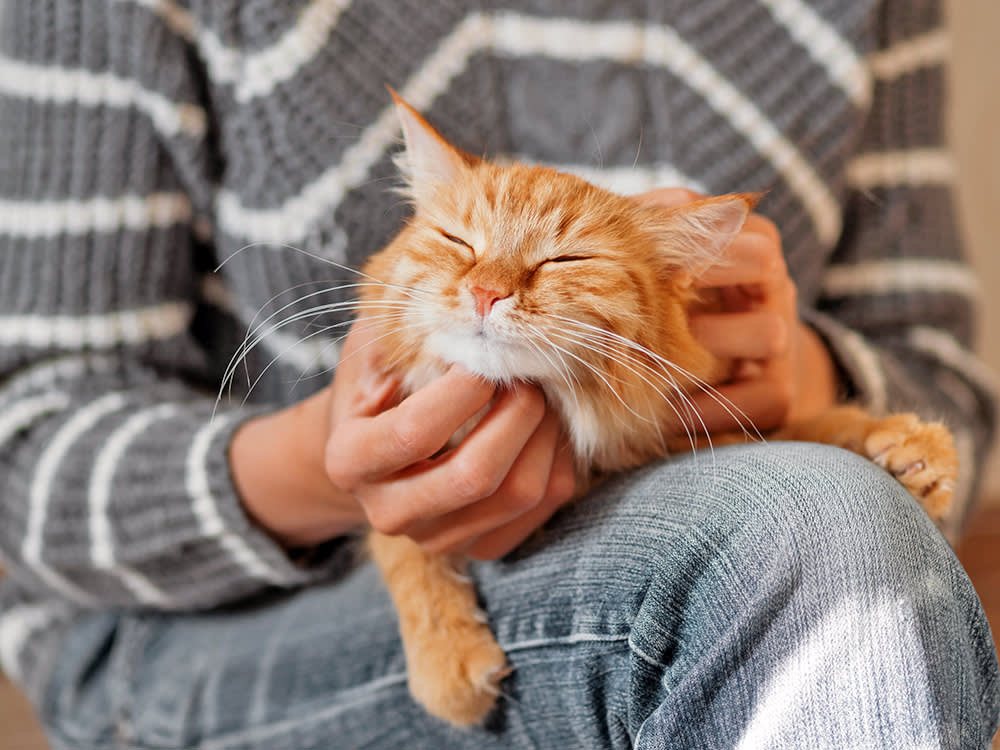
There’s a small wet patch on your jeans. Your cat is purring, eyes closed, kneading like they’re paid by the hour. It’s gross and it’s flattering at the same time, and you’ve probably decided it means they love you.
It might. But here’s the thing most cat owners never get told: the drool of a blissed-out cat and the drool of a cat with a rotting tooth are physically identical. Saliva is saliva. There’s nothing in the puddle that tells you which one you’re looking at.
What tells you is the context. And the context comes down to one question you can answer in ten seconds:
Is your hand on the cat right now, and did the drool start when it landed?
Yes, and it stops shortly after you stop? That’s the happy version. File it and move on.
Anything else, and you have a symptom.
Why cats drool at all
Saliva has a job. It lubricates food, keeps the mouth moist, and neutralizes acids and microbes. Normally the cheeks and lips hold it in without any conscious effort.
Drooling happens when one of two things breaks: the body makes too much saliva, or the mouth can’t hold what it makes. Almost every cause on the list below is one of those two, and knowing which helps you guess what’s wrong.
Relaxation drool is a containment failure. A cat in deep contentment lets their jaw and lips go slack, and saliva escapes because nothing is holding it in. That’s also why cats sometimes drool in their sleep. Nothing is overproducing. Something is just open.
Almost everything else is overproduction. Nausea, pain, irritation, a bad taste, a toxin, heat: all of these tell the body to flood the mouth with saliva, usually as a protective buffer.
The ten reasons a cat drools, sorted by how worried you should be
Green: drool with your hand on the cat
1. Contentment. The classic. Petting, purring, kneading, half-lidded eyes, and a slow drip. Jaw relaxes, lips relax, saliva escapes. Perfectly normal, and there is genuinely nothing to fix here.
2. Catnip. Nepetalactone, the active compound in catnip, hits roughly half of all cats and produces rolling, rubbing, zoomies, and, in some cats, a wave of salivation. It wears off in about 10 to 15 minutes. If the drool tracks the catnip, it’s the catnip.
Amber: drool with a trigger you can name
3. Fear or anxiety. Stress hormones drive up saliva production. The classic scenario is the car ride, but a neighborhood dog in the yard, a vet carrier, or a new person in the house will do it. Anxious cats can be helped with behavior modification, environmental changes, and sometimes medication. It’s worth addressing, not ignoring, especially if you plan to travel with your cat.
4. Nausea. Same reason you salivate before you’re sick. The body is buffering the mouth in advance of vomiting. Carsickness is the obvious one; anything upsetting the stomach is on the list. Drooling that comes with lip-licking, swallowing, or a hunched posture is nausea until proven otherwise.
5. Medications. A lot of pills taste appalling, and cats are not shy about it. A bitter tablet, a crushed capsule, or an oral liquid can produce a dramatic foaming drool that resolves within minutes. Some medications also cause nausea as a side effect, which drools for a different reason. If a new prescription started right before the drool did, call your vet and confirm it’s expected.
Red: drool with no hand, no catnip, no obvious trigger
6. Dental disease. This is the big one, and it’s badly underrated. Dental disease is one of the most common problems veterinarians see, and by the age of three to four, most cats have some form of it. Plaque and tartar drive inflammation, inflammation drives pain, and painful mouths overproduce saliva. Left alone it progresses to tooth loss and infection.
The reason this belongs in the red column is that dental pain is silent. Cats don’t stop eating until it’s severe. They don’t cry. They drool, and their breath gets bad, and they get a little quieter, and everyone assumes they’re just aging.
7. Respiratory infection. Feline calicivirus in particular causes painful ulcers and sores in the mouth, and those sores drive salivation the same way dental inflammation does. Look for sneezing, watery eyes, nasal discharge, and squinting alongside the drool. Mild cases can resolve in a couple of weeks; severe ones need veterinary care.
8. Toxins or poisons. Household cleaners, certain plants, and garden products are irritating to the mouth and throat, and the immediate response is drooling, often with pawing at the mouth, vomiting, or distress. If you have any reason to suspect ingestion, call your vet or the Pet Poison Helpline right away. Do not wait to see what happens, and do not try to induce vomiting on your own.
9. Heatstroke. Cats cool themselves badly. They can’t sweat efficiently, so they rely on panting and seeking shade, and when that fails their temperature climbs. A cat with heatstroke is typically restless, panting, uncoordinated, possibly vomiting, and drooling as the body tries to shed heat. This is an emergency. Get to a vet immediately. On the way, you can begin cooling with cool (not cold) water on the coat or cool towels on the groin and belly.
10. Everything else. A foreign object wedged in the teeth, most classically string or a rubber band, causes drooling plus pawing at the mouth and reluctance to eat. Remove it only if you can do so safely; otherwise, that’s a vet visit. Neurological problems, kidney disease, and liver disease can all cause drooling, either through nausea or through a loss of normal muscle control. Any abnormal drooling deserves to be looked at.
The drool itself is almost never the useful information. What I want to know is whether the cat was being touched, what their breath smells like, and whether they’re still eating the way they used to. Those three answers get me most of the way to a diagnosis before I’ve opened the mouth.
The ten-second mouth check you can do tonight
This is the piece the original version of this question always leaves out, and it’s the highest-value thing on the page.
You don’t need to pry your cat’s jaw open. You need to do this:
- Smell. Get close and take one breath. Healthy cat breath is neutral to slightly fishy. Genuinely foul, rotten, or ammonia-like breath is a finding, not a quirk.
- Lift one lip. Gently, on one side, for two seconds. You are looking at the gum line where the tooth meets the gum. A thin red line there is gingivitis. Yellow-brown crust is tartar.
- Watch them eat. Are they dropping food? Chewing on one side? Turning away from dry food they used to love? Cats with painful mouths change how they eat long before they stop eating.
- Check for asymmetry. Drool from one side of the mouth, a paw going to one side of the face, or a lopsided chew all point at a localized problem: a fractured tooth, an ulcer, a foreign body.
Any of those four, plus drool that isn’t tied to petting, is a call to your vet.
When to go now, versus when to call
Go now for: drooling with difficulty breathing, drooling with panting and disorientation in a hot environment, drooling after any possible toxin exposure, drooling with collapse or severe lethargy.
Call within a day for: new drooling that isn’t tied to petting, drooling with bad breath, drooling with a change in appetite, drooling with a swollen face, drooling with any pawing at the mouth.
Mention at the next visit: drooling that’s always been there, only ever happens on your lap, and stops when you stop.
What newer research adds
The most useful update here isn’t about drooling. It’s about why dental disease keeps getting missed, and the answer is that owners are looking for the wrong sign.
Current veterinary dentistry guidance is emphatic that cats mask oral pain almost completely, and that a normal appetite tells you almost nothing about whether a cat’s mouth hurts. Cats with severe resorptive lesions, a painful condition where the tooth structure literally erodes and which affects a large share of adult cats, routinely keep eating right up until the tooth is lost. Anesthetized examination with dental X-rays is the only way to catch a lot of it, because much of what goes wrong in a cat’s mouth happens below the gum line where you cannot see it.
The practical translation: if your cat drools when nobody is touching them, “but they’re eating fine” is not reassurance. It’s the most common sentence said right before a dental diagnosis. Ask for an oral exam, and ask whether dental radiographs are indicated.
Bottom line
Drool on your lap while you’re petting a purring cat is one of the nicer things about living with a cat, and it means exactly what you think it means.
Drool with your hand nowhere near them means something is producing saliva that shouldn’t be. Most often that’s a mouth that hurts. Sometimes it’s nausea. Occasionally it’s an emergency.
The saliva doesn’t tell you which. The context does.
FAQs
Why does my cat drool when I pet them? A deeply relaxed cat lets their jaw and lips go slack, and saliva escapes. It’s a containment issue, not a production issue, and it’s a sign of contentment. Some cats do the same thing while asleep.
Do cats drool when they’re happy? Many do. Drooling during purring, kneading, and petting is one of the clearest signs a cat has fully let their guard down.
My cat purrs and drools at the same time. Is that fine? Yes. Purring and drooling together, while being touched, is the most reassuring combination on this list.
When should I worry about my cat drooling? When it happens without petting or catnip, when it comes with bad breath, appetite changes, lethargy, pawing at the mouth, or difficulty breathing, or when it’s suddenly new. Drooling with panting and disorientation in the heat is an emergency.
Can dental disease cause drooling in cats? Yes, and it’s one of the most common causes. Most cats have some degree of dental disease by three to four years old, and the pain is largely silent. A normal appetite does not rule it out.
References
- “Feline Calicivirus.” Baker Institute for Animal Health, Cornell University College of Veterinary Medicine. https://www.vet.cornell.edu/departments-centers-and-institutes/baker-institute/research-baker-institute/feline-calicivirus
- “Feline Dental Disease.” Cornell Feline Health Center, Cornell University College of Veterinary Medicine. https://www.vet.cornell.edu/departments-centers-and-institutes/cornell-feline-health-center/health-information/feline-health-topics/feline-dental-disease
- “2019 AAHA Dental Care Guidelines for Dogs and Cats.” American Animal Hospital Association. https://www.aaha.org/resources/2019-aaha-dental-care-guidelines-for-dogs-and-cats/
- “Heat Stroke in Animals.” MSD Veterinary Manual. https://www.msdvetmanual.com/emergency-medicine-and-critical-care/heat-stress-and-heat-stroke/heat-stroke-in-animals
- “Meet the Molecules: Catnip.” John Innes Centre, 14 Nov. 2018. https://www.jic.ac.uk/blog/meet-the-molecules-catnip/
- Pet Poison Helpline. https://www.petpoisonhelpline.com/
Not a substitute for your vet. Our guidance is educational. For urgent symptoms, contact a vet or emergency clinic right away. Editorial standards
Dr. Park is a board-certified emergency and critical care specialist. She reviews our health and safety content for clinical accuracy and contributes guides on recognising urgent conditions. Her focus is helping owners act quickly and correctly when it matters most.
Meet our experts ↗Keep reading
 Health & WellnessYour Cat Needs the Vet More Than Once a YearDr. Lena Park · 7 min
 Health & WellnessThat Sore in Your Cat's Mouth Isn't Nothing. Here's How to Read ItDr. Ravi Mehta · 6 min
 Health & WellnessYour Pet Can't Tell You They're Sick. This Is How You Find Out First.Dr. Lena Park · 6 min
 Health & WellnessThe Vet Says Your Pet Needs Dental Work. Here's What Insurance Actually Pays.Dr. Priya Nair · 7 min
 First DaysYour Kitten Is Losing Teeth Right Now and You'll Probably Never See It HappenDr. Priya Nair · 6 min
 Health & WellnessCat Drooling: The One Question That Tells You Whether to WorryDr. Lena Park · 6 min