


Cat Drooling: The One Question That Tells You Whether to Worry
Drool can mean pure bliss or a swallowed toxin. Instead of a scary list of causes, start with the single context test that sorts happy drool from the kind that needs a vet.

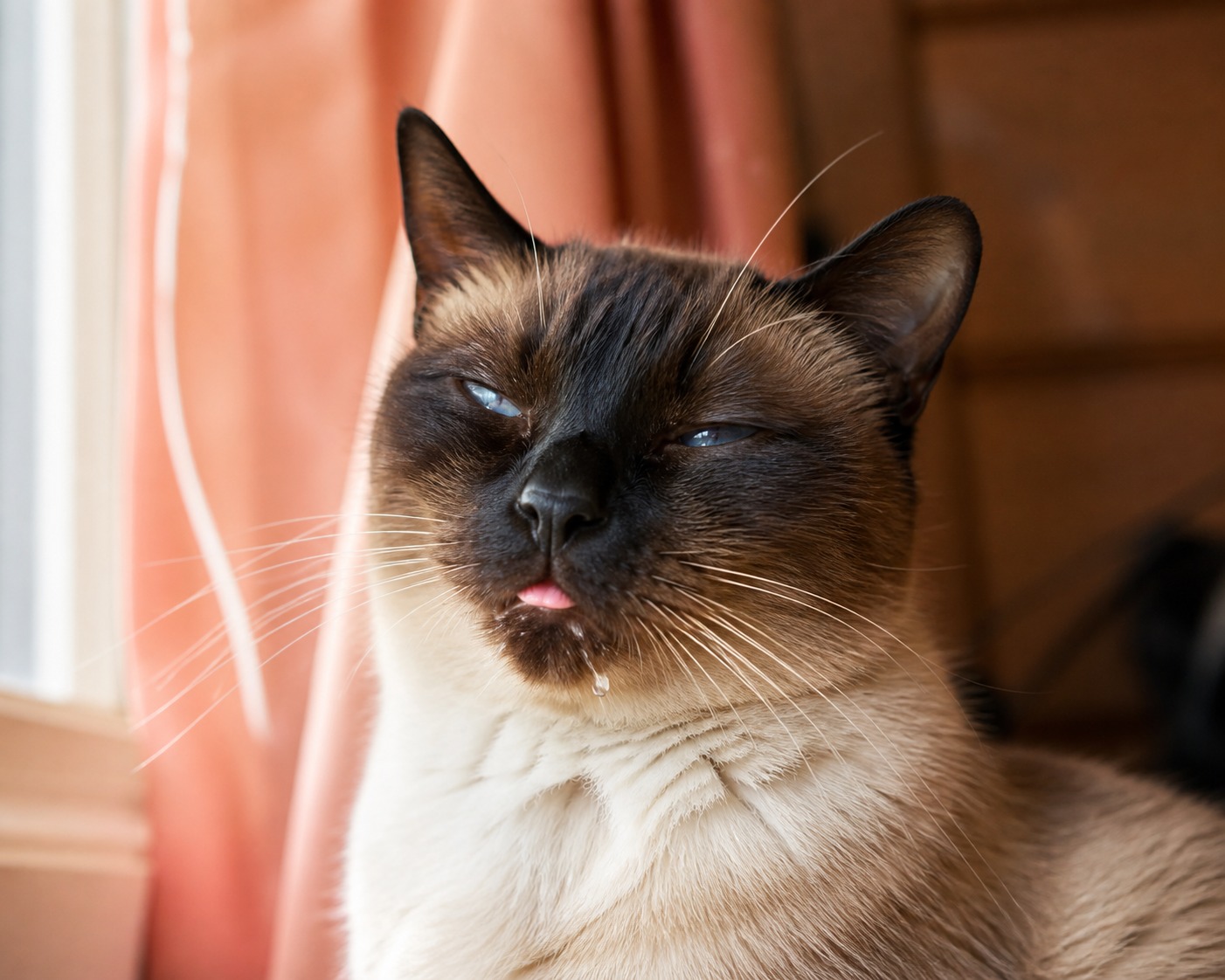
Dogs get a pass on drool. A cat, the self-appointed picture of dignity, dribbling a string of saliva off its chin feels genuinely alarming, and your instinct to wonder about it is correct. But you do not need to memorize a frightening list of everything that can cause it. You need to answer one question first, because it sorts nearly every case into “adorable” or “call the vet”: what is your cat doing right now, and how do they seem otherwise? Context is the whole diagnosis.
The context test
Drool almost never travels alone. Read what comes with it.
If the drool comes with contentment, your cat kneading a blanket, melting into a sunbeam, purring through a catnip haze, half-asleep in your lap, it is very likely the happy kind. Some cats simply salivate when they are deeply relaxed, often while “making biscuits.” On its own, paired with obvious bliss, this is nothing to fix.
If the drool comes with anything else, bad breath, dropping food or eating on one side, a paw swiping at the mouth, hiding, lethargy, a hunched posture, or it appeared suddenly and heavily out of nowhere, it is the kind that earns a vet visit.
The single most useful thing an owner can tell me is the context. Drooling while purring on the couch and drooling while refusing dinner are two completely different animals. Happy drool is calm and comes with a relaxed cat. Problem drool almost always brings a friend, usually bad breath, a change in eating, or a cat who just seems off.
Once you have run that test and landed on “problem drool,” here is what could be behind it, grouped by where it starts.
Problems inside the mouth (the most common by far)
The mouth is where most concerning drool originates, and dental disease leads the pack. A cat’s mouth is naturally full of bacteria that form plaque, which hardens into tartar within days. The bacteria inflame the gums and, over time, erode the ligament and bone anchoring the teeth, a painful process cats are experts at hiding until a tooth loosens. Left unchecked it becomes periodontitis, which is irreversible and needs professional treatment. Some cats also develop stomatitis, a severe, ulcerating inflammation of the gums, tongue, and cheeks that is intensely painful. A broken tooth, a mouth injury, a bee or wasp sting, or a foreign object wedged in the roof of the mouth or throat can all trigger sudden drooling too.
Problems from something swallowed or contacted
Cats groom constantly, so anything that lands on the coat can end up in the mouth. Flea treatments, garden chemicals, paint, creosote, antifreeze, and household cleaners can all cause drooling once licked off the fur, and caustic substances leave painful ulcers. Curious cats also mouth their environment: some common houseplants, including dieffenbachia (dumb cane), elephant ears, and fiddle-leaf figs, contain oxalate crystals that irritate on contact, and chewing an electrical cord can burn the mouth, where drooling may be the only visible sign. Any suspicion of a toxin turns drooling into an urgent problem, not a wait-and-see one.
Problems lower down, and medication
Nausea is a classic drool trigger, alongside lip-smacking, poor appetite, and vocalizing; it can come from eating something off, an intestinal obstruction, organ disease, hairballs, or motion sickness, and a carsick cat often hypersalivates right before getting sick. Esophagitis, an inflamed food pipe from reflux, repeated vomiting, or an irritant, makes swallowing hurt enough that some cats let saliva fall rather than swallow it. And medication is its own category: for some bitter drugs, no amount of tuna disguise works, and your cat will foam and theatrically spit. Certain eyedrops cause drooling too, because tear ducts drain to the back of the throat. Rarely, salivary gland disease (far more common in dogs) causes swelling and trouble swallowing.
What to do at home, and when to stop trying
For genuine happy drool, there is no fix short of cruelly canceling catnip, which no one is suggesting; a napkin on your lap before cuddle time does the job. If nausea is the driver, reducing it helps, so keep car trips short for a carsick cat. If drooling follows a medication, encouraging your cat to drink can wash the taste away.
But the bigger rule overrides all of that: if the drooling is heavy, persistent, or paired with any sign of discomfort, do not manage it at home. Get your cat to a vet, who can treat the underlying pain, dental disease, or nausea at the source.
One reason not to wait: the tools for finding hidden mouth pain have gotten much better. Many general clinics now include full-mouth dental radiographs as a routine part of a cleaning, which reveal disease below the gumline that a visual exam alone misses entirely, and this is often where the source of chronic, unexplained drooling turns up. Given that the large majority of adult cats have some degree of dental disease, unexplained drooling deserves a real mouth check, not a shrug.
References
- Cornell Feline Health Center. “Feline Dental Disease.” Cornell University College of Veterinary Medicine. https://www.vet.cornell.edu/departments-centers-and-institutes/cornell-feline-health-center/health-information/feline-health-topics/feline-dental-disease
- ASPCA. “Toxic and Non-Toxic Plants.” https://www.aspca.org/pet-care/animal-poison-control/toxic-and-non-toxic-plants
- American Veterinary Medical Association. “Pet Dental Care.” https://www.avma.org/resources-tools/pet-owners/petcare/pet-dental-care
Common questions
Why is my cat suddenly drooling a lot?
Sudden, heavy drooling is more likely to signal a problem than bliss. Common causes include dental disease, a mouth injury or foreign object, nausea, a reaction to a bitter medication, or contact with something toxic. If it comes on suddenly and your cat seems unwell, see a vet.
When should drooling send me to the vet?
Get your cat seen if the drooling is heavy or persistent, or comes with bad breath, dropping food, appetite loss, pawing at the mouth, lethargy, or any sign of pain. Also treat drooling as urgent if your cat may have licked or chewed something toxic.
Not a substitute for your vet. Our guidance is educational. For urgent symptoms, contact a vet or emergency clinic right away. Editorial standards
Dr. Park is a board-certified emergency and critical care specialist. She reviews our health and safety content for clinical accuracy and contributes guides on recognising urgent conditions. Her focus is helping owners act quickly and correctly when it matters most.
Meet our experts ↗Keep reading
 Health & WellnessYour Cat Needs the Vet More Than Once a YearDr. Lena Park · 7 min
 Health & WellnessYour Cat's Bad Tooth Doesn't Stay in the MouthDr. Amara Solis · 6 min
 Health & WellnessCan't Brush Your Cat's Teeth? Stop Aiming for Perfect and Stack WinsDr. Nina Kohl · 7 min
 Health & WellnessBrushing a Cat's Teeth Sounds Impossible. The Trick Is to Not Brush at FirstDr. Mara Chen · 9 min
 Health & WellnessYour Cat's Drool Is Only Cute If Your Hand Is on ThemDr. Lena Park · 8 min
 Health & WellnessThat Weird Jaw Jitter? Your Cat Is Hunting an Animal They'll Never Catch.Dr. Lena Park · 5 min