


Most Cats Have Dental Disease by Age Three. The Realistic Home Routine, Ranked
You will not out-brush established gum disease, and you do not have to win a wrestling match to help. A vet ranks what actually protects your cat's teeth, from the gold standard down to the low-effort wins.

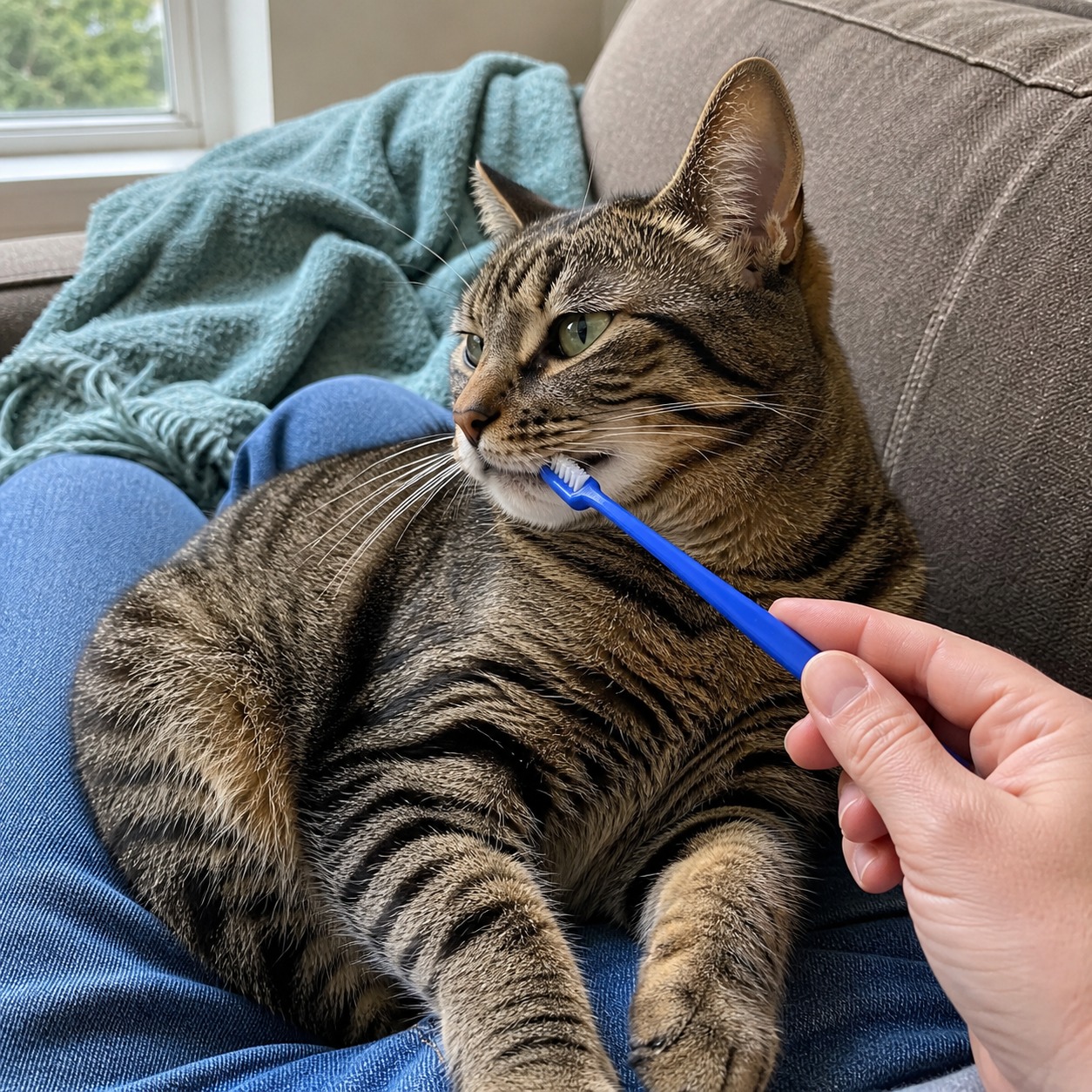
Start with the number that should reframe how you think about this: by age three, most cats already show signs of dental disease. Veterinary groups put the figure somewhere between 70 and 90 percent, depending on the population studied, which means a healthy-looking mouth is not the same as a healthy mouth. Dental disease is the rule in adult cats, not the exception, and it is quietly painful, and it does not resolve on its own.
That changes the goal. The goal is not to win a daily brushing standoff. It is to do something protective most days, chosen from a ladder of options, while never mistaking home care for the professional cleaning that some cats will still need. So here is that ladder, ranked from most protective to least, followed by the slow method that makes the top rung actually achievable.
The ranking: what protects a cat’s teeth, best to easiest
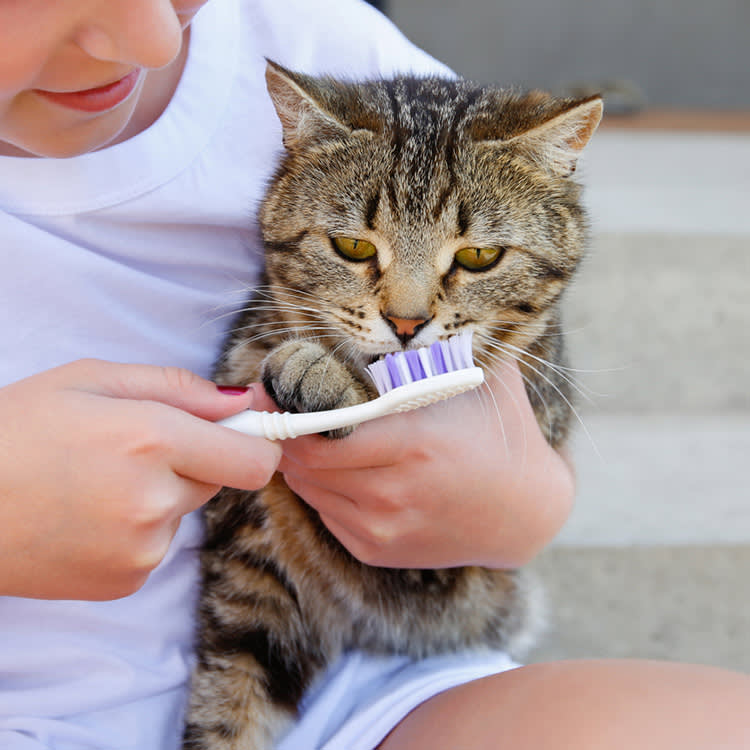
1. Toothbrushing (the gold standard, and worth the effort). Nothing else physically removes plaque from the gumline the way a brush does. It sits at the top for a reason. The catch is that a forced, stressful brushing rarely becomes a habit, so most owners who “can’t brush” actually just started too fast. The method below fixes that.
2. A VOHC-accepted dental diet or treat. The Veterinary Oral Health Council awards a seal to products that passed independent trials proving they reduce plaque or tartar. For cats, that includes specific dental diets from Hill’s, Royal Canin, and Purina, plus certain dental treats. The seal is your shortcut past marketing: a “dental” treat without it is a guess, while a VOHC-accepted one has data behind it.
3. A VOHC-accepted water additive. For the cat who fights the brush hardest, an additive in the water bowl, such as a VOHC-accepted product, is nearly zero-effort and chips away at the bacteria that drive disease. It is not a substitute for brushing, but it is a real contribution for a cat who allows nothing else.
4. Dental wipes and finger tools. A step up in contact from an additive and a step down in stress from a full brush, wipes are a decent daily habit and a useful bridge while you build toward brushing.
The philosophy underneath the ranking is simple: hit the problem from as many angles as you can, and the small efforts compound.
I would much rather an owner do a little, calmly, most days, than win one battle and lose the war. When you force it, you teach your cat that the toothbrush means being trapped, and then every future session starts from fear.
How to reach the top rung without a fight
Think of brushing as a slow courtship, not a procedure. Rushing is the single biggest mistake owners make, and it backfires nearly every time.
- Make toothpaste a treat. Buy a few brands and flavors of pet toothpaste and find the one your cat loves. Squeeze a little onto your finger and offer it like a snack. You want a cat who comes running when the tube appears.
- Get them used to touch. Once they are into the paste, dab a small amount on your finger or a cotton swab and gently slide it into their mouth, moving across their teeth. This builds comfort with the sensation before any brush is involved.
- Graduate to a brush. When they tolerate the finger, move to an actual toothbrush designed for pets. Drugstore brushes are built for much larger human teeth and are the wrong tool for a cat’s small mouth.
Never use human toothpaste. It is not made to be swallowed, and your cat will swallow it. Fluoride and xylitol, common in human formulas, are not safe for cats.
Why this is worth the trouble
Poor oral hygiene opens the door to a cascade: plaque and tartar, then gingivitis, then full periodontitis. The pain is real and often invisible, showing up as drooling, a dropped appetite, hiding, biting, or even avoiding the litter box rather than as an obvious toothache. And the damage does not stay in the mouth. A mouth full of bacteria and infection can become a systemic problem that strains the organs and turns dangerous.
Here is the part that catches people off guard: even with no outward symptoms at all, dental disease can be quietly harming your cat. Absence of a visible problem is not evidence of a healthy mouth, which is exactly why the daily routine matters even when your cat seems fine.
The honest limit: home care is not a cleaning
You cannot brush away established periodontal disease. Once it sets in, your cat needs a professional cleaning under anesthesia, and severe periodontal disease simply cannot be treated at home. Regular dental checkups are the foundation of feline oral health, not an optional add-on, and “anesthesia-free” cleanings do not reach below the gumline where disease lives.
Vet visits stress cats too. Ask your vet about a calming medication to give before the appointment, get your cat comfortable with the carrier ahead of time, and consider a Fear Free certified practice, where the whole experience is designed to keep stress low. Skipping professional cleanings is not on the table, so it is worth making them as gentle as possible.
When to call the vet sooner rather than later
Book a visit, do not wait for the annual exam, if you notice:
- Drooling, especially if it is new or one-sided
- Reluctance to eat, dropping food, or chewing on only one side
- Bad breath that is worse than usual, pawing at the mouth, or facial swelling
- A red, bleeding gumline, or a broken or loose tooth
Any of those can signal pain or advanced disease that home care will not fix. Caught early, most feline dental problems are very manageable. Ignored, they get expensive and painful in a hurry.
References
- “Pet Dental Care.” American Veterinary Medical Association. https://www.avma.org/resources-tools/pet-owners/petcare/pet-dental-care
- “VOHC Accepted Products for Cats.” Veterinary Oral Health Council. https://vohc.org/accepted-products/
- “Dental Disease in Cats.” VCA Animal Hospitals. https://vcahospitals.com/know-your-pet/dental-disease-in-cats
Not a substitute for your vet. Our guidance is educational. For urgent symptoms, contact a vet or emergency clinic right away. Editorial standards
Dr. Chen is a small-animal veterinarian who leads health and safety coverage at The Pet Times. She writes and reviews the bulk of our illness, condition, and safety content, translating clinical guidance into clear, practical advice owners can act on at home.
Meet our experts ↗Keep reading
 Health & WellnessThat Weird Jaw Jitter? Your Cat Is Hunting an Animal They'll Never Catch.Dr. Lena Park · 5 min
 Health & WellnessYour Cat Needs the Vet More Than Once a YearDr. Lena Park · 7 min
 Health & WellnessThe Truth About Cat Toothpaste: The Brush Does the Work, the Paste Is a BribeDr. Lena Park · 9 min
 Health & WellnessThat Sore in Your Cat's Mouth Isn't Nothing. Here's How to Read ItDr. Ravi Mehta · 6 min
 First DaysYour Kitten Is Losing Teeth Right Now and You'll Probably Never See It HappenDr. Priya Nair · 6 min
 Health & WellnessYour Cat's Bad Tooth Doesn't Stay in the MouthDr. Amara Solis · 6 min