


The Truth About Cat Toothpaste: The Brush Does the Work, the Paste Is a Bribe
Here's what the cat toothpaste aisle won't tell you: not one cat toothpaste currently carries the VOHC seal, and the brushing motion, not the paste, is what actually removes plaque. A vet-informed guide to choosing flavor over hype and brushing a cat that would rather you didn't.

Affiliate disclosure. This article contains affiliate links. We may earn a small commission if you buy through a link, at no extra cost to you. How we handle recommendations.
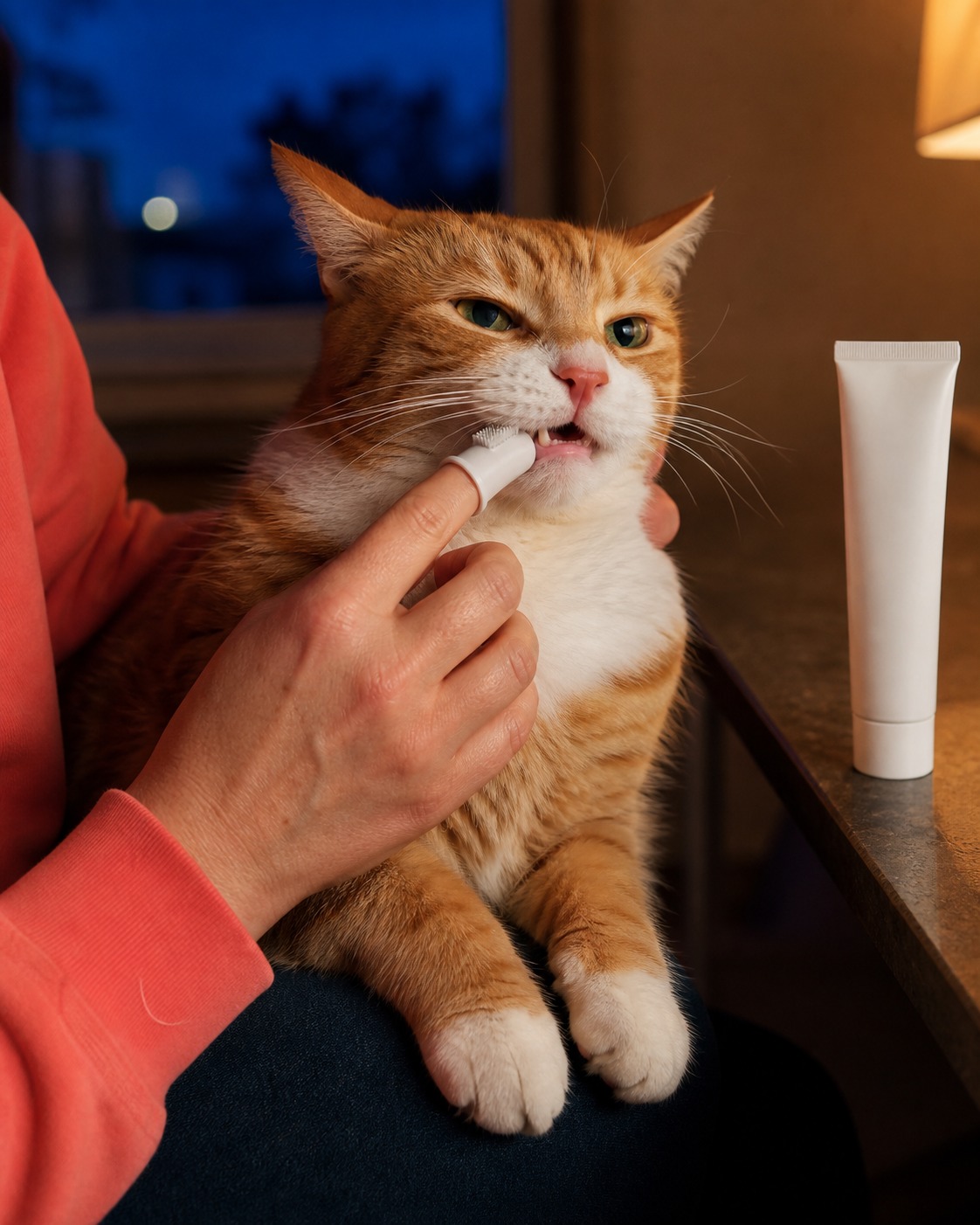
If you came here to find the single best cat toothpaste, here is the answer that will save you money and frustration: there isn’t one, at least not in the way the question implies. The most useful thing to understand about brushing a cat’s teeth is that the toothpaste is not the part that works. The brushing motion is. Toothpaste is the bribe that gets your cat to tolerate the brush, and choosing it well is about flavor and safety, not some special plaque-dissolving power.
That reframing matters because the cat toothpaste aisle is built to sell you on ingredients and claims, and most of those claims rest on far thinner evidence than the packaging suggests. So before we name products, let’s get the mechanism and the evidence straight, because once you understand both, the shopping decision becomes simple.
Why brushing matters at all
Dental disease is one of the most common health problems in cats, and it is genuinely painful, not a cosmetic issue. The reason brushing is worth the trouble comes down to timing. After a professional cleaning at the vet, plaque begins returning to the teeth within hours and hardens into tartar within about two weeks. Once plaque mineralizes into tartar, no toothbrush can remove it; that requires another professional cleaning under anesthesia, which is expensive and not without its own (small) risks. Home brushing is what holds the line in between, keeping soft plaque from ever becoming hard tartar.
That is the whole case for brushing. It is not about fresh breath. It is about interrupting the plaque-to-tartar cycle daily so your cat needs fewer professional cleanings over a lifetime, and so the gum inflammation that plaque causes, gingivitis, never gets a foothold.
The thing the toothpaste aisle won’t tell you
Here is the single most important fact for a shopper, and it is one the typical “best cat toothpaste” roundup quietly skips: as of the current Veterinary Oral Health Council list, no standalone cat toothpaste carries the VOHC Seal of Acceptance.
The VOHC is the independent body that reviews the actual trial data behind dental products and grants its seal only to those that demonstrably reduce plaque or tartar. For cats, the products that have earned it are dental diets, water additives, topical gels and sprays, plaque powders, dental treats, and a toothpaste-plus-brush kit, but not a tube of cat toothpaste on its own. Some popular toothpastes you will see recommended by name, including certain Petsmile and Virbac C.E.T. products, hold VOHC acceptance in their dog formulas or other categories, not as VOHC-accepted cat toothpaste.
Owners are often surprised that the seal they’re looking for isn’t on the tube. It doesn’t mean cat toothpaste is useless or unsafe. It means the proven plaque-fighting belongs to the brushing itself, and the strongest independent evidence for cats sits on water additives, gels, and diets. So pick a toothpaste for the job it actually does, getting your cat to cooperate, and look to VOHC-accepted products if you want something with proven plaque data behind it.
This is not a reason to skip toothpaste. It is a reason to stop overpaying for claims and choose on the two things that actually matter for a tube of cat toothpaste: is it safe to swallow, and will your cat let you use it.
What to actually look for
Three criteria, in order of importance.
It must be made for cats and safe to swallow. This is non-negotiable. Cats do not spit, so every ingredient goes down. Never use human toothpaste: fluoride and foaming agents are not meant to be ingested, and human formulas are simply not built for an animal that swallows the whole dose. Stick to a product clearly labeled for cats (or for cats and dogs).
A flavor your cat actually likes. This is the real decision. Cat toothpastes come in poultry, seafood, malt, and similar flavors precisely because the flavor is the cooperation tool. A mint product, by contrast, is often actively unpleasant to a cat and can sour them on the whole routine. If your cat hates the taste, the toothpaste has failed at its only real job, because you will not be able to brush thoroughly or often against a resisting cat.
Optional: plaque-reducing ingredients, viewed skeptically. Some pastes advertise enzymes (lactoperoxidase, lactoferrin, lysozyme) or gentle abrasives like silicates. These may add a small benefit, but be clear-eyed: there are no VOHC-accepted enzymatic cat toothpastes, “enzyme activity” on a label is not independently verified, and the brushing still does the heavy lifting. Treat these claims as a tiebreaker, not a reason to pay a premium.
Reasonable products, framed honestly
With the caveats above in mind, these are widely used, cat-appropriate options. None is a magic bullet; the right one is whichever your cat tolerates.
A flavored cat-and-dog toothpaste for cooperation. Petsmile Professional Pet Toothpaste is a popular pick whose Calprox-based formula is designed to keep plaque and bacteria from adhering to the tooth surface, and it comes in cat-friendly flavors like rotisserie chicken. It carries VOHC acceptance in the dog/consumer toothpaste category rather than as a cat-specific seal, so treat it as a palatable, reputable paste rather than a clinically proven cat product. Petsmile toothpaste for cats and dogs is available on Amazon.
A long-standing veterinary staple with trial sizes. Virbac C.E.T. enzymatic toothpaste has been used by veterinarians and owners for years, comes in several flavors, and is sold in trial-size packets, which is genuinely useful for testing whether your cat accepts a flavor before you commit to a full tube.
If you want the VOHC seal, change product type. Because no cat toothpaste holds the seal, owners who specifically want VOHC-backed plaque reduction should look at VOHC-accepted cat products in other categories, a HealthyMouth water additive or topical gel, a ProDen PlaqueOff powder, a VOHC-accepted dental diet, or VOHC-accepted dental treats, used alongside brushing, not instead of it.
How to brush a cat that would rather you didn’t
This is where most owners give up, so go slower than feels necessary.
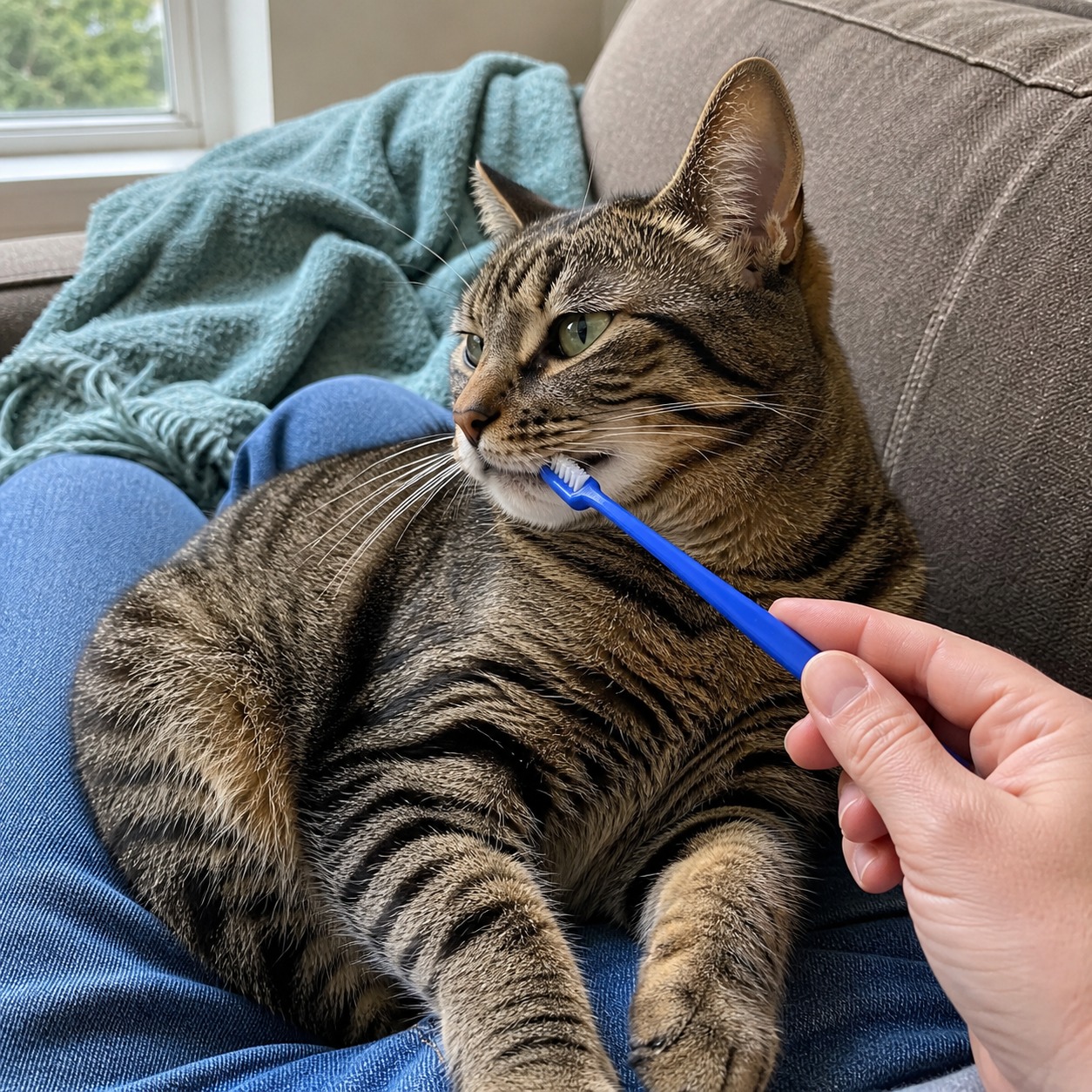
Start with zero brushing. For the first several days, just let your cat sniff and lick a small dab of the toothpaste off your finger, and reward them right after. You are building the association “this tastes good and nothing bad happens.” Next, let them lick it off a cat toothbrush or a finger brush. Only then touch one tooth, then a few, working back toward the molars where tartar collects most. Keep every session short, end on a positive note, and never restrain your cat or force the brush into the mouth; one bad experience can set you back weeks. Aim for daily, and treat three times a week as the floor below which brushing stops meaningfully helping.
If a brush is a non-starter, a piece of damp gauze wrapped around a finger gives you the mechanical action without the intimidating tool. Even brushing with plain water and a good brush beats not brushing at all, because, again, it is the motion that removes plaque.
When to skip the DIY and call your vet
A few situations call for professional input rather than a store-bought tube:
- Your cat has a known health condition. Cats with diabetes, kidney disease, or food allergies may need specific ingredients avoided; ask your vet before choosing a product.
- You see signs of existing dental disease: bad breath that is more than “cat breath,” red or bleeding gums, drooling, pawing at the mouth, dropping food, or reluctance to eat. These mean brushing alone is not enough and your cat likely needs an exam and possibly a cleaning before home care can help.
- Your cat is in pain or resists handling around the mouth suddenly. A new sensitivity can signal a painful tooth (cats are prone to resorptive lesions), and brushing a sore mouth will only make your cat fear the routine.
Avoid DIY human-recipe toothpastes entirely; because cats swallow everything, recipes meant for people are not safe. If you have no cat-safe paste on hand, dipping the brush in tuna water makes the brush appealing, or simply brush with water. The point is never the paste. It is the brush, moving, often.
This article is informational and not a substitute for veterinary care. If your cat shows signs of oral pain or dental disease, see your veterinarian.
References
- “VOHC Accepted Products for Cats.” Veterinary Oral Health Council. https://vohc.org/accepted-products/
- Niemiec, B., et al. “World Small Animal Veterinary Association Global Dental Guidelines.” Journal of Small Animal Practice, 2020. https://onlinelibrary.wiley.com/doi/10.1111/jsap.13132
- “Periodontal Disease in Cats: Back to Basics, With an Eye on the Future.” Journal of Feline Medicine and Surgery. https://journals.sagepub.com/home/jfm
- “Dental Care for Your Pet.” American Veterinary Medical Association. https://www.avma.org/resources-tools/pet-owners/petcare/pet-dental-care
Common questions
My cat refuses to let me brush their teeth. What should I do?
Back all the way up and rebuild the habit in tiny steps. Start by just letting your cat sniff and lick a dab of cat toothpaste off your finger, rewarding them after, for several days before a brush ever touches their mouth. Then progress to one tooth, then a few. End every session on a good note, keep them short, and never restrain your cat or force the brush in, which teaches them to dread the whole thing.
Is there a VOHC-accepted cat toothpaste?
As of the most recent VOHC cat list, no. The Veterinary Oral Health Council's accepted products for cats include water additives, topical gels and sprays, powders, dental diets, treats, and a toothpaste-and-brush kit, but no standalone cat toothpaste carries the seal on its own. That does not make cat toothpastes unsafe; it means the seal, which is your best evidence of proven plaque reduction, currently lives on other product types for cats.
Can you use dog toothpaste on cats?
Only if the label explicitly says it is safe for cats. Many pet toothpastes are formulated for both, but a product labeled strictly for dogs may contain ingredients or flavors that are not appropriate for cats. When in doubt, ask your veterinarian before using it.
Can I use human toothpaste on my cat?
Never. Human toothpaste is made to be spit out, and cats swallow everything you put in their mouth. Fluoride and foaming agents are unsafe to ingest, and while xylitol is far more dangerous to dogs than cats, it has no place in a cat's mouth either.
Not a substitute for your vet. Our guidance is educational. For urgent symptoms, contact a vet or emergency clinic right away. Editorial standards
Dr. Park is a board-certified emergency and critical care specialist. She reviews our health and safety content for clinical accuracy and contributes guides on recognising urgent conditions. Her focus is helping owners act quickly and correctly when it matters most.
Meet our experts ↗Keep reading
 Health & WellnessYour Cat Needs the Vet More Than Once a YearDr. Lena Park · 7 min
 Health & WellnessYour Pet Can't Tell You They're Sick. This Is How You Find Out First.Dr. Lena Park · 6 min
 Health & WellnessThe Vet Says Your Pet Needs Dental Work. Here's What Insurance Actually Pays.Dr. Priya Nair · 7 min
 Health & WellnessMost Cats Have Dental Disease by Age Three. The Realistic Home Routine, RankedDr. Mara Chen · 6 min
 First DaysYour Kitten Is Losing Teeth Right Now and You'll Probably Never See It HappenDr. Priya Nair · 6 min
 Health & WellnessCat Drooling: The One Question That Tells You Whether to WorryDr. Lena Park · 6 min