


Your Dog Has a Favorite Paw. What Its 'Strength' Says About Their Nerves Is the Real Surprise.
Whether your dog is a lefty or a righty is a fun party trick. Whether that preference is strong or wishy-washy is the part that actually predicts how they handle stress, strangers, and loud noises.

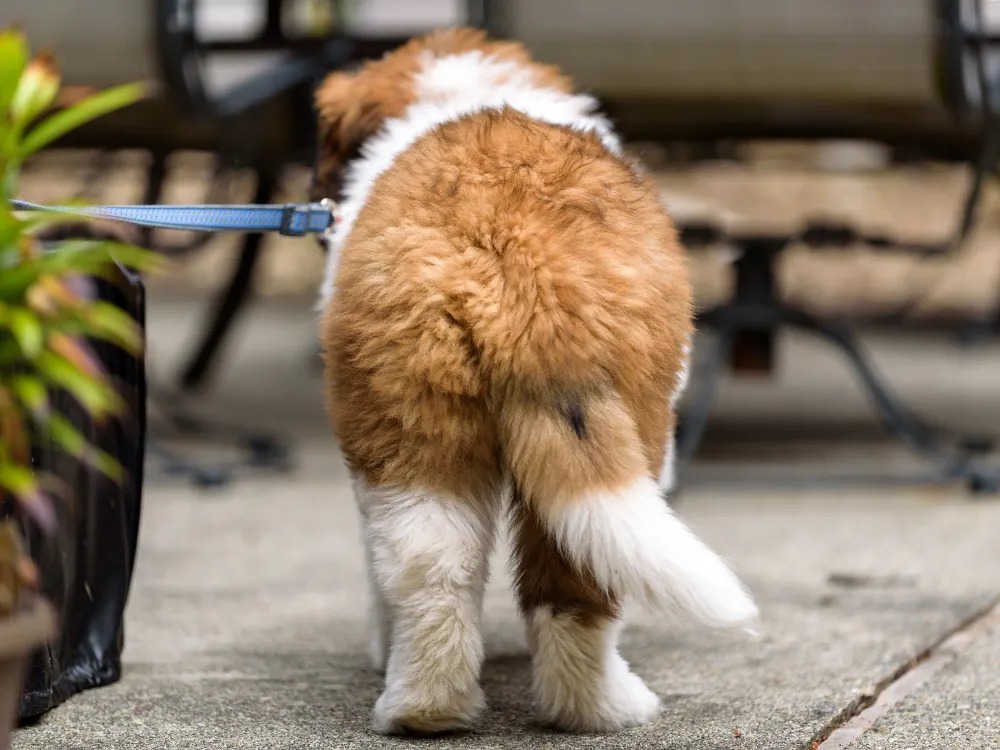
You have probably watched your dog offer a paw, steady a chew toy, or paw at the door and never thought twice about which paw they used. But dogs, like us, tend to favor one side, and figuring out whether yours is a lefty or a righty makes for a genuinely fun afternoon experiment.
Here is the twist most “is your dog left-pawed” articles miss, though. The direction of the preference is the least interesting part. What researchers keep finding is that the strength of the preference, how committed your dog is to one paw versus flip-flopping between them, is the number that actually tracks with how emotionally steady your dog is. That is the part worth understanding.
The brain-side connection
To see why a paw can reveal anything about feelings, start with the tail. Watch a behaviorist watch a dog and you’ll notice they’re tracking which side the wag climbs on, right or left, because the lopsidedness of it tells you which hemisphere currently has the wheel. The body is cross-wired: the right hemisphere controls the left side, and the left hemisphere controls the right side. So a wag that leans right means the left hemisphere is more active, and a wag that leans left means the right hemisphere is.
That matters because the two hemispheres specialize. Broadly, the left hemisphere handles positive, familiar, approach-friendly feelings like happiness, affection, and excitement. The right hemisphere handles the wary stuff: fear, unease, and anything new or threatening. In one classic study, dogs wagged higher to the right when greeting their humans, kept a right lean but at a lower angle for unfamiliar people, and only swung genuinely to the left for one specific trigger, an unfamiliar, confident dog. This same left-brain-positive, right-brain-negative pattern first turned up in humans and has since been found across fish, amphibians, reptiles, birds, and other mammals.
Paw preference plugs into the same system. A dog who favors the right paw is leaning on the left, more upbeat hemisphere. A dog who favors the left paw is leaning on the right, more cautious one.
Finding out: the Kong test
There is no writing-hand equivalent to check in a dog, so researchers use the “Kong test.” You give your dog a food-stuffed toy and, over many tries, record which paw they use to hold it in place. If they use both at once, that counts too. Tally it all up and a pattern emerges: a clear preference one way, or no real preference at all.
The results break dogs into roughly equal thirds: about as many lefties as righties, plus a large group of ambilateral dogs who show no strong preference. That is a sharp contrast with people, who are overwhelmingly right-handed, and it means “no preference” is a completely normal, common outcome rather than a defect.
Strength beats direction
Now the payoff. Both which paw and how strongly a dog favors it carry information, but the strength is the sturdier signal.
Studies link a strong paw preference, in either direction, to a bolder, less cautious dog: more confident, quicker to relax and get playful in new places, less prone to arousal and anxiety, and calmer when meeting strangers or new experiences. Dogs with weak or no preference, the ambilateral group, tend the other way. In one study, a loud noise rattled the no-preference dogs considerably more than it rattled the ones with a clear preference. The direction adds a second layer: right-pawed dogs have been associated with lower arousal and calmer reactions to novelty, while a separate study found left-pawed dogs showed more stranger-directed aggression than right-pawed or ambilateral dogs.
This even shows up in working dogs. Many aspiring guide dogs wash out of training, usually for behavioral reasons, and research has documented higher success rates for right-pawed dogs, as well as for strongly lateralized dogs with low both-paw use, likely because they are less prone to the high reactivity and distress that would end a service career.
I tell owners not to over-read whether their dog is a lefty or a righty, because on its own it’s just a quirk. The finding I actually pay attention to is that dogs with a wishy-washy preference tend to be more noise-reactive and more easily rattled. If that’s your dog, it’s a nudge to be extra thoughtful about their environment, not a reason to worry.
Strikingly, the human parallel holds. People with weak hand preferences are more likely to run high anxiety and are more susceptible to conditions like PTSD than strongly-handed people, echoing the same pattern seen in dogs.
Beyond paws: heads and noses
Lateralization is not confined to limbs. In experiments where dogs faced identical stimuli on both sides while eating, the direction they turned their head revealed which hemisphere was doing the processing. To positive social sounds like play vocalizations, dogs consistently turned right, engaging the positive left hemisphere. To thunder, they tended to turn left, lighting up the fear-linked right hemisphere. Images of cats and snakes also drew left turns at first, but with repetition the response shifted rightward, suggesting novelty itself is a big driver of that initial fear.
Even nostrils get in on it, since each is wired to its own hemisphere. Dogs tend to start sniffing new but harmless smells, like food or lemon, with the right nostril, then switch to the left as the smell becomes familiar and the emotion turns positive. Faced with something alarming, like the scent of adrenaline and sweat from a vet, they stuck stubbornly to the right nostril, a sign the feeling started negative and stayed there.
What newer research adds
The freshest wrinkle is a sex difference that older write-ups tended to skip. Recent studies find that female dogs are more likely to be right-pawed while males lean left-pawed, a split that shows up across age groups and hints that sex hormones may nudge how the brain lateralizes in the first place. Researchers have also started asking whether a dog’s paw preference is swayed by their owner’s handedness, digging into whether nature, environment, or both set the pattern.
None of this turns a home Kong test into a personality readout, and it should not. But it sharpens the practical takeaway. Paw preference is best used as one soft clue among many. A dog with a weak or absent preference may simply be a bit more sensitive to noise and novelty, which is useful to know when you are choosing a home, planning a training approach, or deciding how much to shield your dog from chaos. Read it as a gentle hint about temperament, then let your dog’s actual behavior fill in the rest.
References
- Quaranta, A., Siniscalchi, M., and Vallortigara, G. “Asymmetric tail-wagging responses by dogs to different emotive stimuli.” Current Biology, pubmed.ncbi.nlm.nih.gov/17371755.
- Batt, L. S., et al. “The relationships between motor lateralization, salivary cortisol concentrations and behavior in dogs.” Journal of Veterinary Behavior.
- Barnard, S., et al. “Does owner handedness influence paw preference in dogs?” PMC, pmc.ncbi.nlm.nih.gov/articles/PMC9950156.
- Siniscalchi, M., et al. “Sniffing with the right nostril: lateralization of response to odours in dogs.” Animal Behaviour, sciencedirect.com.
- Wells, D. L. “Lateralised behaviour in the domestic dog.” Behavioural Processes literature, pubmed.ncbi.nlm.nih.gov/16893254.
Common questions
How do I tell if my dog is left- or right-pawed?
Use the 'Kong test.' Give your dog a food-stuffed toy and note which paw they use to hold it steady each time, over many repetitions. Tally the results. A clear lean one way means a preference; using both about equally means your dog is ambilateral, with no strong dominant paw.
Are more dogs left-pawed or right-pawed?
Unlike people, who are overwhelmingly right-handed, dogs split roughly into thirds: about equal numbers of left-pawed, right-pawed, and ambilateral dogs. Some research also finds a sex pattern, with females leaning right-pawed and males leaning left-pawed.
Does paw preference actually mean anything?
The direction matters less than the strength. Dogs with a strong, consistent preference tend to be bolder, calmer with strangers, and less rattled by noise, while dogs with weak or no preference are often more reactive. It's a rough signal, not a diagnosis.
Dr. Mehta is a board-certified veterinary nutritionist who evaluates pet food formulations, ingredient quality, and the science behind dietary trends. He writes and reviews all nutrition content at The Pet Times, including our food rankings and feeding guides.
Meet our experts ↗Keep reading
 TrainingAn AI Sorted Dogs Into 5 Personality Types. Here's What It's Really ForNina Vasquez · 7 min
 TrainingTell Your Dog to 'Create,' and They Actually CanJordan Ellis · 6 min
 TrainingYour Dog's Love Language Isn't About Their Breed. Not Really.Sasha Ford · 8 min
 Health & WellnessA Quiet Dog Is Fine. A Newly Quiet Dog Is a Symptom.Dr. Ravi Mehta · 7 min
 TrainingYour Dog Isn't Reading Your Face. They're Reading Your Hand on the Leash.Dr. Lena Park · 8 min
 TrainingYour Dog Can Smell You From a Block AwayDr. Ravi Mehta · 6 min