


The One Thing Your Dog's Breed Is Quietly Begging You For
Your dog's breed isn't destiny, but it is a strong hint about the itch they most need scratched. Here's the core need behind ten popular breeds, and why the science says to hold it loosely.
Sometimes your dog’s wants are obvious, dinner two hours early, treats on demand. Other times they stare into your soul, huff at you, and leave you baffled, because every box on the basic-needs checklist is already ticked. That huff is often a specific, unmet itch, and one of the most reliable places to look for it is your dog’s breed. Not because breed is destiny, it very much is not, but because breed hints at the job your dog’s ancestors were built to do, and that job usually still lives somewhere in them.
So think of this as a set of starting hypotheses, not a rulebook. Below, the core need behind ten popular breeds, organized not by breed but by the kind of itch each one needs scratched, because that is how you actually plan a dog’s week. Your own dog will confirm or complicate the guess, and either way, you will learn something.
The dogs who need a job
Some breeds were bred to work, and an idle working dog is a miserable, often destructive one. Give these dogs a purpose and the “problem behaviors” tend to evaporate.
German Shepherds live for structure and a sense of purpose. They are high-energy and highly intelligent, and without an active schedule they feel unmoored and can turn destructive, the same way you would fray sitting in an empty room with nothing to do. Build them a predictable daily routine so they know what to expect.
Poodles carry a snobby, show-ring reputation that badly undersells them. They were originally water retrievers, and that working brain still craves a job and mental stimulation. Deprived of it, they turn destructive, so rotate through obedience games, nose work, and puzzle feeders to give that intelligence somewhere to go.
Siberian Huskies sit near the base of the domestic dog family tree and never got fully talked out of their independence. They were engineered to cover ground for days, which explains the stubbornness, the editorial opinions, and the running commentary about the life they believe they were promised. What they require is room and mileage: somewhere fenced where they can genuinely open up, and enough latitude to poke around on their own terms, because the drive underneath all of it is a drive toward freedom. Budget for long walks and longer runs, and brace for the argument when you cut one short.
The dogs who need their nose
For scent breeds, the enrichment that matters most is not a walk, it is a chance to smell. Their world is built through the nose, and blocking that is like handing a reader a book and turning off the lights.
Beagles come with what may be the most celebrated nose in the animal kingdom, the product of centuries of scent-hound work, and the nose is not decorative. It needs following. Daily nose-driven exploration is not optional; pair it with tracking or scent games. An easy home version: hide treats around the house and turn it into hide-and-seek.
Dachshunds need the same mental outlet, plus a physical caution. Their name is German for “badger dog,” and they were bred to burrow after badgers underground, so puzzle feeders and snuffle mats give them that same rewarding dig-and-discover challenge. But their long backs are fragile, and their biggest unconscious need is for you to protect them from too much jumping, incorrect lifting, and excess weight that strains the spine.
The dogs who mostly need you
For the companion and family breeds, the deepest need is connection, though several of them also want far more exercise than their cuddly image suggests.
Shih Tzus were literal palace dogs whose job was, more or less, to receive attention. The palace has shrunk to your apartment, but the need is unchanged: as a toy companion breed, they thrive on consistent human connection, calm routines, and bonding-focused enrichment.
Chihuahuas are stereotyped as purse dogs, and they are fine being close to you, quality time is their love language, needing daily play, rest, and snuggle time. Just do not mistake small for sedentary; despite their size they are high-energy and need real exercise and play.
French Bulldogs have topped America’s most-popular list for years, and it fits, because they are ultimate social butterflies, the Tom Hanks of dogs. Their need is social outlets with both people and dogs, so a dog park, a dog-friendly café, or a pet meetup keeps your extrovert from getting antsy and glum.
Pit Bulls are misunderstood sweethearts who adore their families, and the aggression folklore that trails them has no evidence under it. What they actually need is somewhere to put their body, because they are considerably more athletic than most owners bargained for. Bully breeds do well with hard physical outlets (a tug session, a spring pole), with training built on the relationship rather than on force, and with games that teach them to wait.
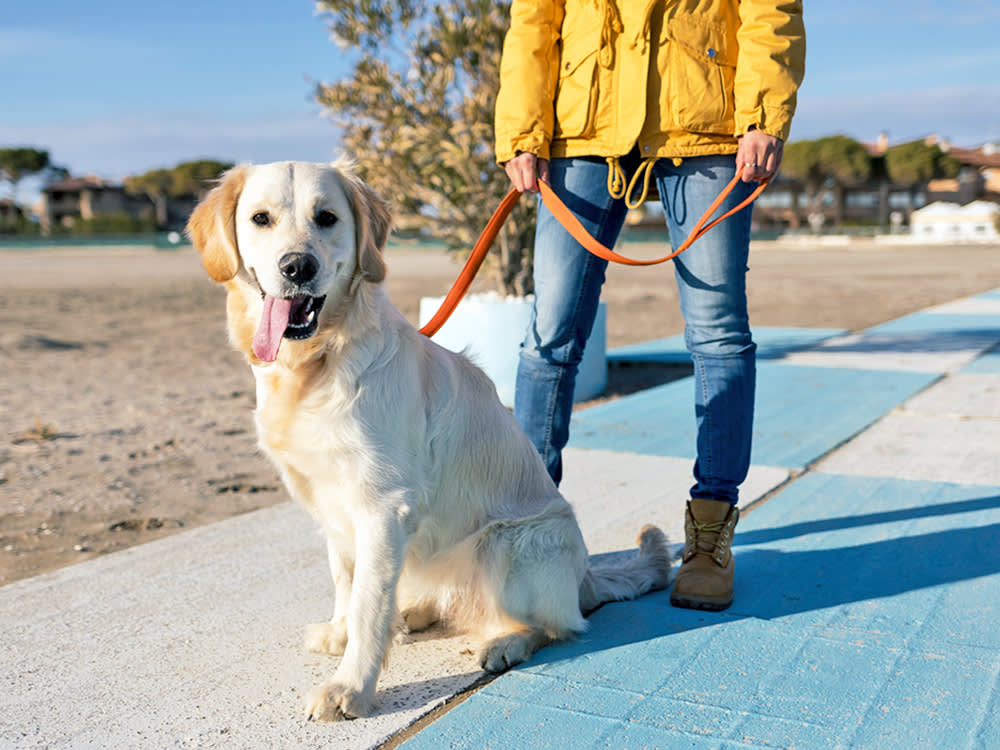
Golden Retrievers were America’s favorite for 22 years before Frenchies took the crown, and underneath that gentle family-dog surface sits the engine of a working animal. Feed it a mix of play, exercise, and training. For a healthy adult that lands around one to two hours of real activity a day, scaled down for puppies and seniors.
“Breed is a great first guess about what a dog needs, and a terrible last word,” says Dr. Lena Park. “I tell owners to use the breed to form a hypothesis, a hound probably needs to sniff, a herding dog probably needs a job, and then test it against the actual animal in front of them. The dog will tell you fast whether you guessed right.”
Not on the list? Start here
If your breed is not above, or your dog is a wonderful genetic mystery, there is a need that cuts across all of them. Whatever the breed, dogs are short on unsupervised outdoor time. Not the four-minute bathroom trip, not the walk where you set the pace and the route, but stretches where the dog gets to investigate, work the ground with their nose, and simply be a dog. A loose yard does it. So does a “sniffari” on a long line. What both have in common is that the dog is choosing, and a dog allowed to choose outdoors is a dog whose deepest behavioral needs are being met, which quietly eliminates a great deal of misbehavior indoors. When a dog is acting out, bored, or unfulfilled, this is the first lever to pull.
Why to hold all of this loosely
Here is the caveat that makes the whole exercise honest, and it is backed by real science. A landmark 2022 study published in Science, which analyzed genetic and behavioral data across thousands of dogs, found that breed accounts for only about 9 percent of the variation in a dog’s behavior. Ancestry shaped tendencies like sociability and biddability far less than most people assume, and the researchers could not find breed-specific genes for the personality traits we stereotype. Individual variation, environment, and upbringing did the heavy lifting.
That does not make breed useless. A Beagle really is more likely to be nose-driven and a Husky more likely to bolt, because those are the tendencies breeding nudged. But 9 percent means the breed is a lean, not a lock. The most useful thing you can do is treat your dog’s breed as an informed first guess about the itch they most need scratched, then pay attention to the individual, huffs and all, and adjust. Meet the need underneath the behavior, and a lot of the “why are you like this?” simply resolves itself.
This article covers canine behavior and enrichment and is for general information.
References
- Morrill, K., et al. “Ancestry-Inclusive Dog Genomics Challenges Popular Breed Stereotypes.” Science, vol. 376, no. 6592, 2022.
- Karlsson, E. K., and Morrill, K. Darwin’s Ark / Broad Institute, “Dog Genetics Suggest That Behavior Is More Than Just Breed.”
- Mehrkam, L. R., and Wynne, C. D. L. “Behavioral Differences Among Breeds of Domestic Dogs: A Review.” Applied Animal Behaviour Science, 2014.
Jordan Ellis is a certified professional dog trainer with a decade of experience working with rescue organisations and private clients. They specialise in anxiety, reactivity, and positive reinforcement methods, and review all training and behaviour content at The Pet Times.
Meet our experts ↗Keep reading
 TrainingA Tired Dog Isn't the Goal. A Fulfilled One Is.Dr. Mara Chen · 8 min
 TrainingStop Rushing the Sniffs. Your Dog's Nose Is Doing Real Work.Jordan Ellis · 6 min
 TrainingYour Dog Isn't Being Dominant. You Trained It to Steal the Bed.Dr. Mara Chen · 7 min
 TrainingYour Dog's Toy Stash Is Adorable. The Growl Over It Isn't.Marcus Webb · 7 min
 TrainingTug-of-War Won't Make Your Dog Aggressive. Playing It Wrong Might.Dr. Nina Kohl · 9 min
 TrainingYour Dog Picked the Foot of the Bed on Purpose. It's a Compromise.Dr. Ravi Mehta · 6 min