


Stop Rushing the Sniffs. Your Dog's Nose Is Doing Real Work.
The part of the walk you keep cutting short is the part your dog needs most. Sniffing is cognitive labor, and there's now data showing it changes your dog's mood. Here's how to run a walk built around the nose.
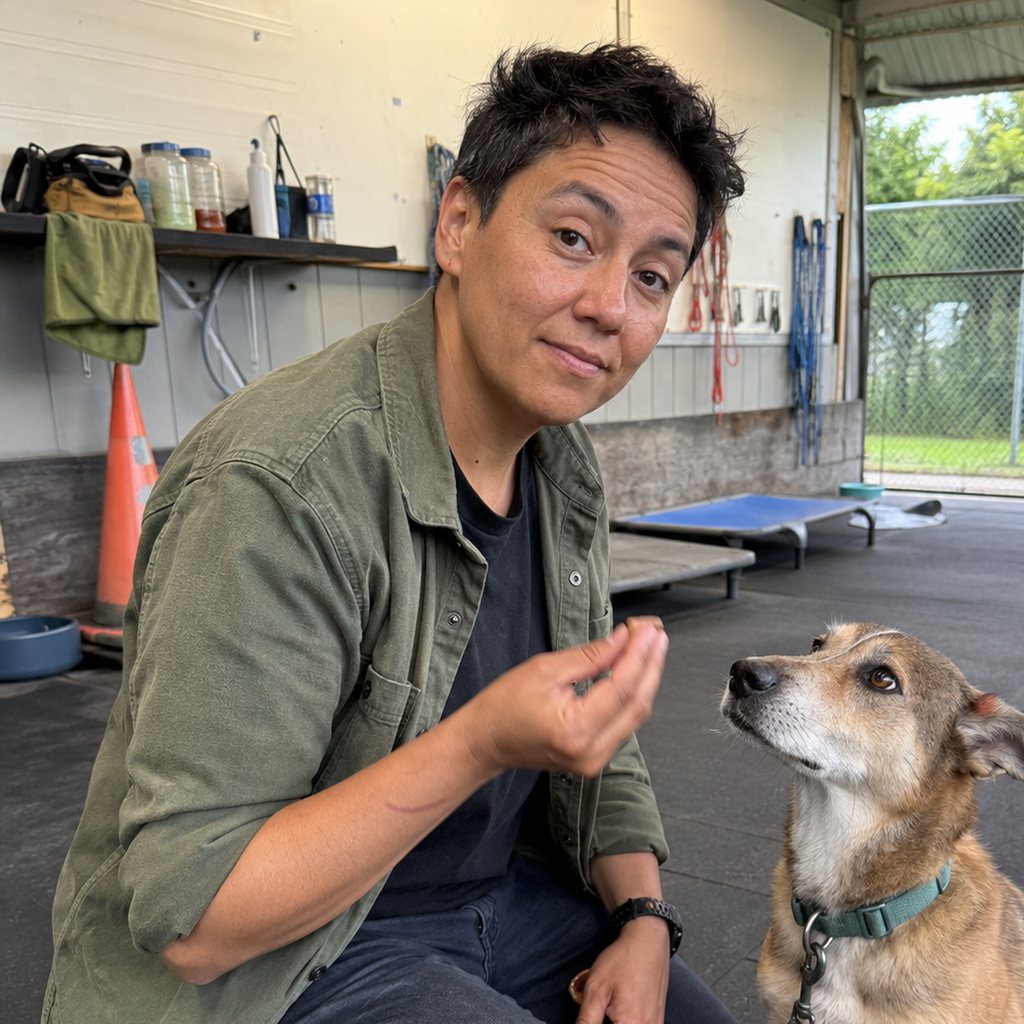
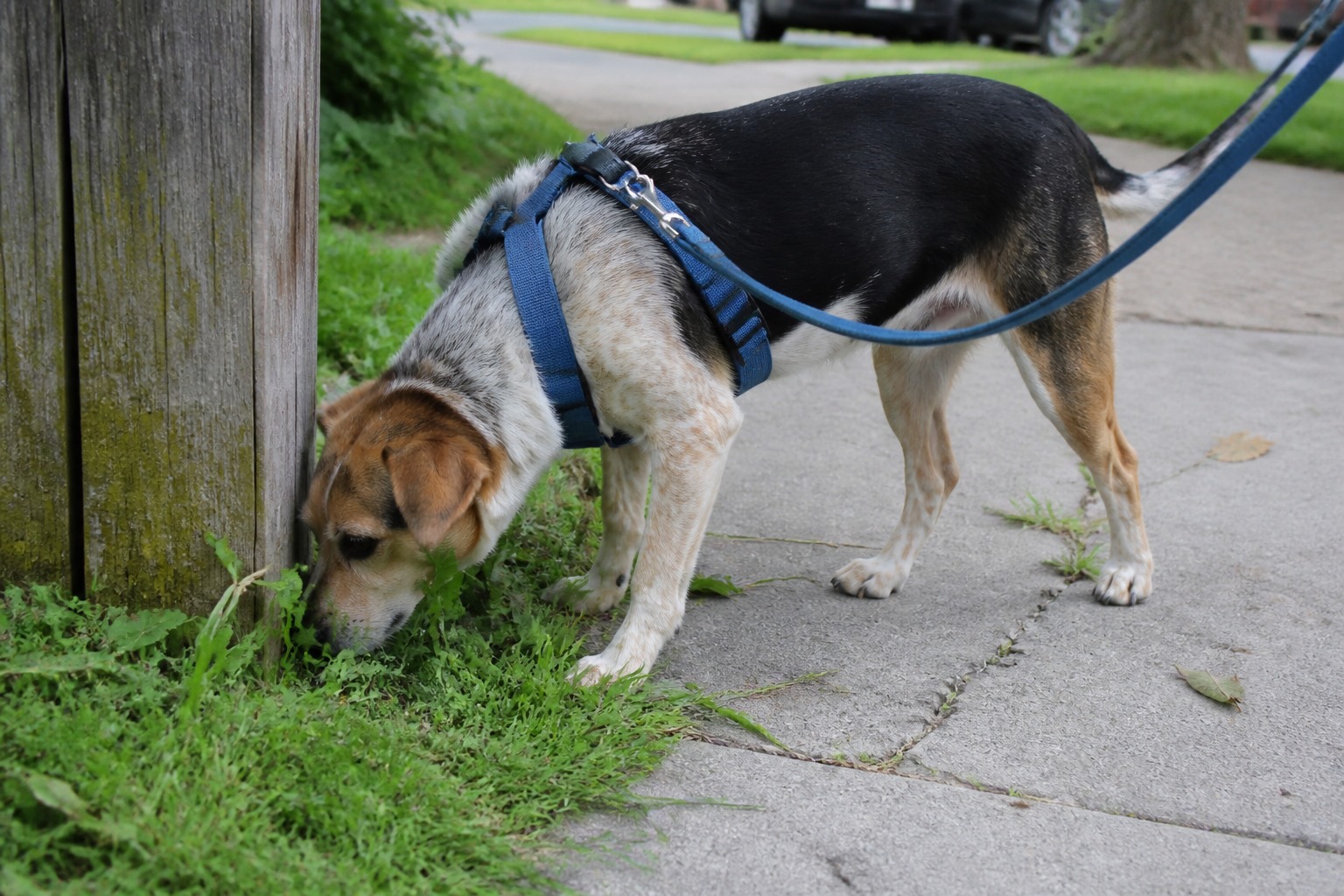
Picture the standard evening walk. You have a loop in mind, a rough amount of time, and a dog who keeps stopping dead at every mailbox post to inhale like it owes them money. So you tug. You coax. You say “come on” in the voice you save for slow elevators. And the whole time, you are interrupting the single most valuable thing the walk offers your dog.
We tend to think of a walk as exercise, a way to burn off the zoomies before bed. For your dog, that is almost beside the point. The walk is mostly a chance to read the neighborhood with their nose, and the reading is where the good stuff happens. Once you understand what a nose actually does for a dog, the tugging starts to feel a little rude.
Your dog is not built like you. They’re built to smell.
Dogs have been put to work sniffing out explosives, cash, narcotics, buried avalanche victims, and the early chemical whispers of diseases like cancer. Even a dog whose most strenuous daily task is relocating from the couch to the rug carries that same equipment. Roughly an eighth of a dog’s brain is devoted to processing odor, which works out to something like 40 times the neural real estate humans hand to smell. Their world arrives nose-first, layered and time-stamped in a way ours simply is not.
So when your dog freezes over a patch of grass, they are not being difficult or wasting daylight. They are doing the thing their body was designed around. Denying them that is a bit like handing someone a great novel and flipping the page every three seconds.
A sniff literally changes your dog’s mood
Here is the part that surprised even a lot of trainers. In 2019, researchers Charlotte Duranton and Alexandra Horowitz ran a small study testing whether scent work shifts a dog’s outlook, not just their energy. They taught dogs that a bowl in one spot always held food and a bowl in another spot never did. Then they placed a bowl in an ambiguous middle location and timed how fast each dog trotted over to check. A quicker approach signals optimism: the dog expects good news.
Half the dogs spent two weeks doing daily nose work. The other half did obedience-style heelwork with no searching. Afterward, only the sniffing group got measurably more optimistic, hustling toward that maybe-bowl faster than before. Letting a dog use their nose did not just tire them out. It appeared to make them more hopeful.
A 2024 review of scent-activity research pulled together a wider picture, linking these smell-based games to better problem-solving, more persistence, and steadier self-control. The takeaway is consistent: giving a dog permission to sniff is real enrichment, not a detour on the way to the real workout.
“People come to me worried their dog is too hyper, and half the time the fix isn’t more running, it’s more nose,” says Dr. Nina Kohl. “A dog who gets to work a scent for ten unhurried minutes usually comes home settled in a way a fast lap around the block never delivers.”
How to actually do it
There is no equipment and no wrong version. The rule is simply this: for some stretch of the walk, your dog picks the agenda and you follow.
Loosen the leash and let them set the pace, even when that pace is glacial and the destination is a single blade of grass. You do not need a scenic trail. A slow tour of your own block, with full stops for every fascinating fence post, does the job. If your whole walk can’t run on dog-time, carve out the last ten minutes for it and let the earlier part be your brisk march.
Timing matters more than people expect. A dog who comes flying out the door at 7 a.m. wired and ready to launch is not in the headspace for a contemplative smell tour. Evenings tend to work better anyway, when the sidewalks are quieter and there is less competing chaos to manage.
The dogs who need it most
Every dog benefits, but a few get an outsized payoff. Anxious dogs and dogs with a revved-up, hard-to-channel drive often do better when scent work becomes a regular part of their routine, alongside whatever training you are already doing. It gives that restless engine a job.
Senior dogs are the other group. As bodies stiffen and long hikes lose their appeal, the nose keeps working long after the legs have filed their complaints. A gentle smell-led amble asks almost nothing of the joints while still lighting up the brain, which matters enormously for older dogs whose worlds tend to quietly shrink. Even a dog slipping into canine cognitive decline can get real comfort from time spent with their face buried in the dirt, following a story only they can read.
When you’re stuck inside
Weather does not always cooperate, and dragging a reluctant dog down a freezing, soaked sidewalk helps no one. On those days, move the sniffing indoors. Put your dog in another room, hide small bits of their kibble around the house, and release them to hunt it down. You are feeding them anyway; turning five minutes of dinner into a search game gives the nose a workout without anyone getting wet.
What newer research adds
The old advice to “let them sniff” used to rest mostly on the fact that dogs obviously enjoy it. The newer work gives it teeth. Scent-based activities now sit in the same conversation as puzzle feeders and training games when behaviorists talk about mental enrichment, and the optimism findings suggest the effect reaches a dog’s baseline mood, not just their energy that afternoon.
For pet owners, the practical shift is small but real. You do not have to choose between a “real” walk and a sniffy one. A few unhurried minutes of nose time, most days, is one of the cheapest and most effective things you can do for a dog’s head. The next time your dog plants themselves at a hydrant, try treating it as the point of the outing rather than the obstacle.
References
- Duranton, C., & Horowitz, A. (2019). “Let me sniff!” Nosework induces positive judgment bias in pet dogs. Applied Animal Behaviour Science, 211, 61–66.
- Murtagh, K., et al. (2024). The value of sniffing: A scoping review of scent activities for canines. Applied Animal Behaviour Science.
- American Kennel Club. How Powerful Is a Dog’s Nose?
Jordan Ellis is a certified professional dog trainer with a decade of experience working with rescue organisations and private clients. They specialise in anxiety, reactivity, and positive reinforcement methods, and review all training and behaviour content at The Pet Times.
Meet our experts ↗Keep reading
 LivingNew York's Hottest Club Is a $795 Dog RunNina Vasquez · 8 min
 TrainingYour Dog Isn't Wrecking the Yard. They're Doing a Job. Name It.Dr. Mara Chen · 8 min
 TrainingYou Can't Force a Dog Friendship. But 6 Things Stack the DeckDr. Ravi Mehta · 5 min
 LivingYour Dog Doesn't Care About Your Square Footage. It Cares About You.Marcus Webb · 9 min
 TrainingYour Dog's Toy Stash Is Adorable. The Growl Over It Isn't.Marcus Webb · 7 min
 TrainingMost Dog-Park Advice Is Half True. These Are the Signals That Actually MatterDr. Nina Kohl · 10 min