


Yes, You Can Judge a Date by How They Treat Their Dog. Just Judge the Right Thing.
How someone cares for their pet really is a window into character. The trick is knowing what actually counts as a red flag, and what's just a well-meaning mess.

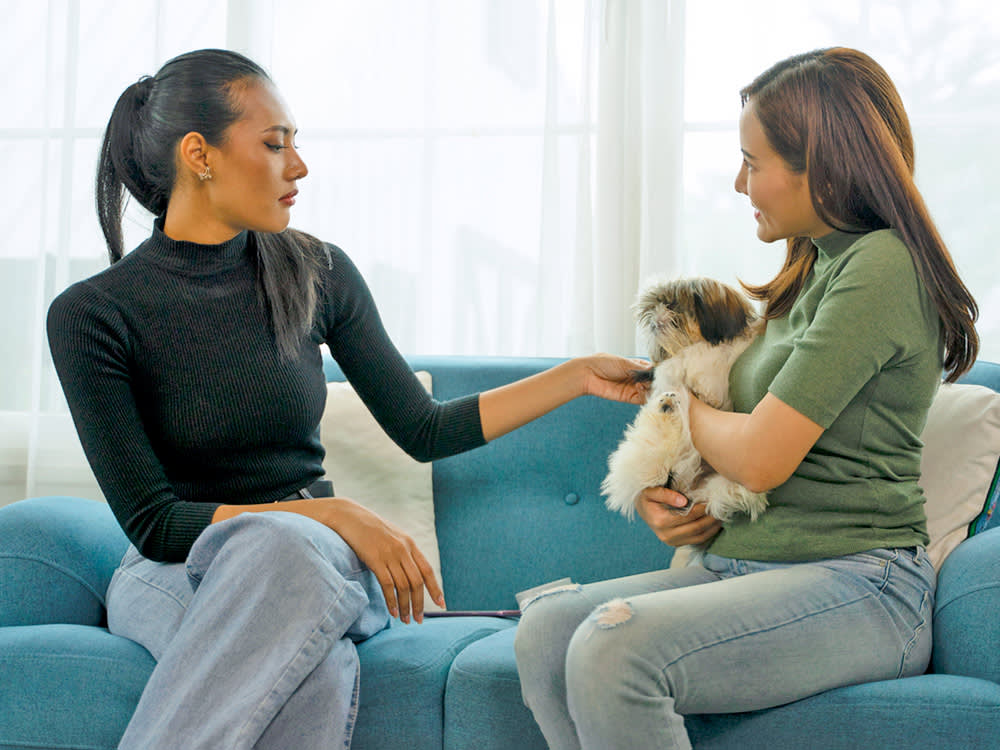
You meet someone new, a date, a friend-of-a-friend, a potential roommate, and at some point their dog enters the picture. Maybe the dog is off-leash and lunging at a stranger’s granola bar while your new acquaintance laughs it off, totally unbothered. And a small, uncharitable voice pipes up: does this tell me something about them?
It does. But most people aim that instinct at the wrong target. They watch for a “good owner” versus a “bad owner,” graded on leash manners and training polish, when the thing actually worth reading is different and more revealing. The real question isn’t whether someone’s dog is well-behaved. It’s whether they treat the animal as a living being they’re responsible for, or as a prop in the story they’re telling about themselves. Get that distinction right, and how someone handles their pet becomes one of the more honest character references you’ll ever get.
Why the instinct is basically sound
Start by granting yourself permission: this is a reasonable thing to notice. How a person treats a creature that is smaller, more vulnerable, and entirely dependent on them is a genuine data point. It’s low-stakes for them and high-stakes for the animal, which is exactly what makes it revealing. Nobody performs their patience for a dog the way they might for a boss or a first date.
“The way someone cares for a pet exposes traits that are hard to fake, like patience under boredom, willingness to be inconvenienced, and whether they can put another creature’s needs above their own comfort,” says Dr. Mara Chen. “You’re not really watching the dog. You’re watching how the person responds when the dog needs something at the least convenient moment.”
That’s the useful version of the instinct. It’s not “is this dog impressive.” It’s “when this animal is inconvenient, what does this person do.”
The red flag that actually matters
Here’s the distinction to hold onto. The most telling problem isn’t a dog with mediocre recall or a chewed-up couch. It’s the person who wants to have a dog, or to be seen having a dog, without wanting to take care of one.
You know the type. There’s a daily flood of adorable photos to the feed and a matching daily walk that quietly didn’t happen. The dog spends hours alone in a bedroom while its person curates an identity around it. When the animal’s actual welfare becomes parenthetical and the pet functions mostly as an accessory, that’s worth flagging, because it points to a pattern that rarely stays confined to the dog. Someone who treats a dependent creature as set dressing will often treat people that way too, eventually.
Compare that to the off-leash friend at the trailhead. Is it irresponsible to let a dog with shaky recall run up on strangers? Sure. But her intention was to give the dog fun and freedom, not to neglect it. That’s a lapse in judgment, not a hole where empathy should be. Those are extremely different findings, and collapsing them into one “bad pet parent” verdict is how you end up writing off a decent, oblivious person, or worse, excusing a genuinely cold one because their dog happens to sit on command.
Poor behavior isn’t always poor care
The next trap is assuming a badly behaved dog means a bad owner. Sometimes the exact opposite is true. Some dogs have serious behavioral issues, reactivity, aggression, deep-seated anxiety, and their people have poured months and real money into training with limited results. A struggling dog can be the visible tip of enormous, invisible effort.
Money muddies it further. Not everyone can afford a trainer, daycare, or the outsourced care that makes a polished dog possible. A person doing their imperfect best on a tight budget can look, from the outside, exactly like a person who doesn’t care, and they are nothing alike. So before you let a chaotic dog color your read on a human, ask what you’re not seeing.
Say something before you write someone off
If you like the person and something about their pet care genuinely bothers you, there’s a move better than silent judgment: say it, kindly. People can’t adjust to a concern they never knew you had, and a gracious, direct conversation, “hey, it stresses me out when she’s off-leash near the road”, gives them a chance to show you who they are when corrected. How someone responds to that is its own tell. Defensiveness and contempt are information. So is a thoughtful “you’re right, I hadn’t thought about it that way.”
So, back to your date
Put it together and you get a usable rule. Values are the thing you’re actually assessing, and how someone cares for a pet is a clean readout of them. If the misalignment is fundamental, an animal treated as a disposable identity prop, a dependent creature whose comfort is always last, that’s the kind of core-values gap that doesn’t bode well for a relationship, romantic or otherwise. If it’s a lapse, a well-meaning person who’s a little oblivious or a little broke, that’s a conversation, not a dealbreaker.
As for the laughing friend with the off-leash escape artist? Best read: she means well and isn’t paying enough attention. Not the worst sin in the world, and not the most appealing trait in a new friend either. Worth a gentle word on the next hike. Worth watching how she takes it. And probably not worth much more judgment than that.
References
- Serpell, James, ed. The Domestic Dog: Its Evolution, Behavior and Interactions with People. 2nd ed., Cambridge University Press, 2017. https://www.cambridge.org/9781107024144
- Payne, Elyssa, Pauleen C. Bennett, and Paul D. McGreevy. “Current perspectives on attachment and bonding in the dog–human dyad.” Psychology Research and Behavior Management, vol. 8, 2015, 71–79. https://www.ncbi.nlm.nih.gov/pmc/articles/PMC4348122/
Nina Vasquez writes about life at home with pets and the relationships at the heart of it. Her work covers day-to-day living, people-and-pet stories, and the products that fit into a real household, with a warm, grounded take on everyday pet ownership.
Meet our experts ↗Keep reading
 TrainingYour Dog Isn't Reading Your Face. They're Reading Your Hand on the Leash.Dr. Lena Park · 8 min
 LivingThe Rescue Dog Who Became a Fashion Label's North StarLeila Torres · 5 min
 LivingA 'Soul Dog' Isn't Magic. It's Fluency, and You Can Build It.Jordan Ellis · 8 min
 LivingThe Best Performance at the 2024 Oscars Came From a Border Collie in a BowtieSasha Ford · 4 min
 TrainingYour Dog Isn't Being Rude at the Door. It Just Never Learned the Boring Version.Sasha Ford · 5 min
 LivingMissouri Tops the 'Horrible Hundred' for a 14th Year. The 2026 Report Is Grim.Nina Vasquez · 6 min