


Flying With Your Pet? Here's What 8 Airlines Actually Charge, and Their Fine Print
Every airline sets its own pet fees, carrier rules, and size limits, and the gaps are big. A clear, current rundown of eight major U.S. carriers plus one dog-only splurge, so you can pick before you book.

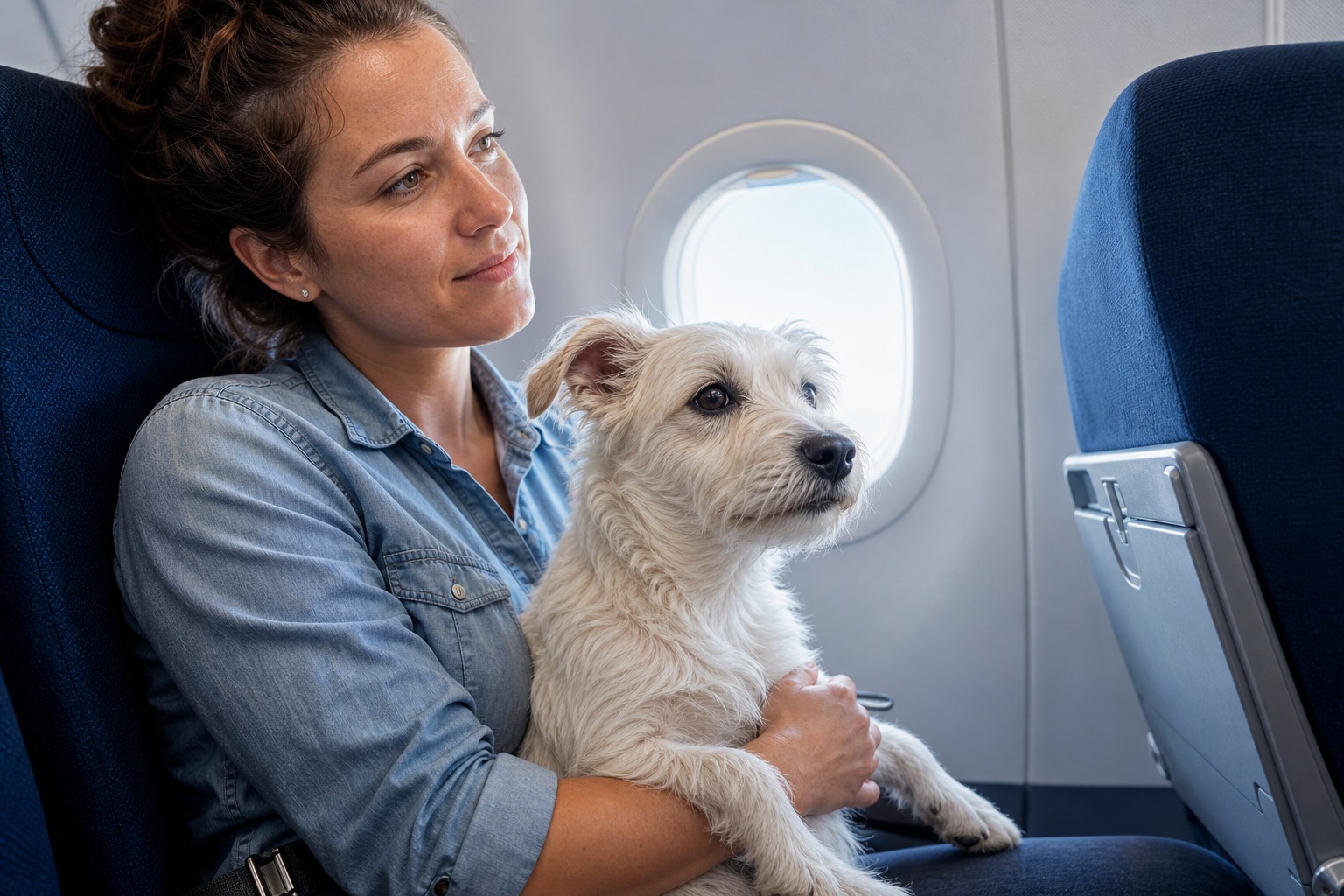
We want our animals with us, and airlines have decided that wish is worth a wildly different amount of money depending on which logo is on the plane. Pet fees, carrier dimensions, which species are even allowed, whether a large dog can travel at all: none of it is standardized. Sort it out before you buy a ticket, not at the gate. Below, a plain-English breakdown of eight major U.S. airlines’ pet policies for domestic flights, plus one boutique option for dogs. For international trips, every airline has stricter, separate rules, so check the carrier’s own pet pages directly.
One safety note before the list, because it applies no matter who you fly.
“Flat-faced breeds, your Frenchies, pugs, Persians, bulldogs, are the ones I worry about most on a plane,” says Dr. Ravi Mehta. “Their airways are already compromised, and the stress and air quality of travel can tip them into real trouble. If you have a brachycephalic pet, talk to your vet before you book, and never let one fly in a cargo hold.”
Alaska Airlines
Among the majors, Alaska is one of the friendliest. Dogs and cats who fit an under-seat carrier ride in the cabin for $100, and larger pets can go in a baggage compartment for $150. Two same-size, same-species pets can share one carrier in the main cabin, and you’re allowed two carriers if you buy the adjacent seat, meaning up to four pets total if they fit. Carriers can be soft or hard in the cabin, but cargo requires a hard one. Two caveats: flat-faced dogs aren’t permitted in the baggage compartment, and your pet counts as your carry-on.
American Airlines
American charges $150 per kennel for a pet that fits under the seat, and unusually, it still lets you bring a separate carry-on bag too. A soft kennel is recommended, though a hard one small enough to slide under the seat also works; count on one pet per carrier and one carrier per seat. Large pets can only travel as checked baggage if you’re active-duty U.S. military or State Department Foreign Service. Routes are limited to Puerto Rico, Mexico, Canada, St. Thomas, St. Croix, and the U.S. itself.
Delta Air Lines
Delta welcomes dogs, cats, and birds as carry-ons if they fit under the seat, and you can put two young animals in one carrier for a single fee, as long as they’re the same breed and size and both between eight weeks and six months old. The carrier has to be soft-sided, and the fee is $150. Larger animals are mostly out of luck: cargo shipping is currently available only to active military members traveling on change-of-station orders.
Frontier Airlines
Frontier is one of the cheaper options at $99 per pet, per direction. There’s no cargo or checked-pet option, so your animal just needs to ride under your seat in a soft-sided carrier. A nice quirk: Frontier also welcomes hamsters, guinea pigs, rabbits, and small birds. International flights are a no.
JetBlue
JetBlue takes dogs and cats in the cabin as carry-ons, with no large-pet or cargo option. If you buy an extra seat, your pet’s carrier can sit beside you rather than under the seat, though not during takeoff or landing, and your pet has to stay inside it the whole flight. You can bring two pets, provided you’ve bought that second seat. The fee is $150.
Southwest Airlines
Small dogs and cats travel in the cabin for $125. You can bring one hard or soft carrier, and two pets may share it. There’s no cargo option, so large dogs and cats will need a different airline. No international pet travel.
Spirit Airlines
Spirit takes small dogs, cats, rabbits, and small birds, in one soft-sided carrier that can hold up to two pets. The fee is $125, and your carrier counts as your carry-on. International flights are off the table.
United Airlines
Any pet that slides under the seat can ride as a carry-on, and you’re allowed two, though the second means buying an additional seat. Hard and soft carriers both work, and the fee is $150.
The splurge: Bark Air
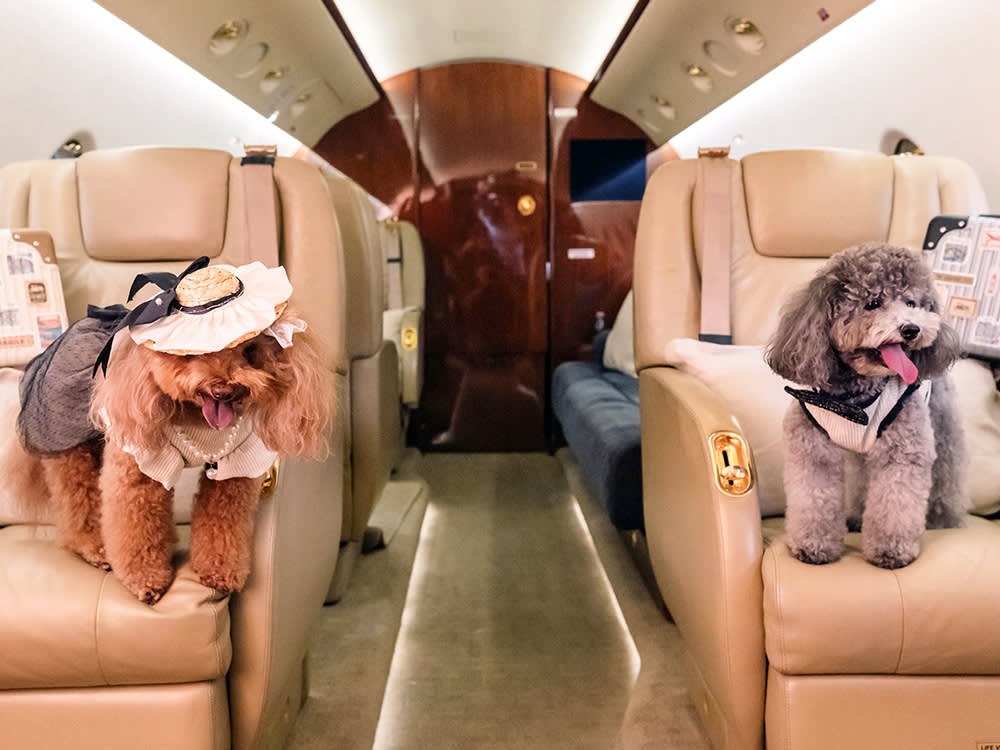
For a very different experience, Bark Air is an airline built specifically around dogs. Instead of a crate, dogs get a crate-free flight: lap, floor space, or their own seat, with complimentary treats and water, and, notably, no size or breed restrictions. The catches are the price, which is steep, and the map, which currently covers only a handful of cities. There’s no separate pet fee, but that’s because the fare itself is the cost of flying your dog in style.
A few things that apply everywhere
Book early. Airlines cap how many pets are allowed per flight, even under-seat ones, so space genuinely runs out. Re-check the policy when you buy, because fees and rules shift. And pack a health certificate from your vet: many airlines require proof of a current rabies vaccine even domestically, some states have their own documentation rules for visiting pets, and international travel piles on vaccine and microchip requirements. A certificate listing your pet’s breed, weight, age, vaccinations, and health history is the safest thing to have in your bag.
What’s new since this was written
Pet fees are a moving target, and several carriers have adjusted theirs recently, generally upward. Alaska’s checked-pet fee has risen from the $150 noted above, Southwest has shifted its in-cabin pricing, and Delta has increased its cabin pet fee as well. Because these numbers change without much fanfare, treat every figure here as a starting point and confirm the current fee on the airline’s own site at the moment you book. The relative picture, budget carriers like Frontier on the low end, the big three clustered higher, tends to hold even as the exact dollar amounts drift.
Sara Lim leads our Product Picks coverage, testing and comparing the things pets and their owners actually use. From everyday essentials to home-and-style finds, she focuses on honest, useful recommendations rather than hype.
Meet our experts ↗Keep reading
 LivingThe Two Things That Actually Go Wrong When You Move a Pet Across State LinesDr. Nina Kohl · 6 min
 LivingThe Most Meaningful Hour of Your Vacation Might Be Spent Walking Shelter DogsLeila Torres · 5 min
 LivingShipping Your Dog Overseas Can Cost $10,000. The Military Finally Started Paying.James Okafor · 7 min
 LivingPets Keep Dying in Cargo Holds. One Country Wants to Force a Global Fix.Dr. Mara Chen · 4 min
 LivingAn $84,000 Seat for Your Dog. The Real Story Is Why Anyone Would Pay It.Marcus Webb · 7 min
 LivingA Top EU Court Just Ruled Your Dog Is Legally 'Baggage' on a PlaneSara Lim · 4 min