


A Top EU Court Just Ruled Your Dog Is Legally 'Baggage' on a Plane
After a family's dog vanished on the tarmac, Europe's highest court decided pets in the cargo hold count as luggage, capping what airlines owe when the worst happens. What the ruling actually says, and why it matters for anyone who flies with a pet.

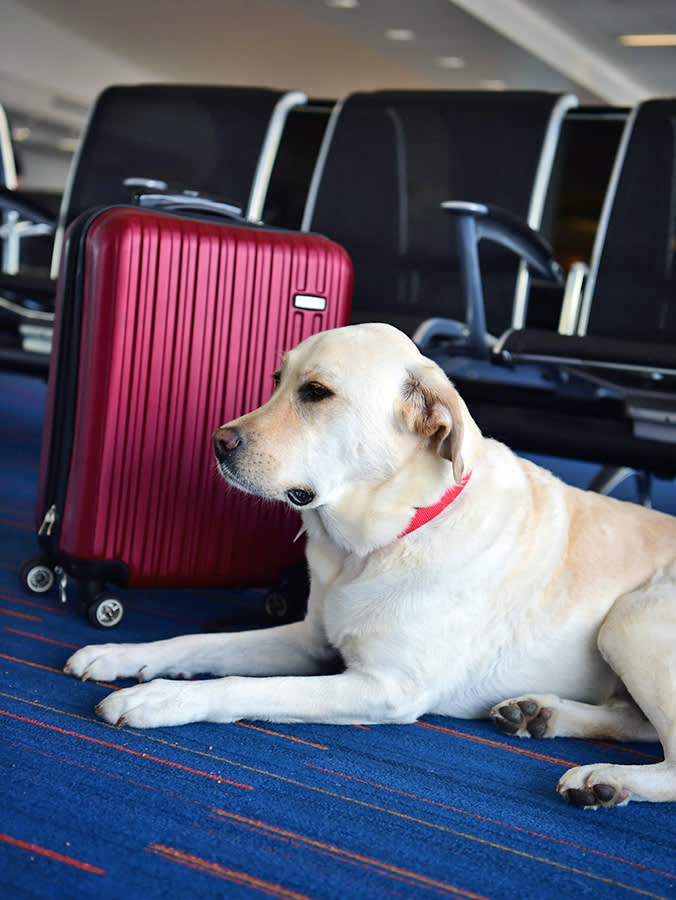
For a while now, the legal trend has run in one direction: toward treating pets as something closer to family than furniture. A New York judge ruled last year that pets count as immediate family, opening the door for owners to seek damages for emotional distress over a pet’s wrongful death. Pennsylvania’s House passed a bill requiring a pet’s welfare to be weighed in custody fights during a divorce. So it landed as a jolt when Europe’s highest court went the other way and decided that, at least once your animal is loaded into an airplane’s cargo hold, your beloved dog is legally baggage.
On October 16, 2025, the Court of Justice of the European Union issued its ruling in Case C-218/24, and the facts behind it are the kind that make any pet owner’s stomach drop.
How a lost dog became a landmark case
In 2019, a passenger identified in filings as Gisel Ortiz checked her dog, Mona, for a flight departing from Buenos Aires and bound, ultimately, for Barcelona on the Spanish airline Iberia. Mona was too big to ride in the cabin, so she was booked to fly below deck in a dedicated crate. Somewhere between the terminal and the plane, while airline staff were moving her, she got loose. She was never found.
Seeking to be compensated for grief rather than a lost object, Ortiz sought 5,000 euros in non-material damages. In interviews with the Argentine newspaper Clarín at the time, she described people who laughed because they did not grasp what the dog meant to her, and days spent crying and watching her phone for a miracle that never came.
The Spanish commercial court hearing the case was sympathetic to that view. It reasoned that animals are sentient beings, and that losing one causes a psychological harm not comparable, generally speaking, to the loss of an ordinary set of belongings. But rather than rule on its own, the court referred a narrow legal question up to the EU’s top court: under the international treaty that governs airline liability, should a pet be excluded from the definition of baggage?
What the court decided, and why
The Court of Justice said no. Under its reading of the Montreal Convention, the treaty that makes airlines responsible for damage to baggage during a flight, a pet transported in the hold falls within the meaning of “baggage.”
The reasoning was almost coldly textual. The treaty, the court noted, is written around only two categories, the people who fly and the bags they bring, and a pet is plainly not a passenger. With no third category available, an animal in the hold defaults to the baggage side of the ledger.
The practical consequence is money. Because Mona was classified as baggage, Iberia’s liability was capped at the standard limit for checked bags, unless Ortiz had made what the treaty calls a “special declaration of interest” at check-in, essentially declaring the item unusually valuable and paying a fee for higher coverage. She had not, because almost nobody does that for a family pet. Instead of 5,000 euros, she was awarded 1,578.82.
Her lawyer, Carlos Villa Corta, called it a missed opportunity. “I believe that a great opportunity has been missed to continue raising awareness of the rights of animals and the people who care for them,” he told The Guardian, adding that the court had effectively decided pets deserve no special or enhanced legal protection compared to a simple suitcase.
What this means if you fly with a pet
A few things are worth understanding without overreading the decision.
First, the scope is specific. The ruling governs airline liability under the Montreal Convention for pets carried in the cargo hold on flights within the EU’s legal reach. It is not a sweeping declaration that pets are property for all purposes, and it sits alongside, rather than erasing, the many places where the law has moved toward recognizing animals as sentient.
Second, the compensation cap is the real teeth of it. If you check a pet into the hold and something goes wrong, the money an airline owes is limited to baggage rules unless you have made that special declaration of value in advance. For anyone flying with an animal in Europe, that declaration is suddenly worth knowing about, even though no amount of money is the point when a pet is lost.
And third, the ruling is a reminder of how far the law still has to travel to catch up with how people actually feel about their animals. The Spanish court that started this process clearly understood that Mona was not a suitcase. Europe’s highest court, bound to the words of a decades-old treaty written long before anyone thought to ask, reached the opposite conclusion. Both things can be true at once: your dog is family to you, and the fine print in an international aviation treaty does not yet see it that way.
References
- Court of Justice of the European Union. Judgment in Case C-218/24, October 16, 2025.
- CBS News. “Dogs count as cargo for airline liability, EU court rules, after passenger’s pet goes missing.”
- Cabinet Bessis. “Is a Pet Considered Baggage? Key Takeaways from the CJEU Judgment of October 16, 2025.”
- The Guardian. “Pets on flights can be classed as baggage, EU court rules.”
Sara Lim leads our Product Picks coverage, testing and comparing the things pets and their owners actually use. From everyday essentials to home-and-style finds, she focuses on honest, useful recommendations rather than hype.
Meet our experts ↗Keep reading
 LivingThe Two Things That Actually Go Wrong When You Move a Pet Across State LinesDr. Nina Kohl · 6 min
 LivingShipping Your Dog Overseas Can Cost $10,000. The Military Finally Started Paying.James Okafor · 7 min
 LivingPets Keep Dying in Cargo Holds. One Country Wants to Force a Global Fix.Dr. Mara Chen · 4 min
 LivingThe Most Meaningful Hour of Your Vacation Might Be Spent Walking Shelter DogsLeila Torres · 5 min
 Health & WellnessWashington's Senate Voted 48-0 to Let You Idle for Your Dog. The Bill Died Anyway.Sasha Ford · 6 min
 Product PicksPutting Your Dog's Face on Your Suitcase Is Objectively the Best Bag TagSasha Ford · 5 min