


How a 'Rescue' Becomes a Hoard: The Lake Hughes Seizure Explained
Officials seized roughly 300 dogs and cats from Rock N Pawz in Lake Hughes, one of the largest such operations in LA County history. The director called it a textbook rescue 'gone wrong.'

The most important sentence in the entire Lake Hughes case did not come from the owner or the neighbors. It came from the official running the seizure, describing a pattern she has watched play out over and over.
“They turn into hoarding situations,” said Marcia Mayeda, director of the Los Angeles County Department of Animal Care and Control (DACC), describing what happened at Rock N Pawz Animal Rescue. “They start with really good intentions, and they’re not able to say no” to additional animals.
That is the through-line worth understanding here, because the headline number, roughly 300 dogs and cats seized in one of the largest operations in county history, is shocking but not actually explanatory. The real story is the slow mechanism by which a self-described rescue collapses into the exact crisis it was founded to prevent.
The anatomy of “gone wrong”
A rescue hoard rarely begins with cruelty. It begins with compassion that loses its brakes. Someone who genuinely loves animals keeps taking in “just one more,” past the point where they have the space, money, staff, or veterinary capacity to provide real care. Intake never stops; adoptions can’t keep pace; the population compounds. What started as saving animals becomes warehousing them.
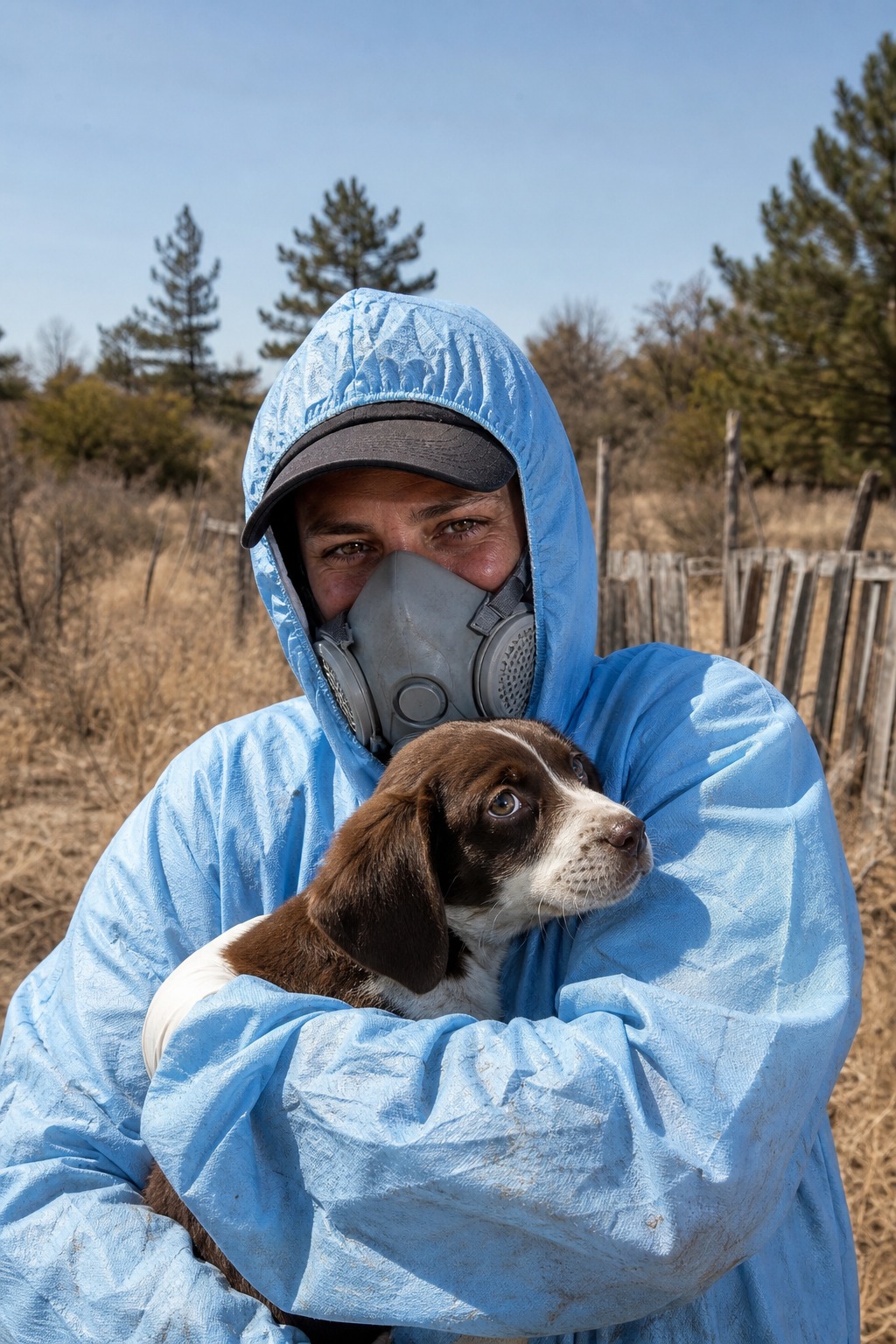
By the time authorities intervene, the conditions are unrecognizable from the founding mission. At the Lake Hughes property, DACC staff had to wear respirators and hazmat suits to enter. “Our staff have to wear respirators and hazmat suits to go into the property,” Mayeda said. Animals were confined to crates with limited access to water, in a site so contaminated that, according to a neighbor, there was no septic system for the kennel at all.
That is what “good intentions, can’t say no” looks like at the end of the line.
The neighbors knew first
For years, residents of Lake Hughes had complained about the property, citing the smell and the constant noise.
“It sounds like a big dogfight,” neighbor David Canfield told the Los Angeles Times. “Very violent.”
“It’s been pretty horrific to see what’s been going on there,” resident Susan Zahnter told CBS News. “I’m not surprised because we have not only listened to [the animals], we have smelled them. The owner is horrific. There’s no septic system on the property for the kennel.” According to Zahnter, the property’s owner, Christine D’Anda, had been running an unlicensed kennel in an area not zoned for one.
The DACC prepared for a week before moving in, planning not just the search but the hardest logistical question of all: where hundreds of animals would actually go.
The numbers, revised
Early estimates put the count near 700 animals. The figure was later revised down to roughly 250 dogs and 66 cats, with officials still counting late into the night.
“We are grateful the number was not as high as first feared, but the impact on our care centers and staff is still very real,” the DACC wrote on Instagram. “Hundreds of animals are now receiving medical evaluations, treatment, and daily care.” Some animals were already dead when the team arrived; the DACC did not specify how many.
D’Anda has disputed the county’s account entirely and vowed to get her animals back. “My animals were not a threat to anybody,” she told ABC 7. “They were healthy. They were cared for. The animals were cleaned every day.” She told KTLA she “can’t wait to go to court,” insisting she has proof the animals were well cared for, and her rescue alleged that DACC workers injured some dogs during the operation. No arrests or criminal charges have been filed.
The cost almost nobody mentions
Here is the part of these stories that gets buried, and shouldn’t: a mass rescue is not a clean happy ending. It is a massive, expensive medical and logistical burden dropped onto a public shelter system that was already full.
“The problem is the cost of bringing a pet back to health after it’s been living in filthy conditions and has parasites, and an illness, or maybe has been attacked by another animal because they’ve got them all in close quarters,” Teri Austin, president of the Amanda Foundation, told ABC 7. A separate charity flew about 27 dogs and a few cats to agencies in the Pacific Northwest to ease the load. Even so, the county has acknowledged the grimmest downstream consequence directly: some animals will be euthanized as a result of this operation.
That is the true price of a rescue gone wrong. Not just the animals who suffered inside it, but the ones in county shelters whose own odds get worse when 300 emergency intakes land overnight.
What actually prevents the next one
The uncomfortable lesson of Lake Hughes is that supporting “rescues” indiscriminately can fund the problem. Before donating to or surrendering an animal to any organization, it is fair, and wise, to ask basic questions: Is it a licensed facility? Does it publish adoption numbers, not just intake numbers? Will it let you visit? A legitimate rescue welcomes that scrutiny. A hoard in the making cannot survive it.
To help the animals from this case, the county directs people to the LA County Animal Care Foundation. The Rock N Pawz animals themselves are not yet available for adoption, but clearing space and resources in county shelters is what gives staff room to care for them.
References
- Los Angeles Times, “Animal rescue operation in L.A. County removes hundreds of dogs and cats”
- CBS News Los Angeles, “Hundreds of cats and dogs seized from Lake Hughes property”
- Los Angeles County Department of Animal Care and Control, official site
- LA County Animal Care Foundation, official site
Nina Vasquez writes about life at home with pets and the relationships at the heart of it. Her work covers day-to-day living, people-and-pet stories, and the products that fit into a real household, with a warm, grounded take on everyday pet ownership.
Meet our experts ↗Keep reading
 LivingIn a Colorado Divorce, Your Dog Is Legally a Toaster. A Bill to Fix That Just DiedClaire Sutton · 5 min
 LivingThe PET Act Closed One Loophole in How Companies Test Chemicals on Dogs and CatsMarcus Webb · 4 min
 LivingShipping Your Dog Overseas Can Cost $10,000. The Military Finally Started Paying.James Okafor · 7 min
 LivingThe Most Meaningful Hour of Your Vacation Might Be Spent Walking Shelter DogsLeila Torres · 5 min
 LivingOne Fake Email Nearly Shut Down This Animal ShelterMarcus Webb · 5 min
 LivingShe Was Convicted of Torturing Animals. The Law Still Called Them Hers.James Okafor · 6 min