


In a Colorado Divorce, Your Dog Is Legally a Toaster. A Bill to Fix That Just Died
HB26-1131 would have made Colorado courts weigh a pet's wellbeing in a divorce instead of splitting the animal like furniture. The bill died in committee in May 2026. Here's what it would have changed, why it stalled, and how pet-custody law already works in other states.

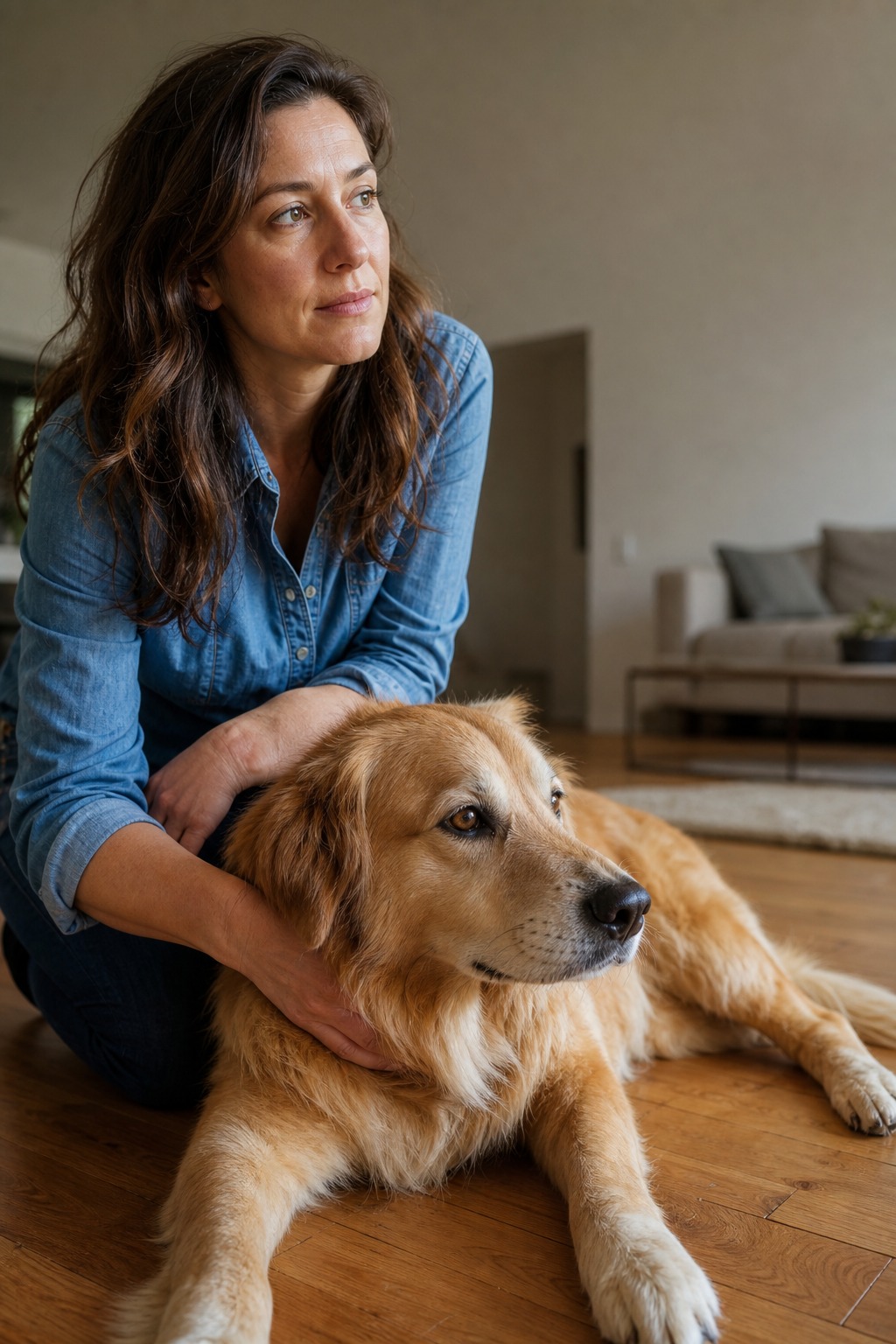
Here is the part of Colorado divorce law that surprises almost everyone who runs into it: when a marriage ends, the family dog is treated the same as the couch it sleeps on. Not a family member, not a dependent with its own needs, but property, to be assigned to one side of the ledger and divided like a kitchen appliance. A bill introduced this year, HB26-1131, was built around undoing exactly that. It died in committee in May, and the fight over it was never really about who “wins” the dog. It was about whether the law is willing to admit a pet is more than a thing.
The “toaster” problem
The bill’s sponsor, Representative Alex Valdez, has been blunt about the gap he is trying to close. Under current law, he has said, a judge looks at a family pet no differently than “a couch or a sofa,” an approach he argues produces inequitable outcomes and more litigation, not less. That framing gets at the real issue. Colorado law does not recognize a companion animal as a family member or as an individual with its own interests, so in a divorce the animal simply falls into the general division of property, alongside the car and the flatware.
For a lot of pet parents, that is a jarring mismatch between how the law sees a dog and how they actually live with one.
This is about closing the distance between what the statute says and what most families already feel in their bones, that a dog or cat is a member of the household, not an asset. When a judge is forced to treat a beloved animal like a piece of furniture, you get rulings that don’t serve anyone, and least of all the pet.
What the bill would actually do
HB26-1131, titled “Custody of Pet Animals,” would give Colorado courts explicit authority to decide the care and custody of a companion animal in a dissolution or legal separation, and to weigh the animal’s wellbeing in doing so. Rather than asking only who paid for the dog, the court could consider a set of real-world factors:
- Who acquired or adopted the animal, and each person’s history with it.
- How day-to-day care has been divided: feeding, walking, play, grooming, training, and vet visits.
- The share of expenses each party has carried.
- The emotional attachment on each side.
If the court awards shared custody, it can divide both time with the pet and the associated costs. Couples can also write their own custody agreement in advance, and a judge would be able to enforce it. In a notable addition, the bill would let a court issue an emergency protection order covering a pet’s custody and care, a provision aimed at situations where an animal is caught in the middle of a volatile separation.
The objection worth sitting with
The bill is not sailing through. It cleared its first committee hearing on a narrow 6-5 vote, and the opposition is not frivolous. The Colorado Bar Association raised the concern that divorce dockets are already strained by child-custody and domestic-violence matters, and several lawmakers worried that adding pet hearings would raise costs and slow an overloaded court system.
The sharpest objection was practical rather than philosophical. One representative pointed out that the person doing the daily chores is not always the person with the deepest bond. “My husband takes care of all the things on this list, but it’s my pet,” she noted, questioning how a court would really weigh feeding-and-walking logs against attachment. It is a fair challenge, and it points to the genuine difficulty here: the factors that are easy to document are not always the ones that matter most to the animal or the person.
Colorado is not the first
The idea is not novel, which is part of why supporters think the objections are surmountable. Several states have already rewritten divorce law to treat pets as more than property. California, Illinois, and Alaska have all passed pet-custody measures in recent years, and Alaska is generally credited as the first state to require courts to consider an animal’s wellbeing in a divorce. In 2025, the Pennsylvania House approved a comparable bill classifying companion animals as cherished family members rather than personal property. Colorado’s debate is one more front in a slow national shift away from the furniture model.
Where the bill ended up
HB26-1131 is dead, and the way it died says as much as the bill itself.
It was introduced on February 4, 2026, and cleared the House Judiciary Committee on February 24 on a narrow 6-5 vote. Then it hit Appropriations, and that is where the math caught up with it. Nonpartisan legislative staff estimated the law would generate roughly 1,900 hour-long pet-custody hearings a year, at a cost to the Judiciary Department of about $796,017 annually. On May 14, 2026, the House Appropriations Committee laid the bill over unamended, which at that point in the calendar is a quiet way of killing it. The General Assembly had adjourned its regular session the day before. The Colorado General Assembly’s official tracker now lists the bill’s status, simply, as “Lost.”
Notably, the loudest objection was not that pets do not matter. The Colorado Bar Association testified against the bill on the grounds that divorce dockets are already overloaded with human child custody and domestic violence cases. That is a resourcing argument, not a philosophical one, and it is the argument any future version of this bill will have to answer: not whether your dog is more than furniture, but who pays for the extra hearing to prove it.
For now, Colorado law is unchanged. If you divorce in Colorado, the dog is still property. But bills like this rarely die once. The direction of travel across the country is clear, and the next Colorado sponsor now knows exactly which number they have to beat.
References
- Colorado General Assembly. “HB26-1131: Custody of Pet Animals.” https://leg.colorado.gov/bills/HB26-1131
- Courthouse News Service. “Who Keeps Fido? Colorado Lawmakers Advance Pet Custody Bill.” https://www.courthousenews.com/who-keeps-fido-colorado-lawmakers-advance-pet-custody-bill/
- LegiScan. “Colorado HB1131, 2026 Regular Session.” https://legiscan.com/CO/bill/HB1131/2026
Claire Sutton writes about life with pets, from the first days home to the small daily routines that make a household work. Her reporting spans people-and-pet relationships, training basics, and the practical side of bringing a new animal into the family.
Meet our experts ↗Keep reading
 LivingThe Photographer Who Kept Finding Cats Inside Refugees' CoatsNina Vasquez · 6 min
 LivingA Lawyer Is Suing the IRS to Claim Her Golden Retriever as a DependentNina Vasquez · 4 min
 LivingThe Vet at the Ukrainian Border Treats Animals to Reach the People Holding ThemDr. Amara Solis · 6 min
 LivingShipping Your Dog Overseas Can Cost $10,000. The Military Finally Started Paying.James Okafor · 7 min
 LivingThe Internet's Favorite Grief Metaphor Just Got a Real AddressNina Vasquez · 4 min
 LivingThe Biggest Study Ever on Pets and Mental Health Is Funded by a Pet-Food CompanySara Lim · 7 min