


Most Pet Owners Skip the Holiday Sitter. Our Survey Found Out Why.
We asked 1,000 pet owners how they handle their dogs and cats over the holidays. Three in four skip a sitter or boarder entirely, and the hardest part of the season isn't the logistics people expect. It's keeping pets calm.
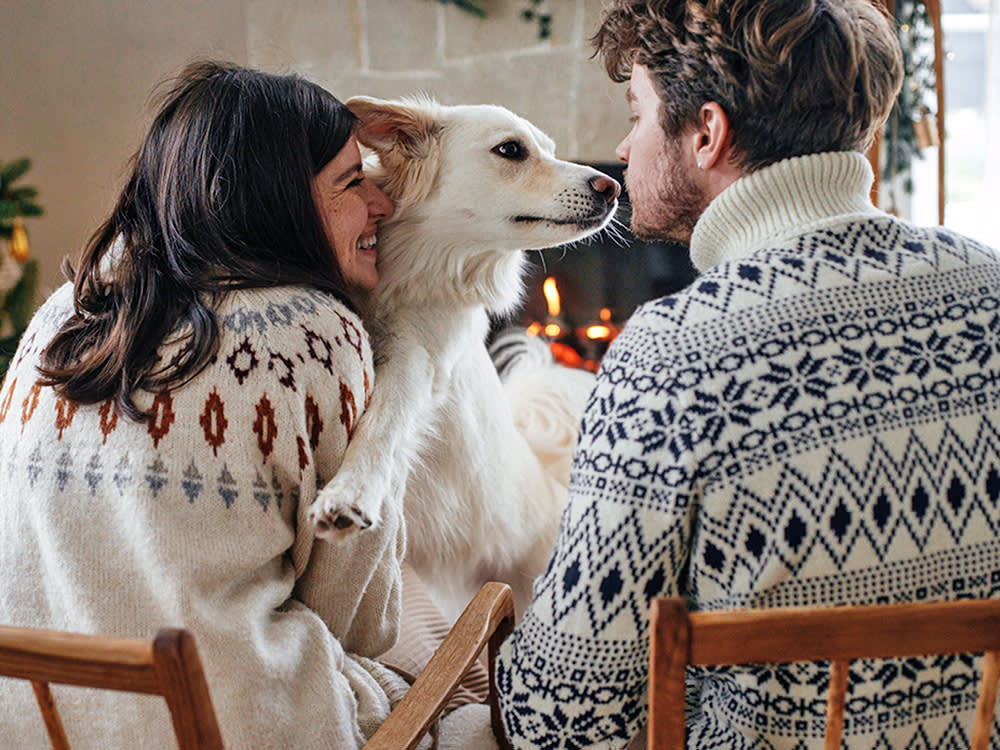
Every year the same holiday debate plays out in group chats: do you board the dog, hire a sitter, drag the cat to your in-laws’, or just wing it? Everyone seems certain their approach is the only sane one. So ahead of the 2025 holidays we ran the numbers, surveying 1,000 pet owners about how they actually plan to handle their animals through the busiest weeks of the year. A few of the findings pushed back on what “everyone knows.”
The headline: far fewer people outsource pet care than the constant sitter-and-boarding chatter would suggest. And the part of the season owners find hardest is not the one you would guess.
The sitter is the exception, not the rule
Ask around and you would think professional pet care is standard. It is not. Three in four owners (75 percent) said they would not use a pet sitter or boarder at all over the holidays. Instead, the fallback is personal: 9 percent planned to hand their animal off to someone they know. Younger owners leaned on their circle more than anyone, with 15 percent of Gen Z going that route, and men were a bit more likely than women to do the same, at 11 percent.
Whether that reflects trust, cost, or just the awkwardness of handing your dog to a stranger, the practical takeaway is the same: most households are keeping holiday pet care in-house.
On hosting, the generations split hard
When it came to actually throwing the party, owners were dead even, half planning to host friends and family, half sitting it out. The interesting story was who leads on hospitality. Gen Z were the most eager hosts, with 62 percent of those expecting guests, followed by Gen X at 53 percent and boomers at 52 percent. Millennials brought up the rear at 44 percent, the least likely to open their homes.
The hardest part isn’t logistics. It’s a wound-up pet.
Here is the finding worth planning around. Asked what makes the season hardest, the top answer was not travel or money. It was keeping pets calm during gatherings, named by 29 percent of owners as the toughest part. Balancing social plans with pet care came next at 24 percent, followed by travel logistics (17 percent), finding affordable care (10 percent), and avoiding holiday food hazards (9 percent).
Age shaped that anxiety, too. Over half of millennials (53 percent) called travel logistics the hardest piece, while 40 percent of Gen X pointed to affordable care as their biggest headache. Different life stages, different pressure points.
Pets, predictably, have opinions
Owners described a full range of reactions to a house full of guests. Nearly a quarter (23 percent) said their pet soaks up the extra attention. Seventeen percent admitted their animal works the room for food. Sixteen percent reported a dog or cat who gets over-excited or disruptive, and 15 percent named a jumper. Just 10 percent called their pet friendly and curious yet genuinely calm, which tells you how rare a chill holiday animal really is.
What to do with all this
The survey’s clearest practical lesson lines up with what behavior and safety experts say every December. Since the number-one struggle is a keyed-up pet, plan for that first: give dogs a hard workout before guests arrive, set up a quiet room with water and a chew as an escape hatch, and reward calm rather than only reacting to chaos. The food-hazard worry is smaller in owners’ minds (9 percent) but outsized in the emergency room, so keep the toxic classics, chocolate, xylitol-sweetened treats, grapes and raisins, rich fatty scraps, and bones, out of paw’s reach, and steer guests away from feeding the begging dog under the table.
And if you are in the 75 percent skipping a professional sitter, decide your backup now, not at 6 p.m. on the day. Line up the friend, agree on feeding times, and leave clear notes. A little planning is what turns a chaotic holiday with pets into a merely lively one.
Methodology
We surveyed 1,000 pet owners about their holiday plans. At that sample size, results carry a 95 percent confidence level and a 3-point margin of error. Because the data is self-reported, respondents may carry biases, and what people say they will do can differ from what they actually do.
References
Jordan Ellis is a certified professional dog trainer with a decade of experience working with rescue organisations and private clients. They specialise in anxiety, reactivity, and positive reinforcement methods, and review all training and behaviour content at The Pet Times.
Meet our experts ↗Keep reading
 LivingThe Cat-or-Dog Sleep Gap Is About Physics, Not LoveSara Lim · 7 min
 LivingYour Cat Ruins Your Meditation by Sitting on Your Chest. That's the Practice.Jordan Ellis · 5 min
 LivingShoot Your Pet Like a Cover Star: 7 Phone-Portrait Rules From a ProSasha Ford · 4 min
 LivingThere's a Tree in Central Park Covered in Dead Pets. New Yorkers Made It Sacred.Leila Torres · 5 min
 LivingLibra Season Is the Fairest Time to Be a Pet at the Dog ParkSasha Ford · 5 min
 LivingThere's a Grief Ritual for Pets. Most Americans Have Never Been Told About It.Sara Lim · 8 min