


Your Cat Ruins Your Meditation by Sitting on Your Chest. That's the Practice.
We treat pets as the thing interrupting our calm. Flip it: the warm weight, the purr, the badly timed dog kiss are the easiest on-ramp to mindfulness you'll ever have.

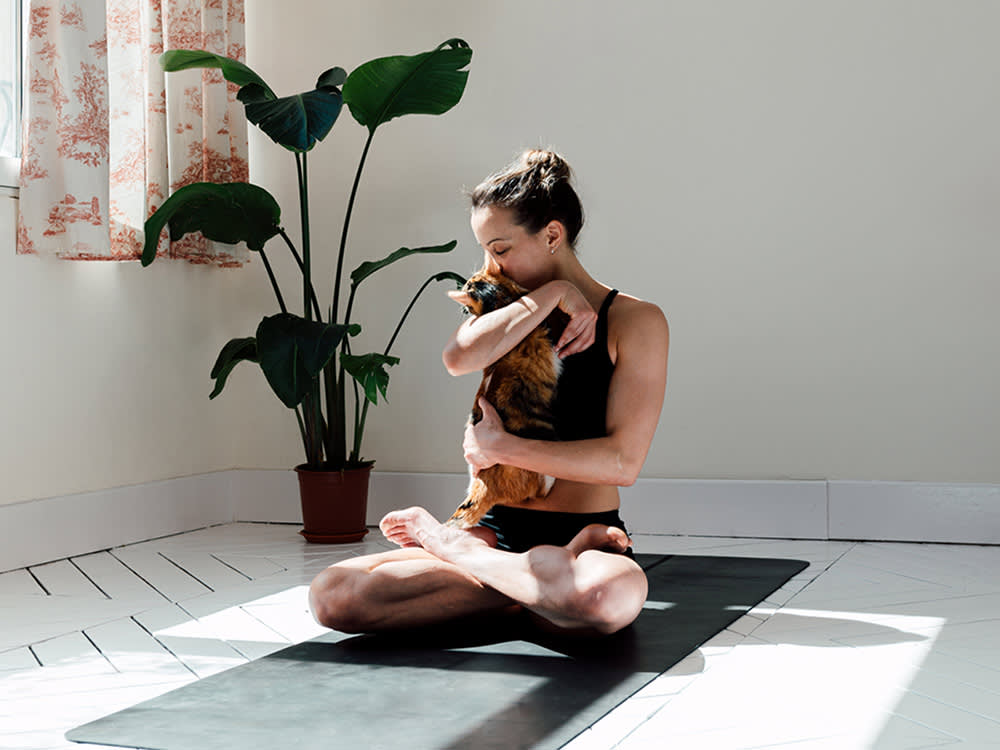
You settle onto the mat, close your eyes, take one deep breath, and your cat immediately climbs onto your sternum and begins kneading. Or the dog, sensing stillness, interprets it as an invitation and starts licking your face. The standard reaction is frustration: the pet is wrecking the moment of peace you carved out.
Here is a better reaction. Let it happen. That interruption is not the obstacle to your mindfulness practice. On a good day, it is the practice.
What mindfulness actually is (and isn’t)
The practice traces back to Buddhist meditation, and its core is simple: notice whatever is happening right now, your body, your mood, the room, the noise in your head, and let all of it be there without slapping a verdict on it. There’s solid and growing evidence that doing this regularly can ease stress, anxiety, and depression, and even sharpen a wandering attention span.
The part that trips people up is the image: legs folded, spine straight, room silent, mind blank. You can practice that way if it suits you, but you don’t have to, and labeling yourself a failure because sitting in silence makes you twitchy just adds a layer of self-criticism that defeats the entire point. The practice is meant to be personalized. And this is exactly where an animal earns its keep, because a pet drags your attention into the present moment whether you asked it to or not.
The pet is a shortcut to “now”
Think about what a mindful moment requires: your focus, gently, on something real and immediate instead of the churn of your to-do list. A pet hands you that on a platter.
When you wake up, you can rest your attention on the warmth of the cat draped over your legs and the rhythm of the purr instead of grabbing your phone. On a walk, you can notice the sound of the wind in the trees and the pull of the leash while you feel your own breath go in and out. And when your dog barrels over mid-stretch to shower you with kisses, you can simply observe it: the goofy enthusiasm, the small disappointed huff when they realize it isn’t playtime, the specific feeling that rises in you when this creature chooses to spend its time on you. Notice the rise and fall of your cat’s ribcage as it breathes on your chest. None of that is a distraction from mindfulness. It is mindfulness, using a subject that happens to be furry.
“I tell clients who can’t stand sitting meditation to start with their pet, because the animal does half the work,” says Dr. Lena Park. “You’re not trying to empty your mind, you’re just fully noticing one warm, breathing, present thing. Petting a dog and paying real attention to how it feels is a legitimate practice, and for a lot of anxious people it’s the only version that ever sticks.”
The science underneath the coziness
This isn’t just a nice metaphor. When you pet your dog or hold a long, soft gaze with them, both of you get a release of oxytocin, the so-called love hormone. Dogs are linked with lower blood pressure, reduced risk of heart disease, less loneliness, and more daily structure, and multiple studies suggest cat owners tend to run happier and less stressed. The social side of this showed up at scale a few years ago: the ASPCA estimated that upward of 23 million U.S. households brought home a pet during the pandemic, then leaned on those animals for the closeness and comfort that isolation had stripped away. Pets read as nonjudgmental, which is a big part of why their company lands as genuine support rather than obligation.
There’s a bonus, too: pets are relentless enforcers of routine. The dog who needs a morning walk and the cat who stares you down at 5 p.m. sharp are, whether they mean to be or not, building the scaffolding a mindfulness habit needs to survive. And it doesn’t take much. Research on attention has found that even a modest daily session, on the order of 12 minutes, done consistently, can measurably help. Twelve minutes with a cat on your lap is not a heavy lift.
So the next time your practice gets hijacked by a paw, a purr, or a wet nose, don’t sigh and start over. Notice it, breathe, and let the interruption be the whole point.
References
- Purdue University College of Veterinary Medicine: Organization for Human-Animal Interaction Research and Education (OHAIRE)
- Jha, A.P. et al., research on mindfulness training and attention, University of Miami
- ASPCA: COVID-19 and pet ownership data
- Handlin, L. et al., “Short-term interaction between dogs and their owners: effects on oxytocin,” Anthrozoös (2011)
Jordan Ellis is a certified professional dog trainer with a decade of experience working with rescue organisations and private clients. They specialise in anxiety, reactivity, and positive reinforcement methods, and review all training and behaviour content at The Pet Times.
Meet our experts ↗Keep reading
 LivingEverybody Got a Second Dog. Her Order Book Was the First to Know.Jordan Ellis · 6 min
 LivingTaurus Season Is a Rest Prescription. Your Pet Already Filled It.Sasha Ford · 6 min
 LivingShould You Co-Parent a Pet With Your Ex?Sasha Ford · 8 min
 LivingA $10 Service Rescues Your Pet After the Rapture. It Asks a Real QuestionJordan Ellis · 6 min
 LivingYour Partner Is Allergic to Your Pet. Treat It Like a Medical Problem, Not a BreakupDr. Amara Solis · 6 min
 LivingYour Pisces Pet Feels Everything. Loving Them Back Is Its Own Art.Sasha Ford · 4 min