


The Cat-or-Dog Sleep Gap Is About Physics, Not Love
A study of nearly 1,600 people found cat co-sleepers slept fine while dog co-sleepers slept worse. The reason has nothing to do with how much you love your pet, and that is exactly why the fix is mechanical, not emotional.

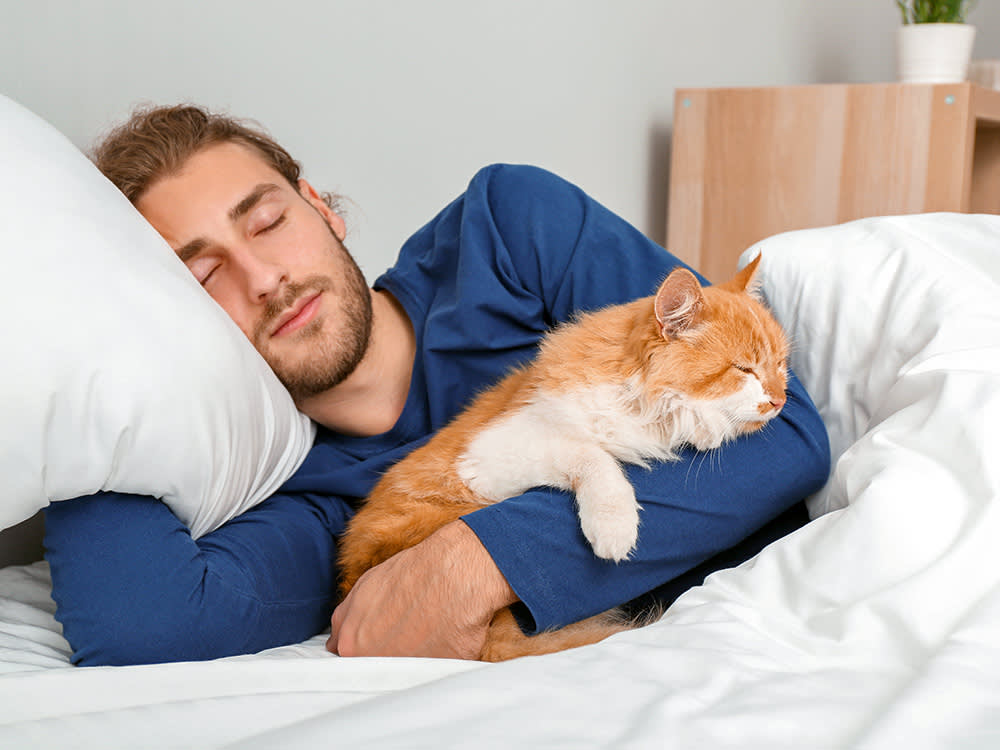
Here is the most useful thing to understand about sharing your bed with a pet: when your sleep suffers, it is almost never because of the bond. It is because of mass, movement, and heat. A study of nearly 1,600 people found that the people sharing a bed with dogs slept measurably worse, while the people sharing with cats did not, and the researchers found zero relationship between how close someone felt to their animal and how well they slept. That single null result reframes the whole conversation. The problem is physical, which is good news, because physical problems have practical fixes that don’t require loving your pet any less.
What the dose-response data actually shows
The research comes from Brian N. Chin, a psychologist at Trinity College, with co-authors Tvisha Singh and Aisha S. Carothers, published in the journal Scientific Reports. They surveyed 1,591 adults between the ages of 18 and 91. Of those, 758 were co-sleepers, meaning their pet slept in the bed or at least in the room for part of the night, and their answers were compared against 833 people who slept pet-free.
Three findings matter most, and most coverage of this study flattens them into one. People who co-slept with dogs reported worse perceived sleep quality, lower sleep efficiency (the share of time in bed actually spent asleep), and greater insomnia severity than pet-free sleepers. Cat co-sleepers, by contrast, showed no penalty on quality or insomnia, and actually reported better sleep efficiency than both the dog group and the pet-free group. That is the headline split.
The second finding is the one that turns this from trivia into a decision tool: the effect was dose-dependent. The more pets a person slept with, the worse the impact, with insomnia severity climbing the most. One quiet cat is a rounding error. Two restless dogs plus a third animal is a measurable nightly tax. If your sleep is bad, the number of bodies in the bed is a lever you can actually pull.
The third finding is the one people resist: closeness did not protect anyone. A person who described an intensely bonded relationship with their pet slept no better than someone who described a casual one. Love is not the variable. Disturbance is.
Why a cat and a dog produce such different nights
Chin attributes the penalty to pets “serving as a source of nighttime disturbance,” which is a polite way of saying they move, they make noise, and they radiate heat. Every animal does this, but a dog does it at a different scale. A nine-pound cat resettling on the duvet barely registers. A 40-pound dog circling, flopping, and dream-twitching against the back of your knees is a different event entirely, and bigger dogs are worse. Cats also move through the dark with a precision dogs simply don’t have; a cat is built to not wake the thing it is hunting, and you are, functionally, the thing it is sleeping on.
This is why the cat-versus-dog gap is not a verdict on which animal makes the better bed partner emotionally. It is a verdict on body size, sleep style, and thermal output. Frame it that way and the solutions become obvious.
The belief-versus-reality gap, and why it’s fine
The strangest wrinkle in the data is how wrong people are about their own sleep. Among co-sleepers, 60 percent believed sharing the bed had a positive or very positive effect on their sleep, and only six percent thought it was negative. Fully 83 percent believed it benefited their overall health and wellbeing, against two percent who felt the opposite. Those beliefs run almost exactly counter to the measured results.
We are very good at deciding that things we love can’t be bad for us, and honestly, that is allowed. Plenty of people would happily trade a little sleep efficiency for the warm weight of a dog against their spine, and that is a legitimate choice, not a mistake to be corrected. The point of knowing the data is not guilt. It is leverage: if your sleep is genuinely suffering, and especially if it has started to breed resentment toward an animal you adore, you now know the cause is mechanical and the fix is available. Resentment is the real danger here, not a few lost minutes of REM.
A step-by-step protocol for moving a dog out of the bed
Undoing an established sleep routine is harder than never starting it, but it is very doable, says professional trainer Jordan Ellis. The mistake people make is going cold turkey, which reads to a dog as a confusing punishment. Do it in graded stages instead:
- Anchor a new spot in a neutral room first. Put the dog on a leash and sit on the couch with the dog’s own bed at your feet. The leash isn’t about restraint; it removes ambiguity about where you want them, so you aren’t sending mixed signals.
- Reward settling, not just lying down. When the dog actually falls asleep in its own bed, that is the behavior you are building. Let them.
- Move the setup into the bedroom. Sit on the edge of the bed (sitting up, not lying down) with the dog’s bed on the floor beside you. Same routine. Once they sleep, unclip the leash and lie down yourself.
- Drop the leash entirely. After a few consistent nights, most dogs settle in their own bed without it.
- If the goal is out of the room, walk the bed outward. Once the dog is comfortable in its own bed inside the room, shift that bed a little farther each night until it is in the hall or another room.
- Tire them out on purpose. Block naps in the couple of hours before bed so the dog is genuinely sleepy when you are. A tired dog accepts a new sleeping spot far more easily than a rested one.
“Done properly, this shouldn’t stress the dog at all,” Ellis says. “But watch for it. If they’re gnawing the leash or just seem overwhelmed, back up a step or get a trainer involved.” This is a behavior change, not a banishment, and the dog should never experience it as rejection.
Cats are a different negotiation entirely
You cannot simply shut a cat out, because a closed door is, to a cat, a personal insult and a project. The move is to make somewhere else more appealing than your pillow, says feline behavior specialist Dr. Nina Kohl. Much of a cat’s bedtime cuddling is thermoregulation, so give them a heated mat or a warm bed and place it somewhere they already like to be. “Warmth is the draw. Out-compete yourself on warmth and the cat will choose the spot on its own, day or night.”
The second lever is ritual. Cats run on a hunt, eat, groom, sleep loop, so stage it on purpose: a vigorous play session followed by a small meal right before you turn in primes a cat to crash when you need it to. “Play, then feed, then let them groom and settle,” Dr. Kohl says. “You’re working with the wiring instead of against it.” And because cats are famously resistant to being told what to do, there is no shame in calling a professional if the DIY version stalls.
The bottom line is the one the study quietly hands you: co-sleeping can be wonderful for connection and still chip away at your rest, more so with dogs than cats, and more so with every extra body in the bed. If that trade-off has started to sour how you feel about your pet, the cause is physical and so is the remedy. And if you would rather keep the warm weight and lose a little sleep? That is a perfectly good answer too. You just deserve to know it’s a choice.
References
- Chin, B. N., Singh, T., and Carothers, A. S. “Co-sleeping with pets, stress, and sleep in a nationally-representative sample of United States adults.” Scientific Reports, 2024. https://www.nature.com/articles/s41598-024-56055-9
- “Could sharing a bedroom with your pets be keeping you from getting a good night’s sleep?” The Conversation, 2024. https://theconversation.com/could-sharing-a-bedroom-with-your-pets-be-keeping-you-from-getting-a-good-nights-sleep-226216
Sara Lim leads our Product Picks coverage, testing and comparing the things pets and their owners actually use. From everyday essentials to home-and-style finds, she focuses on honest, useful recommendations rather than hype.
Meet our experts ↗Keep reading
 LivingThere's a Grief Ritual for Pets. Most Americans Have Never Been Told About It.Sara Lim · 8 min
 Living8 Absurdly Pampered Pets, Ranked by Whether the Money Bought Them AnythingNina Vasquez · 8 min
 LivingThe Internet's Coziest Corner Is Run by One Woman and a Lot of SheepJordan Ellis · 4 min
 LivingYour Dog Is 'Worth $90,000 a Year.' That Number Is Doing Something Sneaky.Jordan Ellis · 6 min
 LivingYour Pisces Pet Feels Everything. Loving Them Back Is Its Own Art.Sasha Ford · 4 min
 LivingThis Romance Bookstore Used to Be a Pet Shop. The Neighborhood Dogs Never Got the Memo.Jordan Ellis · 6 min