


Pets Keep Dying in Cargo Holds. One Country Wants to Force a Global Fix.
More than four million animals fly every year, yet there is no binding worldwide rule for keeping them safe in the hold. Colombia is asking the UN's aviation agency to write one, and two dozen countries are backing the push.

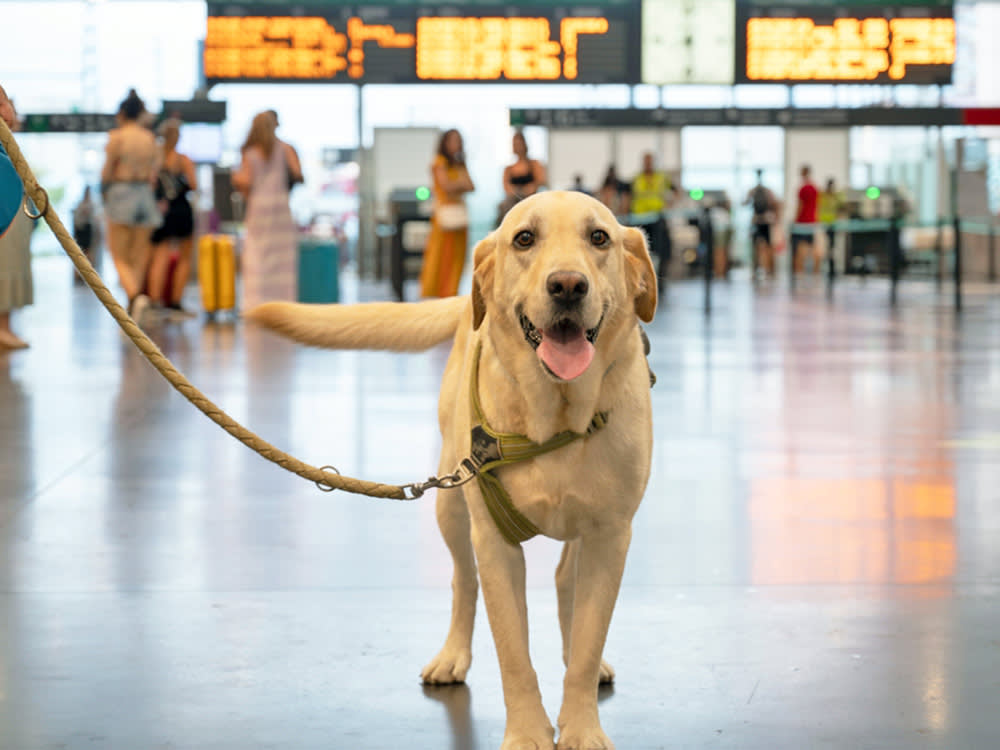
Flying with a pet has never been more common. The International Pet and Animal Transportation Association estimates that more than four million animals take a flight every year, a number that keeps climbing as dog-only airlines launch and traditional carriers loosen their rules to court pet owners. Here is the unsettling gap behind that growth: for all the international coordination that governs air travel, there has never been a single binding worldwide standard for keeping animals safe on the way. Colombia is now trying to close that hole.
The proposal, and who is behind it
Colombia has formally asked the International Civil Aviation Organization, the United Nations agency that sets air-travel standards across 193 countries, to create global guidelines for transporting pets across borders. The country is not acting alone; roughly two dozen nations across Latin America and Europe have lined up behind the request, according to Reuters.
The logic is straightforward. ICAO already writes the rulebook for air navigation, border procedures, accident investigation, and much of the machinery that makes international flight work, yet animal safety has never been part of that remit. A Colombian representative to ICAO, Mauricio Ramirez Koppel, framed it as a legal vacuum: his country saw cases that harmed pets in transit and found no ICAO guidance setting standards for moving live animals safely. Different countries apply different, inconsistent rules, and animals fall through the cracks between them.
The cases driving the alarm
Fatal incidents in the hold are rare, but they are horrifying and they span the globe. In 2021, an American Bulldog died in the cargo hold on a flight within Colombia, from Puerto Asís to Santiago de Cali. In 2024, a Golden Retriever named Joca died of cardiac arrest in Brazil after being loaded onto the wrong plane and forced through a journey that stretched to eight hours rather than the two it should have taken. Back in 2018, a French Bulldog died on a United Airlines flight in the United States after being placed in an overhead bin, a practice since made illegal there. And in 2020, the Canadian Kennel Club publicly called for reform after dozens of dogs died on a single flight from Kyiv to Toronto.
Each case is different, but the through-line is the same set of hazards: inadequate ventilation, unsafe cargo temperatures, insecure containment, and punishingly long transfer times.
Why the risk isn’t the same for every pet
Not every animal faces the hold on equal footing, and that is where the science matters most.
Flat-faced breeds, your Bulldogs, Frenchies, Pugs, and Persian cats, are the ones I worry about in cargo. Their airways are already compromised, so the heat, stress, and thin ventilation of a hold hit them far harder than a longer-nosed dog. Any global standard worth writing has to account for the fact that some animals simply should not be flying in cargo at all.
That breed-specific vulnerability is one reason a patchwork of national rules is so dangerous: a route that is merely uncomfortable for one dog can be life-threatening for another, and no single authority currently accounts for it worldwide.
What’s new since this was written
Colombia brought the proposal forward ahead of ICAO’s triennial assembly, which met in Montréal from September 23 to October 3, 2025. The assembly did not produce an immediate binding pet-transport standard, and for now the most widely used benchmark remains the International Air Transport Association’s Live Animals Regulations, industry rules that many regulators adopt but that are not, on their own, legally binding. Notably, IATA has said it would support ICAO providing an overarching framework for pet transport, as long as it builds on the existing regulations rather than duplicating them. In other words, the momentum Colombia started is still live: the pieces for a coordinated global standard are on the table, even if the signatures are not yet on the page.
ICAO cannot force any nation to adopt its guidance, but member countries routinely fold ICAO standards into their own law. If a framework eventually emerges, the ordinary act of putting a pet on an international flight could become meaningfully safer, and more consistent, than it is today.
References
- Reuters. “Colombia asks UN aviation agency for global standards to protect pets on planes.” September 2025. https://www.reuters.com/
- International Civil Aviation Organization. “Assembly – 42nd Session.” https://www.icao.int/events/assembly-42nd-session
- IATA. “Live Animals Regulations (LAR).” https://www.iata.org/en/publications/manuals/live-animals-regulations/
Dr. Chen is a small-animal veterinarian who leads health and safety coverage at The Pet Times. She writes and reviews the bulk of our illness, condition, and safety content, translating clinical guidance into clear, practical advice owners can act on at home.
Meet our experts ↗Keep reading
 Product PicksPutting Your Dog's Face on Your Suitcase Is Objectively the Best Bag TagSasha Ford · 5 min
 Health & WellnessWashington's Senate Voted 48-0 to Let You Idle for Your Dog. The Bill Died Anyway.Sasha Ford · 6 min
 LivingA Top EU Court Just Ruled Your Dog Is Legally 'Baggage' on a PlaneSara Lim · 4 min
 LivingAmerican Airlines' New Pet Rule, and the Real Math on What It SavesJordan Ellis · 5 min
 LivingShipping Your Dog Overseas Can Cost $10,000. The Military Finally Started Paying.James Okafor · 7 min
 LivingTurbulence Is Getting Worse. The Pre-Flight Plan That Keeps Your Pet SafeSara Lim · 7 min