


Turbulence Is Getting Worse. The Pre-Flight Plan That Keeps Your Pet Safe
Severe turbulence over the U.S. and North Atlantic is up 55 percent since 1979, and the work that protects your pet happens days before takeoff, not at 35,000 feet. A flight-day playbook for cabin and cargo.

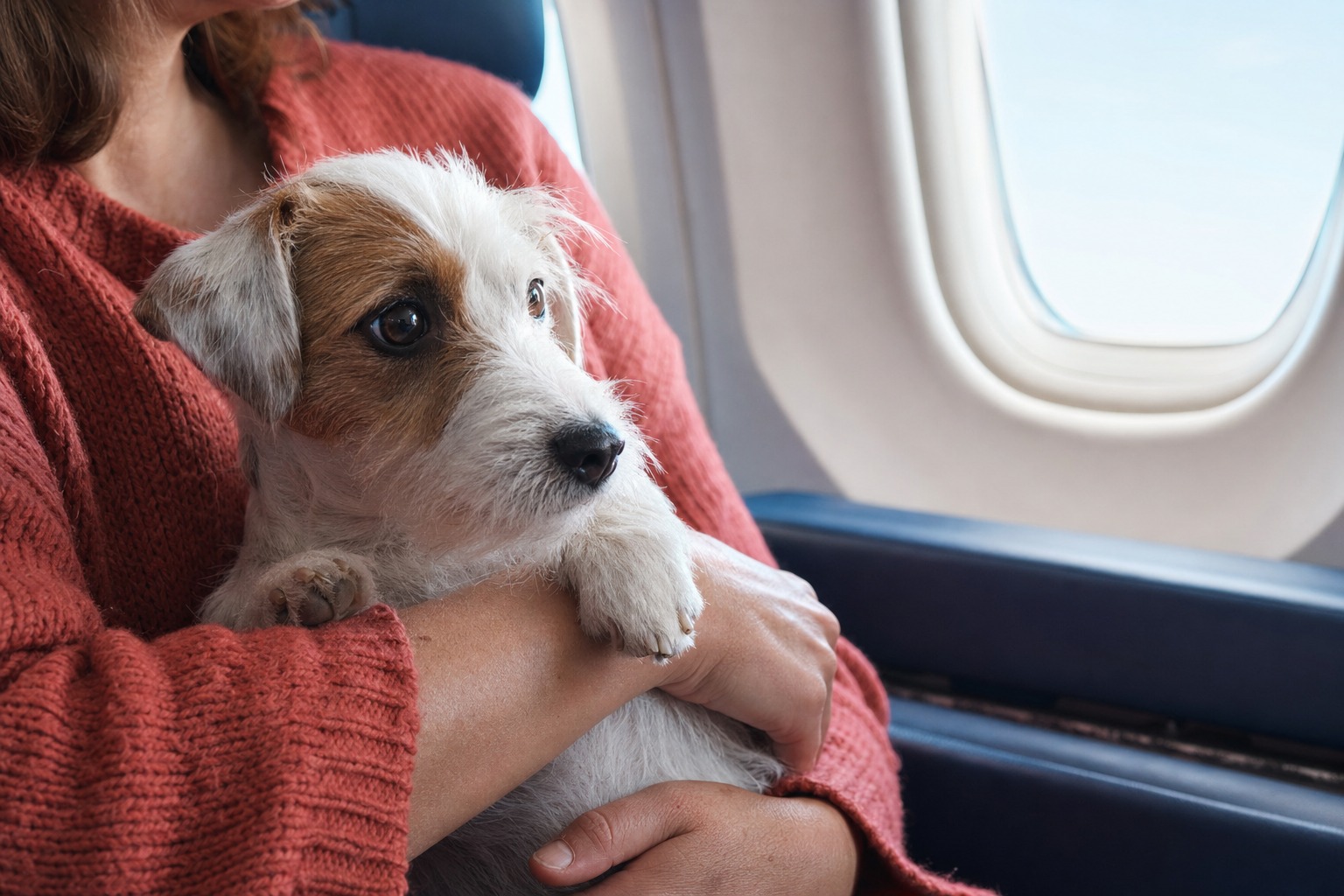
Most advice about flying with a pet treats turbulence as the moment of crisis, the bumps you white-knuckle through with a hand on the carrier. But by the time the seatbelt sign dings on, almost everything that determines whether your pet rides it out safely has already been decided: which cabin they’re in, what carrier they’re in, whether they’ve eaten, and whether that carrier is truly wedged under the seat. The flight is where you find out how well you prepared. The preparation is the whole ballgame.
That matters more than it used to, because the air itself is rougher. A 2023 University of Reading study published in Geophysical Research Letters found that at a typical point over the North Atlantic, one of the busiest routes in the world, the annual hours of severe turbulence rose 55 percent between 1979 and 2020, from 17.7 hours a year to 27.4. Moderate turbulence climbed 37 percent and even light turbulence rose 17 percent. The driver is climate change strengthening wind shear in the jet stream, which means the trend is forecast to continue, not reverse. So this is worth getting right.
Here is the playbook, ordered the way it actually unfolds: the days before, the morning of, and the air itself.
Days before: the decisions that do the heavy lifting
Cabin or cargo is the single biggest safety call, and it’s mostly made for you by size. Cats and small dogs almost always fly in the cabin under the seat, which is far safer in turbulence because you’re right there. Larger dogs often have no cabin option and must travel in the cargo hold, and that carries real, documented risk: pets in the hold can escape, get lost, or be mishandled, and a number of animals are affected every year. Airlines are technically required to disclose those incident statistics, though they don’t make them easy to find. If your dog must fly cargo, treat it as a serious decision, not a formality.
Book to lower the odds of trouble. For a cargo pet especially, choose a nonstop flight on a less-trafficked travel day; fewer connections means fewer transfers where things go wrong, and a quieter day means less ground chaos.
Get the right carrier, and break it in. For the cabin, you need an airline-approved soft carrier that genuinely fits under the seat in front of you. For cargo, you need a crate rated for hold travel: strong, waterproof, large enough for your dog to stand and turn but not so roomy they’d be thrown around in turbulence. Whichever it is, don’t unbox it the night before. Let your pet sleep in it, eat near it, and ride in the car in it for at least a couple of weeks, so the carrier reads as “safe den,” not “trap.”
Talk to your vet about the body, not just the booking. Ask specifically about anti-nausea medication approved for cats and dogs, and about how to time food and water to cut the risk of in-carrier accidents. Resist the urge to ask for a heavy sedative: most veterinary and aviation guidance now advises against sedating pets for flights, because sedation can impair breathing and temperature regulation at altitude, especially in cargo. The goal is a calm, alert pet, not an unconscious one.
“The flight is not the place to improvise,” says Dr. Lena Park, a veterinarian who counsels owners on travel. “Two weeks of carrier acclimation and a five-minute conversation with your vet about nausea and feeding will do more for your pet’s safety than anything you can do once the wheels are up.”
The morning of: stack the deck calm
Burn off energy. A real walk or play session before you leave for the airport helps a dog arrive tired and settle, rather than vibrating with pent-up energy in a strange, loud place.
Pack the cabin go-bag. Line the carrier with an absorbent pee pad, and bring a small cleanup kit: nitrile gloves, pet wipes, paper towels, and a couple of zip-top bags. Tuck in one familiar object that smells like home, a small blanket or unwashed T-shirt, plus a quiet distraction such as a chew or a non-squeaky toy. Skip the squeaker; a startled squeak during a tense cabin moment helps no one.
Arrive early on purpose. You’ll likely have to check your pet in and pay the pet fee at the counter, and you want to confirm in person that they’re actually on your reservation, in-cabin pets sometimes don’t show online. Call the airline after booking to lock it in. Extra time at the airport is extra margin for everything that can run late.
In the air: small moves that matter
Once a cargo pet is loaded, they’re on their own, turbulence or not, which is why the days-before work was everything. For a cabin pet, you still have meaningful control:
Keep the carrier under the seat, period. This is the non-negotiable. In severe turbulence, anything not secured becomes a projectile; a carrier on the floor protects your pet, you, and the people around you. If a flight attendant tolerates the carrier sticking out an inch or two, fine, but the bulk of it stays down. Follow attendants’ instructions; they’ve managed nervous pet parents before.
Comfort without opening up. You can usually unzip the top corner just enough to slip a hand in and rest it on your pet. That contact reliably settles an anxious cat or dog more than talking does. What you should not do is take your pet out mid-flight. If you absolutely must, do it only inside a locked lavatory with the toilet lid closed, so there’s no chance of escape into the cabin or a fall into the bowl.
Manage your own nervous system. Pets read your state. A 2-on-the-Richter-scale of panic from you, heavy breathing, a death grip, a sharp voice, tells your pet the situation is genuinely dangerous, which can tip them into panting, whining, lip-licking, or barking. Keep your seatbelt on, keep your pet secured, and keep your own breathing slow. You’re modeling “this is survivable,” because it is.
And it is. Even bad turbulence is short. Do the unglamorous work in the days beforehand, stay steady in the moment, and the rough air becomes a few uncomfortable minutes rather than an emergency.
References
Sara Lim leads our Product Picks coverage, testing and comparing the things pets and their owners actually use. From everyday essentials to home-and-style finds, she focuses on honest, useful recommendations rather than hype.
Meet our experts ↗Keep reading
 LivingThe Two Things That Actually Go Wrong When You Move a Pet Across State LinesDr. Nina Kohl · 6 min
 LivingFlying With Your Pet? Here's What 8 Airlines Actually Charge, and Their Fine PrintSara Lim · 7 min
 LivingThe Most Meaningful Hour of Your Vacation Might Be Spent Walking Shelter DogsLeila Torres · 5 min
 LivingShipping Your Dog Overseas Can Cost $10,000. The Military Finally Started Paying.James Okafor · 7 min
 Health & WellnessWashington's Senate Voted 48-0 to Let You Idle for Your Dog. The Bill Died Anyway.Sasha Ford · 6 min
 LivingPets Keep Dying in Cargo Holds. One Country Wants to Force a Global Fix.Dr. Mara Chen · 4 min