


An $84,000 Seat for Your Dog. The Real Story Is Why Anyone Would Pay It.
Asia's first pet airline flies your dog to San Francisco in a leather cabin seat with a custom menu. It's absurd, it's booked out a year ahead, and the reason why is a genuine indictment of how pets normally fly.

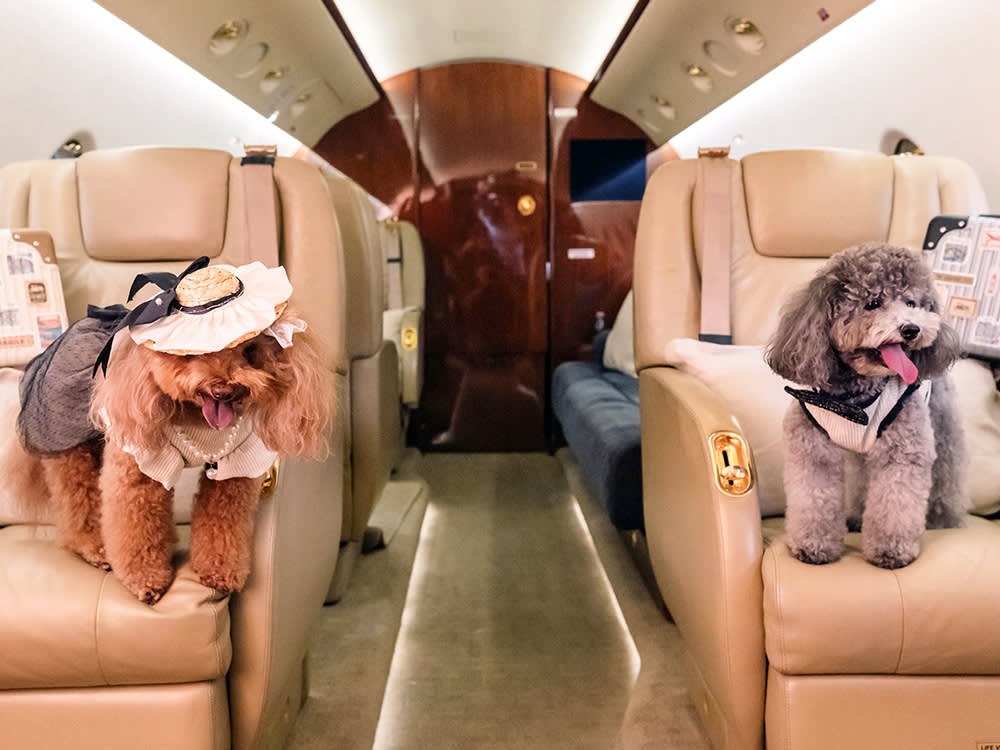
Eighty-four thousand dollars. One way. Singapore to San Francisco, for you and your dog.
Go ahead and laugh, because it is funny. Then sit with the part that isn’t: Singapaw Air is booked out roughly a year in advance. People are not paying that because they are idiots. They are paying it because the normal way of moving an animal across an ocean is genuinely bad, and they have decided that money is easier to lose than the dog.
That is the actual story here.
What it is
Singapaw Air is Asia’s first airline built specifically around pets, operated by TheAsianPawrent, a Singapore-based pet-parent content and community platform, with the flying handled by charter operators including Air7Asia and VistaJet.
It is not a commercial airline in the way you are picturing. There are no scheduled routes and no seat map on a booking engine. It sells shared jet charters: a private jet flies, and the seats on it are sold individually, which is what brings the entry price down from “buy an entire jet” to something a determined person can actually reach.
Flights leave from Singapore’s Seletar Business Airport, which is the general-aviation field rather than Changi, and they go to Bangkok, Tokyo, Melbourne, San Francisco, and elsewhere.
Onboard, the pitch is straightforward: your animal flies in the cabin, with you, not in the cargo hold and not in a crate. There are no breed restrictions, no size restrictions, and no species restrictions, so dogs, cats, rabbits, and birds are all welcome. There is a custom dining menu built around the individual pet’s needs. There are toys and bedding. The crew are trained to keep animals safe and engaged rather than merely tolerated.
They also do the paperwork, which is not a small thing. Health certifications, customs clearance, GST permits, and the border-entry choreography that makes international pet travel a bureaucratic nightmare are all handled.
What it costs
The prices, which are the reason you clicked:
- Singapore to Kuala Lumpur: from about US$5,500
- Singapore to Hong Kong, return: from about US$19,200
- Singapore to Tokyo, return: from about US$34,400
- Singapore to San Francisco, one way: about US$84,000
The per-seat model brings the practical entry point down to somewhere around US$10,000 for many routes, which is the number that makes this a business rather than a stunt.
There are also vacation packages: a three-week Japan trip departing in late 2026, and a week in Hong Kong aimed at 2027.
The reason this exists
Here is the part that gets lost when everyone piles on about the $84,000 dog.
For most people flying internationally with an animal, the options are: put your pet in cargo, which means the hold, in a crate, alone, through loading, engine noise, temperature swings, and layovers, with a well-documented history of animals being injured, lost, or killed. Or leave them behind with a sitter or a kennel, which for a long relocation is not a real option at all.
Every airline has different rules. Breed bans, particularly on flat-faced dogs, are common, and for good reason: brachycephalic animals genuinely do die in cargo holds at a higher rate. Seasonal embargoes shut down summer travel. The paperwork changes by country and gets refused at the border for reasons that are not always obvious in advance.
So the market that Singapaw Air is serving is not really “people with too much money.” It is people relocating with an animal they love, who looked at the cargo hold, ran the numbers on what they would pay to not put their dog in it, and came up with a large number.
That is a damning thing to be able to say about commercial aviation, and it is why this keeps happening. Bark Air launched in the US on the same logic and the same eye-watering fares. RetrievAir sits slightly below it on price with a narrower set of routes. Singapaw is the Asian entry in a category that did not exist five years ago and now has real customers waiting in line.
The trend underneath it
This is not a novelty. Amadeus, the travel technology company that quietly runs a great deal of the industry’s booking plumbing, put pet travel as the number one forecasted trend in its 2026 Travel Trends report.
The demand is real and it is growing in two directions at once: people who want to bring the dog on holiday, and people relocating to a new country who are not leaving the cat behind. The second group is the one driving the money, because relocation is the situation where there is no substitute and no option to just not go.
What to do if you are not paying $84,000
Which is essentially everyone. The useful version of this story is that the reasons these airlines exist are the reasons your own pet’s flight goes badly, and most of them you can manage.
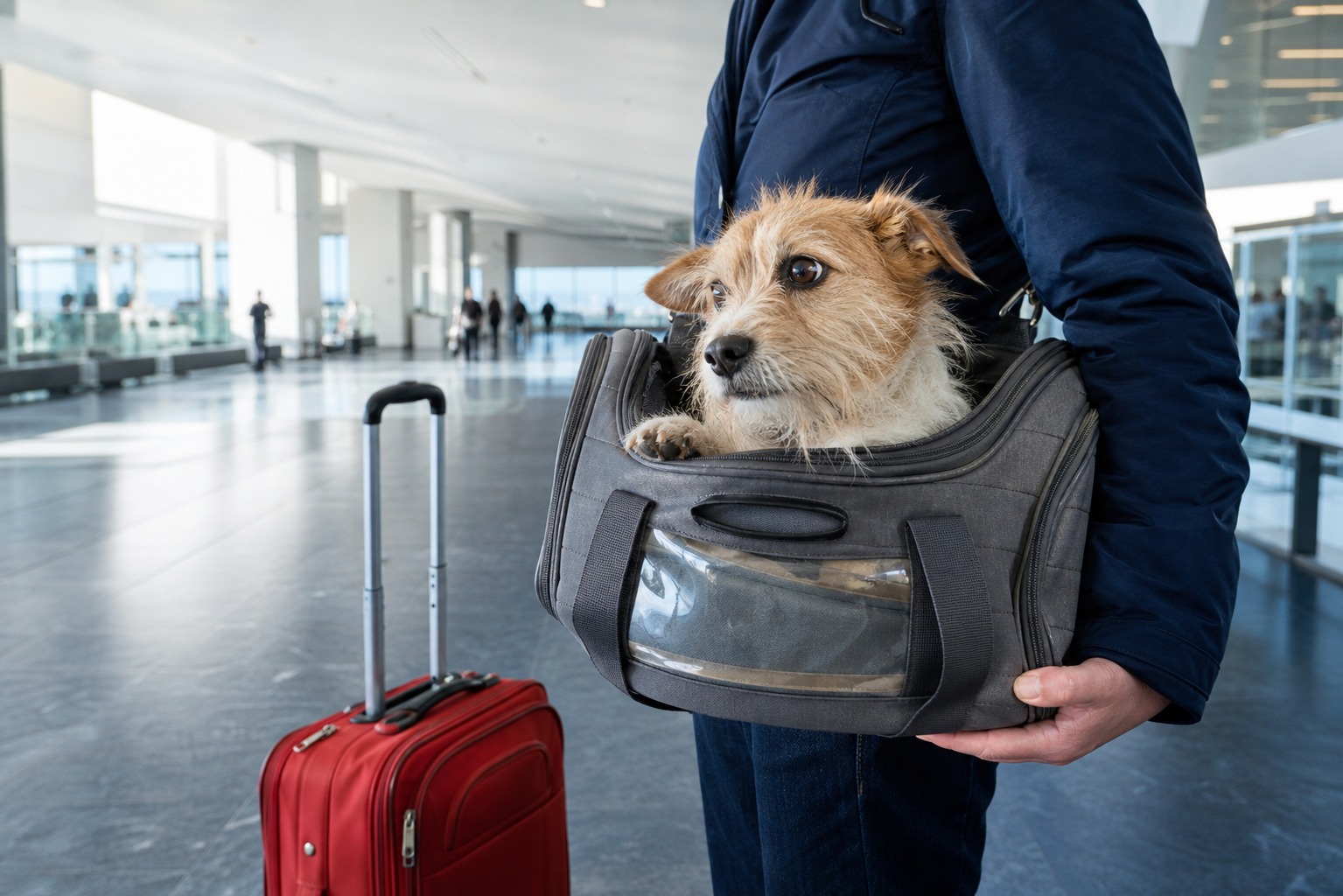
Fly in-cabin if the animal is small enough. Most airlines allow a carrier under the seat for pets under roughly 8 kg including the carrier. The rules on this are strict and the spots are limited, so book the pet before you book yourself. This is the single biggest lever available to you.
Fly direct, always. Layovers are where things go wrong: a connection means another loading cycle, another tarmac, another chance to be left on it. Pay the premium for a direct flight.
Avoid cargo if your dog is flat-faced. Bulldogs, Frenchies, Pugs, Boxers, Persians, Himalayans. Their airways cannot cope with heat and stress the way other animals can, and many carriers now refuse them outright. If your only path is cargo and your dog is brachycephalic, seriously consider not going.
Watch the season and the time of day. Book early morning or late evening in summer, midday in winter. The tarmac, not the cabin, is where the temperature risk lives.
Start the paperwork absurdly early. Rabies titres for some destinations must be drawn months ahead. Import permits have lead times. This is the failure that strands people at check-in, and it is entirely preventable.
Consider a pet relocation agent instead. For a fraction of a charter fare, a specialist will handle the paperwork, the crate, the routing, and the border. It is the middle option almost nobody knows exists, and for a one-off international move it is usually the sane answer.
Do not sedate. Sedatives can compromise breathing and thermoregulation at altitude and are broadly advised against for air travel. Talk to a vet about the alternatives rather than reaching for the medicine cabinet.
What newer research adds
The most concrete update since Singapaw launched is that it is trying to become something more like a real airline. The operator has been exploring scheduled quarterly flights between Singapore and Hong Kong, potentially starting in late 2026 or early 2027. Scheduled service is the difference between a charter novelty and infrastructure, and it is worth watching.
The other thing worth noting is the direction of travel on price. The per-seat model already cut the entry point dramatically compared with chartering a whole aircraft. When demand supports it, luxury operators historically do add routes and bring fares down. The $84,000 transpacific seat is not the future of this. It is the price of being first.
Whether any of it ever reaches the price of an ordinary ticket is a much harder question, because the economics of a jet carrying a dozen animals will never look like the economics of a jet carrying two hundred people. But “expensive” and “absurd” are different words, and this is drifting from the second toward the first.
The bottom line
An $84,000 seat for a dog is a headline. The reason people are queuing for it is the story.
The pet travel industry is booming because the pet travel experience is bad, and a market this eager to be rescued from cargo holds is telling the commercial airlines something they have spent twenty years not hearing.
References
- Amadeus. “Travel Trends 2026 report.”
- Singapaw Air. Route and pricing information.
- International Air Transport Association. “Live Animals Regulations.”
- U.S. Department of Transportation. “Animal incident reports filed by U.S. air carriers.”
- Hall, E. J., et al. “Brachycephalic obstructive airway syndrome and thermoregulation.” Veterinary Record, 2020.
Marcus Webb writes about the gear, gadgets, and everyday choices that make life with a pet easier. His coverage runs from product picks to training and the causes worth paying attention to, always with an eye on what actually earns a place in your home.
Meet our experts ↗Keep reading
 LivingFlying With Your Pet? Here's What 8 Airlines Actually Charge, and Their Fine PrintSara Lim · 7 min
 Health & WellnessIt's Illegal to Cook a Dog in a Car. In Most States, It's Still Illegal to Save One.Dr. Priya Nair · 8 min
 LivingThe Most Meaningful Hour of Your Vacation Might Be Spent Walking Shelter DogsLeila Torres · 5 min
 LivingAmerican Airlines' New Pet Rule, and the Real Math on What It SavesJordan Ellis · 5 min
 Product PicksPutting Your Dog's Face on Your Suitcase Is Objectively the Best Bag TagSasha Ford · 5 min
 LivingPets Keep Dying in Cargo Holds. One Country Wants to Force a Global Fix.Dr. Mara Chen · 4 min