


A Raw Pet Food Was Pulled for Salmonella and Listeria. Check These Lot Numbers.
Viva Raw recalled two lots of its frozen dog and cat food over Salmonella and Listeria. Here are the exact products and lot numbers, the symptoms to watch for, and why raw diets carry this risk in the first place.

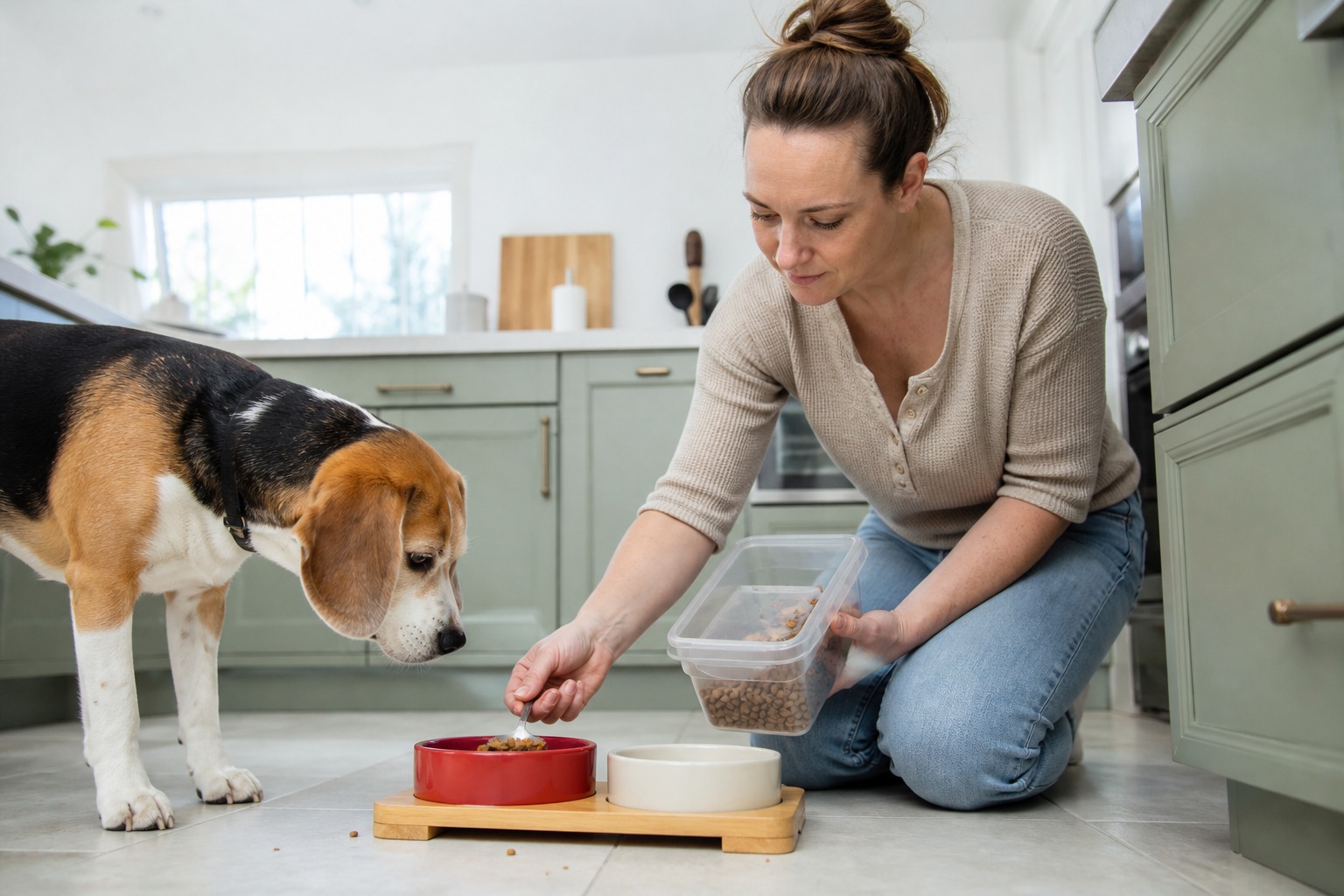
If you feed your dog or cat a frozen raw diet, this is one worth two minutes of your attention. In August 2025, the raw pet food company Viva Raw voluntarily recalled two lots of its dog and cat food after testing turned up contamination with Salmonella and Listeria monocytogenes, according to the U.S. Food and Drug Administration.
What was recalled
The recall covered two specific lots. Lot 21495 included Viva Ground Beef for Dogs and Viva Beef and Turkey for Puppies. Lot 21975 included Viva Ground Chicken for Dogs, Viva Chunked Chicken for Dogs, Viva Chicken for Cats, and Viva Pure Chicken. The products were sold as frozen one-pound bricks in clear vacuum packaging, with the lot number printed on the top.
According to the company, the affected products went out between July 2 and August 21, 2025, sold directly to customers across the country and to a small number of retailers in Arizona, California, South Carolina, Kansas, Florida, Illinois, and New York. If you have either lot in your freezer, the guidance is straightforward: don’t feed it. Viva Raw asked customers with recalled product to email info@vivarawpets.com for a full refund, and the company could also be reached at 919-371-8882 from 9 a.m. to 5 p.m. Eastern, Monday through Friday.
Why this matters even if your pet seems fine
The reason a Salmonella or Listeria recall gets flagged so urgently is that the danger runs in two directions. The pathogens can sicken the animal eating the food, and they can also make people sick, particularly anyone handling the product or touching surfaces it contacted and then not washing up thoroughly. Households with young children, older adults, or anyone immune-compromised have extra reason to be careful.
If your pet ate any of the recalled food, call your vet and keep a close eye out. Watch for lethargy, vomiting, and diarrhea, which may be bloody, along with fever. Some animals show milder signs instead, like a reduced appetite or belly pain. Loop in your vet as soon as you notice anything off, even if it seems minor.
When you throw the food out, do it so that pets, children, and wildlife can’t get to it, and then clean up like you mean it. Use hot water and soap on every bowl, container, and surface the food may have touched.
With a raw-food recall, I always remind people that the handling risk to the human is real, not theoretical. Treat that package the way you’d treat raw chicken for your own dinner, keep it away from other food, and scrub everything it touched. Then watch your pet for a few days and call us if anything changes.
The bigger picture on raw diets
There’s a reason recalls like this one tend to involve raw products. Because raw pet food isn’t cooked, there’s no heat step to kill bacteria that may be present, which is why the FDA has long cautioned that raw diets carry a higher risk of Salmonella and Listeria contamination than cooked or processed foods, both for pets and for the people preparing them. That doesn’t automatically make every raw diet a bad choice, but it does mean careful sourcing, strict hygiene, and a habit of checking recall notices are part of the deal if you feed raw.
What’s new
The encouraging footnote: according to the company’s announcement, no illnesses in pets or people were reported in connection with these specific lots. A recall triggered by testing, before anyone gets sick, is the system working the way it’s supposed to. If you’re not sure whether a bag or brick in your freezer is affected, the safest move is simply to check the lot number against the two above, and when in doubt, don’t feed it.
References
Not a substitute for your vet. Our guidance is educational. For urgent symptoms, contact a vet or emergency clinic right away. Editorial standards
Dr. Park is a board-certified emergency and critical care specialist. She reviews our health and safety content for clinical accuracy and contributes guides on recognising urgent conditions. Her focus is helping owners act quickly and correctly when it matters most.
Meet our experts ↗Keep reading
 Health & WellnessThe Salmonella Recall That Sickened Babies Started in a Bag of Dog FoodDr. Amara Solis · 5 min
 Health & WellnessA Raw-Food Recall, Decoded: What Blue Ridge Beef's Salmonella Scare MeansDr. Ravi Mehta · 6 min
 Health & WellnessBlue Ridge Beef Recall of Puppy and Kitten Food Now Covers 16 StatesDr. Ravi Mehta · 4 min
 FoodSalmonella and Listeria in Darwin's Raw Pet Food: The Exact Lots to TossDr. Amara Solis · 4 min
 FoodStop Memorizing the List. The 5 Reasons Holiday Food Hurts PetsDr. Amara Solis · 7 min
 FoodSalmonella Pulled These Freeze-Dried Chicken Treats. Check Your Pantry for the Lot Numbers.Dr. Mara Chen · 3 min