


Stop Memorizing the List. The 5 Reasons Holiday Food Hurts Pets
You can't memorize every dangerous holiday dish, and you don't need to. Learn the five mechanisms that make festive food risky, and you can judge anything on the table on sight.

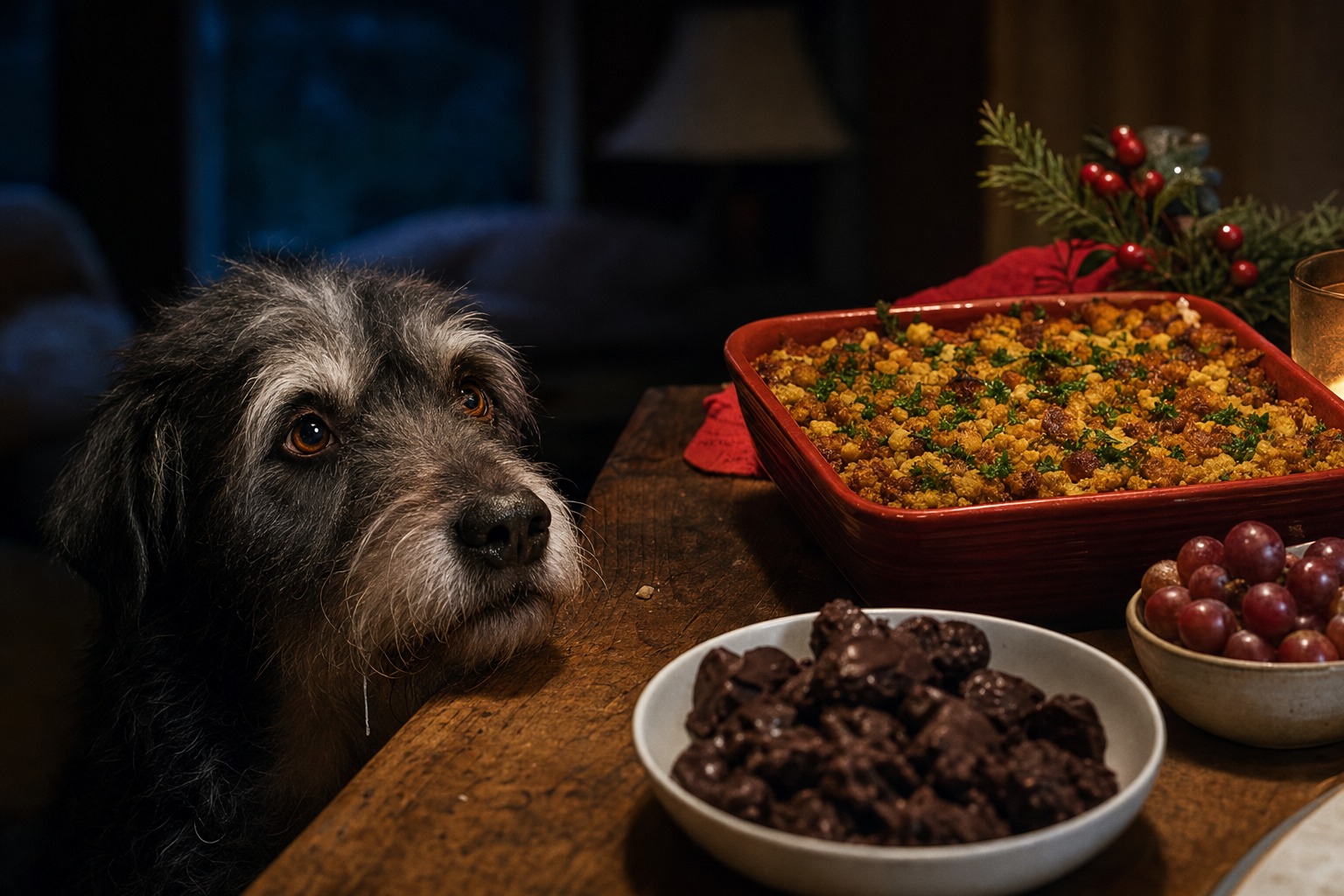
Every holiday-hazard article hands you the same thing: a long list of dishes to avoid. Stuffing, eggnog, Yule log, prime rib, and so on. The problem with the list is that it never covers your table. Your family’s recipes, your guests’ contributions, that dish someone brought that you cannot identify, none of them come labeled. So instead of memorizing dishes, learn the mechanisms. There are really only about five reasons any holiday food turns dangerous for a dog or cat, and once you can spot the mechanism, you can judge anything, a strange casserole, an unlabeled cookie, a scrap a guest is about to slip under the table, without a cheat sheet. Here are the five.
Mechanism 1: the Allium family (the hidden toxin)
Onions, garlic, leeks, shallots, and chives are all members of the Allium family, and they are toxic to both cats and dogs. They damage red blood cells and can cause hemolytic anemia, a serious illness, and the danger is not dose-obvious because it hides inside other dishes. This is the mechanism behind why stuffing is dangerous (butter plus garlic, leeks, or onions), why mashed potatoes are risky (often made with chives and garlic), and why the crispy fried-onion topping on green bean casserole is a problem. The lesson that travels: any savory dish that tastes seasoned probably contains an Allium, and “I only gave a little” does not make it safe. When in doubt about a made dish, assume onion or garlic is in it.
Mechanism 2: fat, which means pancreatitis
Holiday food is the fattiest food of the year, and fat is the mechanism behind the most common holiday emergency of all. A sudden load of rich, fatty food can trigger pancreatitis, a painful and sometimes serious inflammation of the pancreas that fills veterinary ERs every December. This is why turkey skin is dangerous, why fatty cuts like prime rib, steak, and roast beef put pets at risk, and why the butter in nearly every side dish adds up. The tell: if a food is greasy, buttery, or drippings-rich, the fat mechanism is in play, regardless of what specific dish it is. Cats are affected too, but dogs get into the drippings far more often.
Mechanism 3: the sudden-serious toxins (small amount, big consequence)
Some holiday foods are dangerous not because of fat or hidden seasoning but because a small amount can cause an outsized, sometimes life-threatening reaction. These are the ones to treat as hard no’s, never “a taste is fine.”
- Chocolate, the star of the Yule log and countless desserts, is toxic to dogs and cats. Small amounts cause vomiting and diarrhea; larger amounts can cause seizures and heart failure.
- Grapes, raisins, and currants can cause sudden kidney failure in dogs, and holiday baking is full of them: fruitcake, mince pies, stollen, panettone, and rum-soaked puddings. For years the toxicity looked random until a 2021 report in the Journal of the American Veterinary Medical Association traced the likely cause to tartaric acid, which grapes carry in wildly variable amounts. That is exactly why there is no known safe dose. Two raisins can hurt a small dog.
- Alcohol, obvious in eggnog but also lurking in boozy desserts, is a toxin for dogs and cats even in small amounts.
- Xylitol (also labeled “birch sugar”) now appears in more sugar-free holiday baked goods, candies, and even some peanut butters. In dogs it causes a rapid, dangerous drop in blood sugar and potential liver damage. Add it to your scan list this year.
- Nutmeg is toxic to cats, another reason eggnog is off-limits, and macadamia nuts and walnuts in pies are dangerous too.
The mechanism to remember: certain ingredients are dangerous by their nature, not their quantity. For this group, portion size is not a defense.
Mechanism 4: bones and swallowable objects (obstruction and injury)
Some holiday foods are risky not for their chemistry but their physical form. Turkey and ham bones, toothpicks, skewers, and other sharp or inedible bits can splinter, cause choking, or lodge in the digestive tract and lead to blockages or perforation, a surgical emergency. This is why “just the bone” is never a safe scrap and why any dish held together with a toothpick is a hazard. The tell: if a food contains something hard, sharp, or stringy that a pet might swallow whole, the obstruction mechanism applies.
Mechanism 5: dairy and sugar (the digestive-upset tier)
The mildest but most common mechanism. Cats and dogs lack enough lactase to digest dairy well, so the milk, cream, and cheese in green bean casserole, creamed sides, and eggnog cause bloating, gas, and diarrhea. High-sugar foods like pies spike blood sugar, which is unhealthy for all pets and especially dangerous for diabetic ones; cats, as obligate carnivores, handle sugar particularly poorly. Rarely life-threatening on its own, but it is why “just a little dessert” so often ends in a mess on the rug.
When the mechanism has already struck: the emergency protocol
Sometimes prevention fails, so know the plan cold. The first sign might be catching your pet mid-theft, or finding the evidence: torn wrappers, crumbs, a missing bite. Spotting it immediately is the best case, because you can act before symptoms appear. Often, though, you will not know until your pet acts sick: retreating, skipping their own food, going lethargic, then progressing to drooling, vomiting, or diarrhea. Note anything unusual, since some toxins have very specific effects, and tell your vet.
If you suspect ingestion, contact your veterinarian and a pet poison hotline right away. Save both numbers in your phone before the holidays, because both are staffed around the clock, including Thanksgiving and Christmas Day:
- ASPCA Animal Poison Control Center: (888) 426-4435
- Pet Poison Helpline: (855) 764-7661
Both charge a per-incident fee and both are worth it, because they can tell you in minutes whether this is an emergency or a wait-and-see. Have the packaging or recipe ready so you can report the exact ingredient and rough amount, plus your pet’s weight. One firm rule: never induce vomiting at home unless a vet or poison-control expert tells you to, since with some substances that does more harm than good.
The other side: what you can safely share
The mechanisms also tell you what is safe, and it is the same answer every time: plain, single-ingredient, whole foods that trip none of the five. Keep portions small, since any big diet change upsets the stomach, and remember pets need a balanced diet made for them. Safe options include plain roasted sweet potatoes, carrots, string beans, plain white-meat turkey, pumpkin, plain white-meat chicken, and fruits like banana, apple, and berries, or a small amount of fully cooked plain bread. When in doubt, check with a poison hotline or your vet.
One more front: it isn’t only food
The same “swallowable and toxic” logic extends past the table. Shiny, dangling decorations and tinsel are irresistible, especially to cats, and can cause serious internal problems if swallowed. Many holiday plants are toxic too, including peace lilies, mistletoe, poinsettias, and amaryllis, all common gifts and decorations. Keep the most dangerous foods and plants well out of reach, serve off high surfaces rather than low coffee tables, keep trash sealed, ask guests not to slip scraps, and give your pet something of their own, a food puzzle or a safe treat, so they are busy and out of trouble. Learn the five mechanisms and you are not memorizing a list anymore. You are reading the table.
References
- ASPCA Animal Poison Control Center. “People Foods to Avoid Feeding Your Pets.” aspca.org
- Merck Veterinary Manual. “Allium Species Toxicosis in Animals.” merckvetmanual.com
- Wolf, D.C., et al. “Unique sensitivity of dogs to tartaric acid and implications for toxicity of grapes.” Journal of the American Veterinary Medical Association, 2021. avmajournals.avma.org
- Pet Poison Helpline. “Xylitol.” petpoisonhelpline.com
Common questions
Can pets eat turkey?
Plain white-meat turkey is fine in small amounts. Skip the skin, which is very fatty, all bones, and any meat cooked with spices, butter, or seasonings.
Should I worry about holiday decorations and plants?
Yes. Shiny, dangling decorations are tempting, especially to cats, and can cause serious problems if swallowed. Many holiday plants are toxic too, including peace lilies, mistletoe, poinsettias, and amaryllis.
What are the two numbers I should save before the holidays?
The ASPCA Animal Poison Control Center at (888) 426-4435 and the Pet Poison Helpline at (855) 764-7661. Both are staffed around the clock, including holidays, and both charge a consultation fee.
Not a substitute for your vet. Our guidance is educational. For urgent symptoms, contact a vet or emergency clinic right away. Editorial standards
Dr. Solis is a board-certified veterinary dermatologist with over twelve years of clinical experience. She advises on skin conditions, allergies, and grooming practices that affect coat and skin health. All dermatology and allergy content at The Pet Times is reviewed by her team before publication.
Meet our experts ↗Keep reading
 FoodYour Dog Ate Grapes and Was Fine. That's the TrapDr. Lena Park · 5 min
 FoodYour Cat Ate a Cockroach. The Bug Isn't the Problem. What's on It Is.Dr. Priya Nair · 5 min
 FoodThe Christmas Food That Sends Dogs to the ER Isn't Chocolate. It's the Gravy.Dr. Priya Nair · 8 min
 FoodBaked Sourdough Is a Fine Dog Snack. Raw Dough Is a 911 Call.Dr. Amara Solis · 6 min
 FoodGingerbread's Real Danger to Dogs Isn't the SugarDr. Nina Kohl · 6 min
 Health & WellnessThe Onion Danger to Your Dog Is the Wait, Not the BiteDr. Mara Chen · 6 min