


The Tuxedo-Cat IQ Myth Is Really a Story About Us
The claim that tuxedo cats are smarter doesn't survive contact with cat genetics. What it does reveal is how reliably humans read intelligence into a fur pattern, and the research showing why we're wrong.

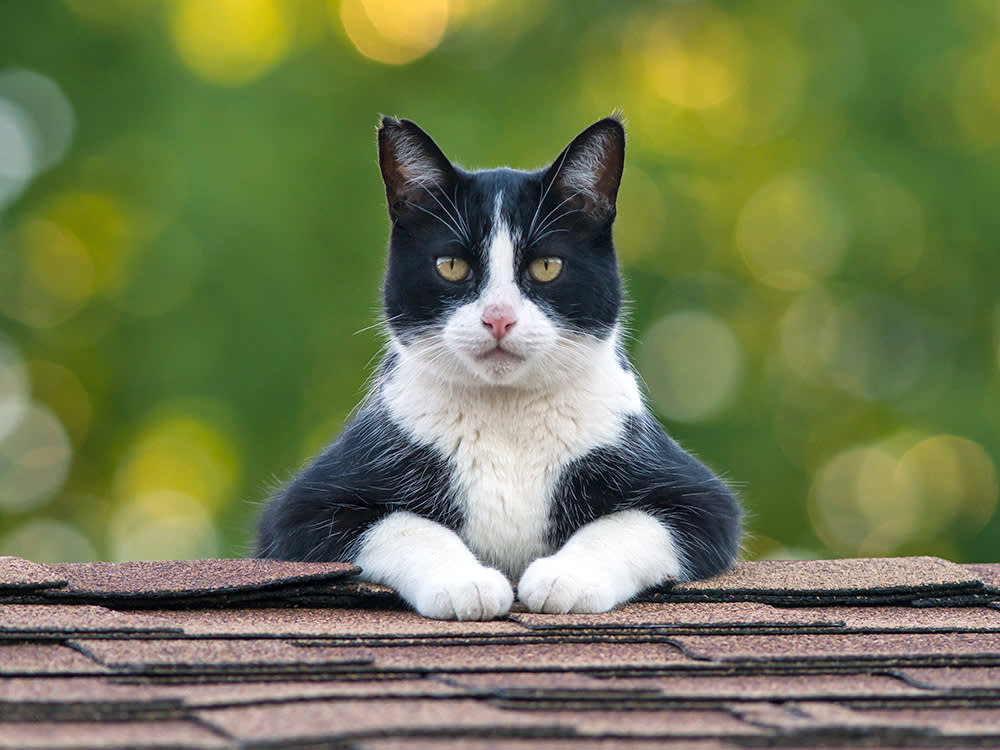
Scroll cat TikTok long enough and you will meet the claim, stated with total confidence, that tuxedo cats are smarter than other cats. Some versions go further and put a number on it: tuxedos are supposedly up to 200 percent more intelligent than the average house cat. It is a fun idea. It is also one of the cleanest examples you will find of a myth that tells you nothing about cats and a great deal about the people making it up.
So this piece is going to do two things. First, settle the science: there is no biological route from a black-and-white coat to a sharper brain, and we will walk through exactly why. Second, and more interesting, look at what the myth is actually doing, because the research on coat color and personality turns out to be a study of human perception wearing a cat costume.
The genetics simply do not connect coat to cognition
Start with what a tuxedo pattern is. It is not a breed. It is a coat pattern that shows up across countless mixed and purebred cats, produced by the same pigment genetics that govern any black or bicolor cat. The base switch sits on the X chromosome and toggles between two pigments, the orange-red and the black-brown families, with white spotting layered on by a separate gene that limits where pigment lands. A “tuxedo” is just black with a particular distribution of white.
That pigment machinery is a tiny corner of a much larger genome. Domestic cats carry on the order of 20,000 genes, and the ones steering coat color have no documented role in building or wiring a brain.
“Coat color is decided by a handful of pigment genes, and those genes are not in the business of brain development,” says Dr. Mara Chen, a veterinary behaviorist. “Expecting a black-and-white pattern to predict intelligence is like expecting someone’s eye color to predict their math ability. The genetics are running on completely separate tracks.”
There is one tantalizing biological thread worth being honest about, because skeptics deserve the strongest version of the opposing case. Melanin, the pigment that colors fur, is built along a chemical pathway that overlaps with the one that produces dopamine, a neurotransmitter tied to mood and behavior. That shared pathway is the entire scientific basis for the broader “coat color predicts personality” idea. It is a real and reasonable hypothesis. It is also a long way from established, it concerns temperament rather than intelligence, and nothing about it singles out the tuxedo pattern as special.
What “smart” even means for a cat
Here is the deeper problem, the one no coat study can fix: we have not agreed on what we are measuring.
Ask 100 owners what makes a cat intelligent and you will get 100 answers. Using the scratching post instead of the couch. Using the litter box instead of the tub. Learning to open a cabinet, or waiting until a civilized hour to demand breakfast. Most of those describe a cat that is easy to live with, not a cat that is cognitively gifted. A genuinely clever cat can still snub the litter box out of sheer opinion, and a dim one can nail the scratching post by accident.
“When people say a cat is smart, they usually mean the cat is cooperative or easy to read,” Dr. Chen says. “Those are wonderful traits. They are not the same as problem-solving ability, and a fur pattern predicts neither.”
It is also worth remembering that cats were not bred the way dogs were. Many dog breeds were selected over centuries to perform specific jobs, and we tend to call their job aptitude “intelligence.” Cats were shaped mostly for looks and broad temperament. There is no centuries-long selection pressure that would have quietly loaded extra brainpower into the bicolor cats.
The research is really measuring people
Now the genuinely revealing part. Several recent studies have tried to test whether coat color predicts personality, and their results expose the myth’s true subject.
One 2024 survey of 200 cat owners checked how often each color group’s real behavior matched the personality the stereotype predicts. The match rates were dismal across the board: orange cats lined up with their reputation only about 16 percent of the time, white cats 25 percent, black cats roughly 19 percent, calicos about 8 percent, and even tabbies, the most “matched,” only 34 percent. In other words, the stereotypes failed far more often than they succeeded.
Other work has found that what really tracks with coat color is not the cat’s behavior but the owner’s expectations. People reliably describe orange cats as friendly, tricolor cats as intolerant, and white cats as aloof, before the cat has done anything to earn the label. The pattern lives in the human, not the animal.
That is the engine behind tuxedo super-smarts. We dressed an entire category of cats in the visual language of human status. A “tuxedo” reads as formal, groomed, and competent because that is what tuxedos signal on people. From there it is a short, lazy hop to “competent” meaning “smart.” The myth may also have grown as a mirror image of the older “orange cats are lovable dummies” trope: if orange is silly, the binary logic goes, black-and-white must be sharp. Neither claim was ever about feline cognition.
What the myth costs you
A harmless internet meme, sure, until it starts steering real decisions. The same instinct that ranks tuxedos as geniuses is the instinct that makes people pass over black cats at shelters, where they are statistically the slowest to be adopted. When you let a coat pattern stand in for a personality, you talk yourself out of cats that might have been perfect for you and into expectations a real animal cannot meet.
The better predictor of a happy cat is not the cat’s coat. It is the fit between a specific animal and your specific home, the time you put into play and enrichment, and the history the cat is carrying. A cat that seems “spicy” may simply be under-stimulated. A cat that seems standoffish may be recovering from a rough start. None of that is written in the fur.
So call your tuxedo a genius if you like. Mine certainly thinks she is. Just know that the tuxedo has nothing to do with it, and that the most interesting thing about the myth is how neatly it caught all of us reading a story into a coat.
References
- Delgado, M. M., et al. “Human Perceptions of Coat Color as an Indicator of Domestic Cat Personality.” Anthrozoos. https://www.researchgate.net/publication/266676455_Human_Perceptions_of_Coat_Color_as_an_Indicator_of_Domestic_Cat_Personality
- “Cat Coat Color, Personality Traits and the Cat-Owner Relationship Scale: A Study with Cat Owners in Mexico.” Animals (MDPI), 2022. https://www.ncbi.nlm.nih.gov/pmc/articles/PMC9024431/
- Pontius, J. U., et al. “Initial sequence and comparative analysis of the cat genome.” Genome Research. https://pmc.ncbi.nlm.nih.gov/articles/PMC2045150/
Nina Vasquez writes about life at home with pets and the relationships at the heart of it. Her work covers day-to-day living, people-and-pet stories, and the products that fit into a real household, with a warm, grounded take on everyday pet ownership.
Meet our experts ↗Keep reading
 LivingYour Cat's Fur Pattern Says Almost Nothing About Who They AreDr. Mara Chen · 7 min
 Health & Wellness45 Degrees Is the Number That Should Bring Your Cat InsideDr. Nina Kohl · 7 min
 LivingYour Cat Isn't Embarrassed. Misreading That Scramble Is How People Make Cats Anxious.Dr. Nina Kohl · 6 min
 LivingThe Cat Is the Trojan Horse: How Cats of Brutalism Sells ConcreteNina Vasquez · 5 min
 Living'Cat Lady' Was Always a Compliment. These 11 Women Are the Proof.Sasha Ford · 7 min
 LivingA Video Game Studied Cats Harder Than Most Cat Owners DoSasha Ford · 6 min