


The 'Revenge Poop' Is a Smoke Alarm, Not a Grudge
Dogs can't do spite, so a sudden accident after you do something they dislike isn't payback. It's an alarm going off. Here's how to find the fire, when to rule out a medical cause first, and how to help an anxious dog.

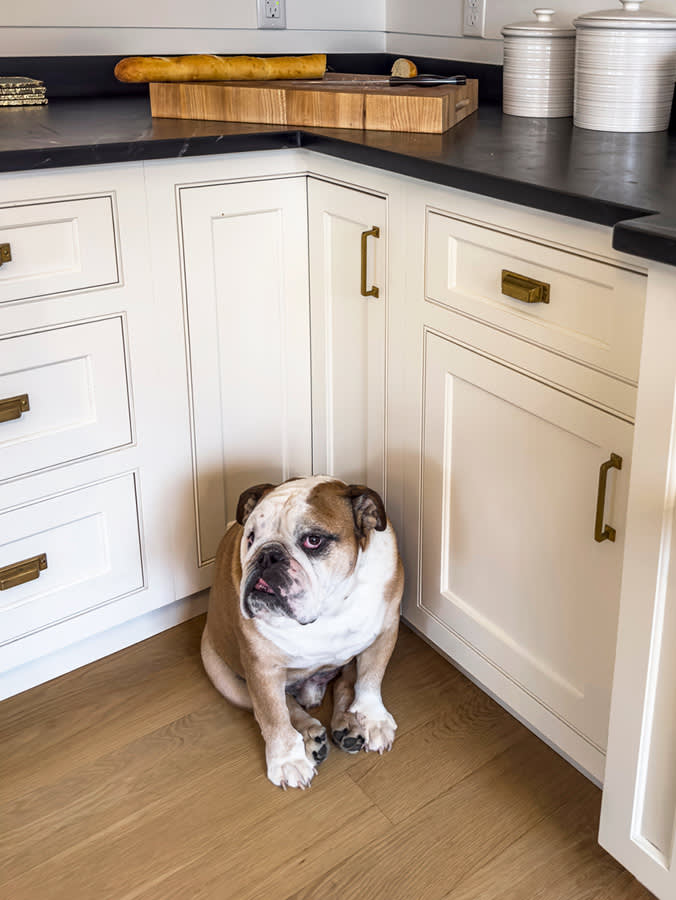
You did something your dog did not like, and now there is a mess on the rug. The story writes itself: he was angry, so he got even. It is a satisfying story, and it is wrong. Dogs are not capable of the calculated spite the “revenge poop” implies, which means the accident is not a verdict on you. It is a smoke alarm. Something in your dog’s world is on fire, usually fear, and the mess is the alarm going off. Your job is not to silence the alarm by scolding or cleaning faster. It is to find the fire.
“Revenge, malice, and forethought are human specialties,” says veterinary behaviorist Dr. Nina Kohl. “A dog leaving you a so-called gift is not plotting. They are overwhelmed, and this is what overwhelmed looks like in a body that cannot tell you in words.”
Before anything else: rule out the body
Here is the step most articles skip and the one a good vet insists on. A sudden return of accidents in a previously house-trained dog can absolutely be stress, but it can also be a urinary tract infection, a gastrointestinal upset, a parasite, incontinence, or pain that makes it hard to get outside in time. None of those are behavioral, and none of them respond to training. So the smoke alarm has two possible fires, medical and emotional, and you check the medical one first.
Treat the timing as your clue. A dog who has loose stool, strains, drinks or urinates more than usual, or has accidents with no obvious emotional trigger needs a vet exam and likely a urine or fecal test before you assume anxiety. Only once the body is cleared does it make sense to read the accident as an emotional signal. Getting this order right spares you weeks of training a problem that needed an antibiotic.
Why spite is off the table
Assuming the vet finds nothing physical, the science of dog emotion explains what is really happening. Researchers credit dogs with “primary emotions,” the immediate feelings like happiness, fear, and sadness. What the evidence does not support is “secondary emotions,” the kind that require sizing up a situation and responding strategically, which is where guilt and spite would live. There is some debate at the edges, a few studies suggest dogs may feel something like jealousy, but vengefulness, the deliberate “I’ll show you” of the revenge-poop myth, is simply not in a dog’s emotional repertoire.
So when house-training seems to collapse after a stressful event, the honest explanation is harder to hear than spite: your dog is most likely frightened. The events that read as joyful or neutral to us, a move, a baby, a new roommate, can register to a dog as the ground shifting under them.
Find the fire: the stressors hiding behind accidents
Once you accept it is fear, the triggers usually become visible. The common ones:
A new baby. Newborns swallow a household’s time and attention, and the dog’s routine is often the first casualty. As Dr. Kohl notes, people consumed with a new baby frequently fall off the dog’s walk schedule, and a missed walk is a missed chance to relieve stress and a missed bathroom break. It does not help that a baby’s cries can hit 110 decibels, about twice the volume of normal speech, enough to put anyone on edge. Add unfamiliar smells and equipment everywhere, and a dog’s stress starts to make sense.
A new adult in the home. A partner or roommate changes the soundscape and the social map. Loud weekends, a stranger in the dog’s space, or simply a disruption to the familiar rhythm can all unsettle a dog who lacks confidence around newcomers.
A move. The whole house is suddenly foreign, every scent and surface unfamiliar, which is an enormous adjustment in itself.
Your own stress. Dogs are emotional sponges. “Your anxiety doesn’t stay yours for long — the dog absorbs it,” Dr. Kohl says. A tense household produces a tense dog.
And dogs process all of this on their own clock. Some have an accident immediately after a stressful event; others react hours later or the next day. Major life events, death, divorce, marriage, moving, take people six to twelve months to process. There is no reason to think it is faster for a dog.
Read the other alarms, too
An accident rarely travels alone. If you suspect anxiety, look for corroborating body language:
- Dilated or constricted pupils
- Wide “whale eyes” with the whites showing
- Excessive panting
- Lip licking
- A rigid, frozen posture
- Raised hackles
- Ears pinned back or hyper-alert
- Whining
To see what you miss while you are gone, set up a camera. A calm dog usually relaxes or naps soon after you leave; an anxious one paces, whines, or cannot settle. That footage is some of the best diagnostic information you can bring to a vet.
The one that hides in plain sight: separation anxiety
Separation anxiety is widely under-recognized, because people picture a destroyed couch and a howling dog. Plenty of cases are quieter than that, and an accident may be the only outward sign. Owners often misread it as the dog “being mad.” In reality, Dr. Kohl says, it is almost always anxiety, and the feeling is far more acute than annoyance.
“Separation anxiety has nothing to do with payback,” Kohl says. “For the dog, your leaving feels like the floor giving way. That is the scale of distress we are talking about, and it is painful, so it deserves real help, not correction.”
While you work with a professional, a few management changes help. Keep your dog in an area where they can reach an appropriate spot if needed. Practice graduated departures: give your dog something absorbing to do, then leave the room, then build up to short absences of around ten minutes before extending. And keep arrivals and departures low-key, no emotional goodbyes, a calm hello, so coming and going stops feeling like a dramatic event.
How to help, and what you cannot do
You cannot train a dog out of a hardwired stress response. The physiological side of anxiety, racing heart, elevated blood pressure, spiking cortisol, is automatic and not a behavior choice. What you can do is lower the baseline and support the dog through it. Alongside a professional’s plan, useful tools include:
- Pheromone diffusers to ease background tension
- A snug pressure wrap like a ThunderShirt for gentle, calming compression
- Vet-recommended calming supplements
- Enrichment toys like food-stuffed Kongs and puzzles to occupy an anxious mind
When to call the vet, and who to call
For this kind of stress response, the guidance is to act early rather than wait it out.
“The moment you catch yourself wondering whether your dog’s distress is a problem, treat that as your answer,” Kohl says. “Anxiety at that pitch hurts, and the sooner it gets attention, the better.”
Start with your primary-care veterinarian, both to rule out the medical causes above and to get a referral, often to a veterinary behaviorist, who can layer in medication and a behavior plan if needed. Being proactive pays off, too: if a baby is on the way or a new person is moving in, a behaviorist can prepare your dog before the disruption rather than after the accidents start.
The bottom line
The mess on the floor is not your dog settling a score, because your dog does not keep one. It is an alarm, and a kind one, telling you they are scared or unwell and cannot say so. Check the body first, then look for the stressor lighting the alarm, and respond to the fear instead of the floor. As Dr. Kohl puts it, it sounds like a cliché, but an accident like this really is a cry for help, and your dog would never deliberately do anything to hurt you.
This piece touches on anxiety, medication, and behavior change. It is general information, not a substitute for veterinary care; a sudden change in your dog’s bathroom habits warrants a hands-on exam.
References
- Bekoff, Marc. The Emotional Lives of Animals. New World Library, 2007.
- Sherman, Barbara L., and Daniel S. Mills. “Canine Anxieties and Phobias: An Update on Separation Anxiety and Noise Aversions.” Veterinary Clinics of North America: Small Animal Practice, vol. 38, no. 5, 2008, pp. 1081-1106.
- “House Soiling in Dogs.” American Animal Hospital Association, aaha.org.
Dr. Mehta is a board-certified veterinary nutritionist who evaluates pet food formulations, ingredient quality, and the science behind dietary trends. He writes and reviews all nutrition content at The Pet Times, including our food rankings and feeding guides.
Meet our experts ↗Keep reading
 TrainingYour Dog Isn't Being Rude. He's Cornered.Dr. Amara Solis · 8 min
 TrainingYou Can't Train Your Dog in a Moving Car. Start in the Driveway.Dr. Ravi Mehta · 8 min
 TrainingSome Dogs Hate Walks. Dragging Them Only Makes It Worse.Dr. Ravi Mehta · 8 min
 TrainingYou Didn't Cause Your Dog's Leash Reactivity. Here's How to Manage ItDr. Amara Solis · 7 min
 TrainingYour Reactive Dog Can't 'Settle.' Stop Asking and Give Them a Job.Dr. Mara Chen · 8 min
 TrainingYour Dog's Licking Is a Map. Here's How to Read What That Tongue MeansDr. Mara Chen · 10 min