


The Hour After Training Decides Whether the Lesson Sticks
Research on dogs and sleep points to a simple, overlooked rule: what your dog does in the hour right after a lesson can make or break their memory of it. Here's how to build that hour.
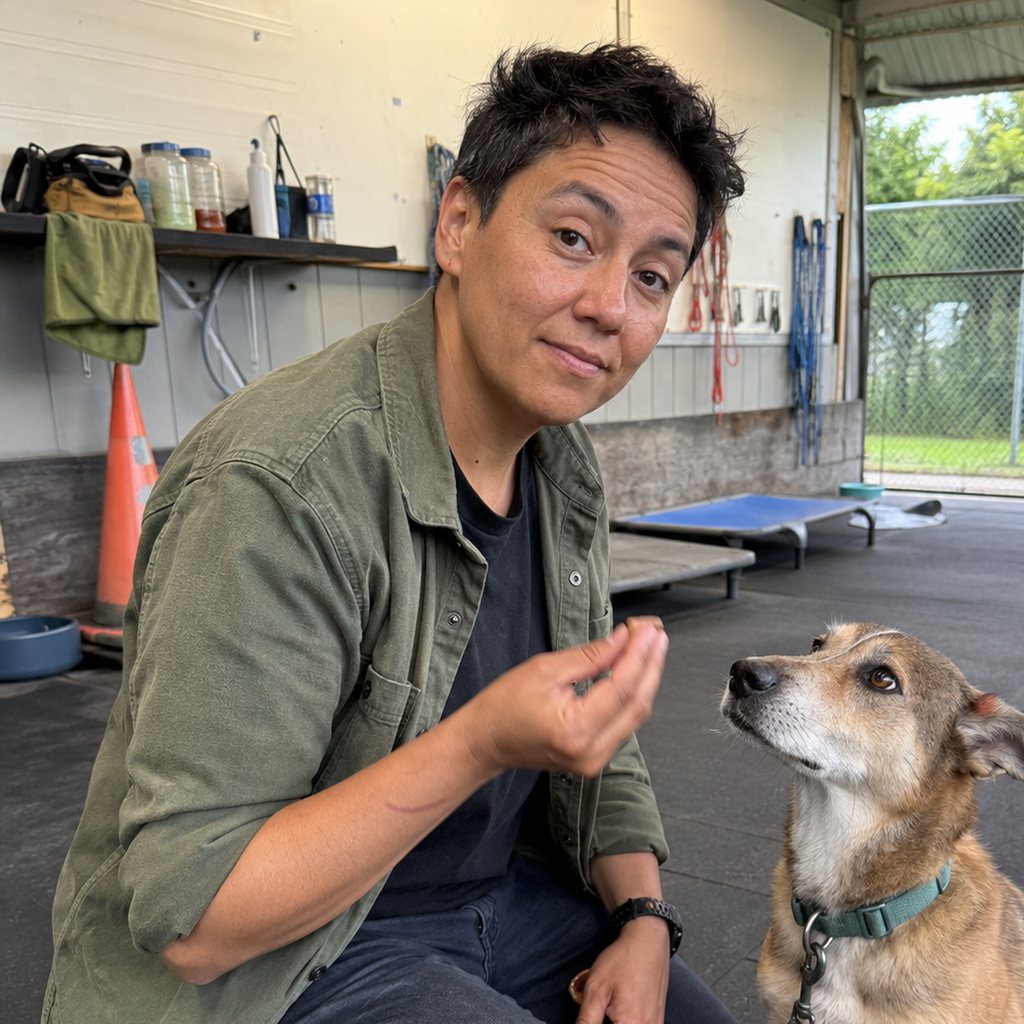
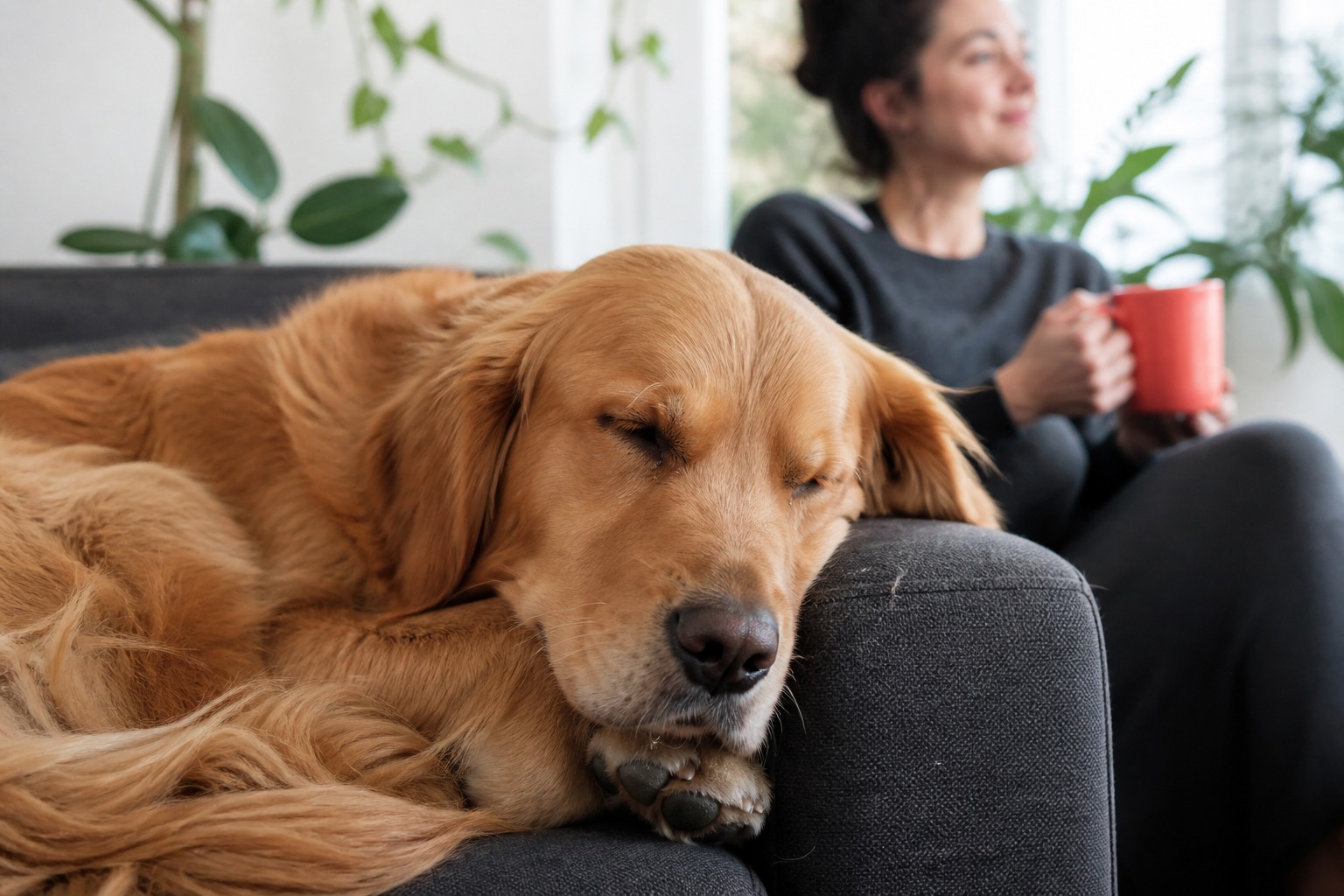
You can run a flawless five-minute session, your dog nails the new cue, and then it evaporates by tomorrow. Frustrating, and common. The fix is not more reps. It is paying attention to a window most owners ignore entirely: the hour right after you stop training. What your dog does in those 60 minutes, and whether sleep comes next, has a measurable effect on whether the lesson is still there in a week.
That claim comes out of a body of canine sleep research, and the practical upshot is refreshingly simple. Teach the thing, then protect the wind-down. Here is what the science actually says, and the routine it points to.
What the research found
In a now-foundational 2017 study from the Hungarian Academy of Sciences, Anna Kis and colleagues taught dogs a new cue for a familiar behavior like “sit,” then sent them for a three-hour nap monitored by a non-invasive sleep study. Retested afterward, every dog performed the new cue better than before the nap. The EEG data even hinted the dogs slept more deeply after learning something new, which is exactly what you would expect if the brain were busy filing the lesson away.
The second experiment is where it gets useful. Dogs learned a new cue, then spent an hour doing one of four things: sleeping, walking on leash, training an unrelated skill, or playing with a food-stuffed Kong. They were retested at one hour and again a week later.
The pattern was telling. Sleeping or walking after the session produced no improvement at one hour, but clear improvement a week later (once the dogs had banked several full nights of sleep). The dogs who instead did unrelated training or worked a food toy in that hour did worse, in both the short and long term. The interference, not the rest, was the problem.
More recent work has sharpened the why. A 2024 study in Scientific Reports found that pairing a learning experience with a pleasant surprise, a “positive expectancy violation,” and then sleep, influenced how dogs consolidated the memory. In plain terms: a good session followed by rest is not just neutral downtime, it is when the learning gets locked in.
The takeaway: a “teach, then settle” routine
Read together, the studies point to one rule. The lesson is fragile right after you teach it, and the next hour either protects it or scrambles it. So build the hour on purpose.
Think of sleep as the save button. A skill that looks wobbly at the end of a session firms up overnight, or even over a good nap, and by morning it is suddenly load-bearing. I watch it happen with client after client. — Sara Lim, certified professional dog trainer
What protects the lesson:
- A nap, or just calm downtime. If your dog drifts off after a session, do not wake them to “practice once more.” That nap is the work.
- A relaxed sniff walk. Walking after training helped in the study, and sniffing is naturally decompressing. It is the ideal way to break up a session for a dog who hates repetition.
What scrambles it:
- A second, unrelated lesson. Stacking a new skill on top of the first overloads the system and the cues blur together. One concept per session.
- A high-octane food puzzle right after. A loaded Kong is so rewarding it yanks the dog’s full attention onto itself and tires them in a wired, not restful, way. Save it for after the wind-down, not in place of it.
There is a useful exception worth knowing. A food toy is a great tool to end a session and ease a dog into rest, just not as the immediate next “activity” while the lesson is still settling. Give it a beat first.
Keep sessions short, and read your dog
The dogs in the study trained briefly, not for an hour. Mirror that. Most home sessions should run five to ten minutes, not the hour-long block people imagine when they picture “training class.”
You’re aiming for a dog with fuel still in the tank but no fizz left in the brain. Ten minutes of thinking can drain a dog more than a half-hour run, so end while they’re still enjoying it, and stop the moment they start turning away or checking out. — Dr. Ravi Mehta, DVM
If those professional classes run an hour, it is because the human needs the hour. “You are training the person as much as the dog,” as Mehta puts it, and good classes are built around breaks. At home, you do not have that excuse to push past your dog’s attention span.
Where a cue actually lives: the four stages
It also helps to know that “learned it” is not a single moment. A cue moves through four stages, and most of the frustration owners feel is really impatience with the third one.
- Acquisition — the dog first connects the cue to the behavior, often in minutes.
- Fluency — the response gets faster and more reliable with practice.
- Generalization — the dog can do it in new places and around distractions. This is the slow one.
- Maintenance — occasional practice keeps the cue sharp for life.
A dog who “knows sit” in your kitchen but blanks at the park has not forgotten. They are mid-generalization. Start every new skill in a calm, familiar, low-distraction spot, then once it is fluent, deliberately practice in harder and harder settings.
Mark the moment, and mind your treats
Two small mechanics make a big difference. First, use a marker, a clear “yes” or a clicker, to pinpoint the instant your dog gets it right, then deliver a reward immediately. The marker tells the dog precisely what earned the treat.
Second, do not lead with your best treat. Counterintuitively, you want the lowest-value treat that still works.
Use the most boring treat that keeps your dog in the game. That leaves you somewhere to go. You save the gourmet stuff for the genuinely hard things, recall away from a squirrel, calm around a trigger, where you really need their whole brain. — Sara Lim
If all of this feels like a lot, it is not. The heart of training is still repetition and consistency, done in small doses. Teach one thing, keep it short, then let your dog walk it off or sleep on it. When a new cue is not sticking, the answer is often not another rep. It is a nap.
References
- Kis, A., et al. “The interrelated effect of sleep and learning in dogs (Canis familiaris); an EEG and behavioural study.” Scientific Reports, 2017. https://www.nature.com/articles/srep41873
- Iotchev, I. B., et al. “Potential interactive effect of positive expectancy violation and sleep on memory consolidation in dogs.” Scientific Reports, 2024. https://www.nature.com/articles/s41598-024-60166-8
- Bódizs, R., et al. “Sleep in the dog: comparative, behavioral and translational relevance.” Current Opinion in Behavioral Sciences, 2020. https://www.sciencedirect.com/science/article/abs/pii/S2352154620300723
Jordan Ellis is a certified professional dog trainer with a decade of experience working with rescue organisations and private clients. They specialise in anxiety, reactivity, and positive reinforcement methods, and review all training and behaviour content at The Pet Times.
Meet our experts ↗Keep reading
 LivingRenaming Your Rescue Won't Confuse Her. Keeping a Poisoned Name Might.Dr. Amara Solis · 6 min
 Training'Spin' Looks Impressive. It's the Easiest Trick You'll Ever Teach.Sasha Ford · 5 min
 TrainingYour Dog Understands Words. Just Not the Way You Think.Dr. Priya Nair · 9 min
 TrainingYour Treat Is Late. That One Second Is Costing You the Whole Lesson.Dr. Mara Chen · 8 min
 First DaysEight Weeks Isn't a Feeding Milestone. It's a Behavior Deadline.Dr. Priya Nair · 9 min
 TrainingThe Viral 'Run Away From Your Dog' Trick Works. You Get to Use It Once.Dr. Mara Chen · 7 min