


Yes, Your Dog Can Learn to Skateboard. It's Just Shaping in Disguise.
A skateboarding dog looks like a circus act. It's really five patient steps of rewarding tiny wins, and the whole thing rests on never letting the board become scary.

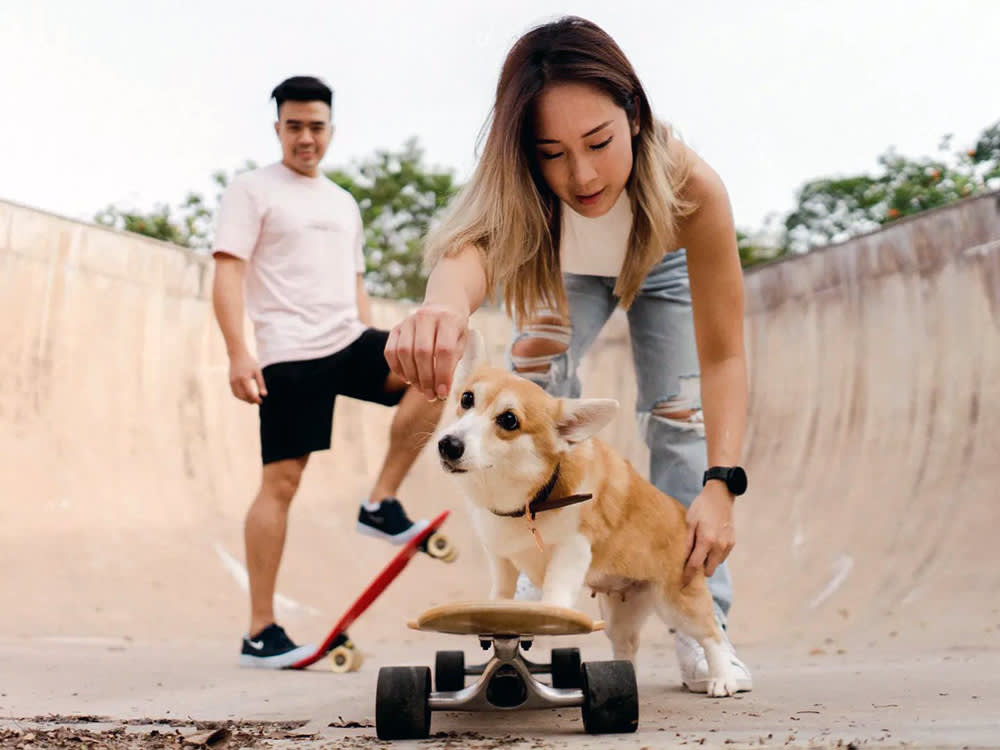
A dog riding a skateboard looks like pure spectacle, the kind of thing that racks up millions of views because it seems impossible. It isn’t. Strip away the wow factor and skateboarding is just shaping: taking a strange, complicated skill and breaking it into pieces so small your dog can nail each one, then stacking those pieces up. Every good trick works this way. This one just happens to end with your dog looking like a legend at the skatepark.
There’s one rule that matters more than any technique here, so let’s put it first: go slower than you think you need to. The entire project depends on the board never becoming something your dog is afraid of. Rush it, spook them once, and you’ll spend weeks undoing that. Take it in tiny, rewarded steps and most dogs get there happily.
A quick note on who this suits. Some breeds are naturals, Bulldogs especially, thanks to their low center of gravity, but plenty of larger dogs can do it too if they physically fit on the deck. Athletic, confident, food-motivated dogs pick it up fastest.
The five steps
1. Make standing on a still board pay off. This is the foundation, and it’s worth doing slowly. Start with the board locked down so it can’t roll, braced with a block of wood or your foot, and if the trucks are adjustable, tighten them so it can’t rock either. Reward your dog for putting a single paw on the deck. Then two paws. Then all four. You want the board to become the most rewarding place in the room before it ever moves.
2. Introduce a little motion. Once your dog stands calmly on all four paws, add movement, and only a whisper of it. Roll the board a few inches, reward, then a little farther. Keep the motion slow and let your dog get comfortable staying aboard while it drifts, even if one paw hops along behind to keep up at first.
3. Teach the push. This is the step that turns a passenger into a driver. Mark and treat any time a back paw shoves off against the ground. That shove is what lets a dog drive the board any real distance, instead of coasting on one you’ve nudged into motion.
4. Add speed and distance, gradually. As your dog gets confident pushing, start asking for a little more before you reward, so they ride farther and faster. Read the dog: some love the extra speed, some don’t, and there’s no prize for pushing a dog past what they enjoy. Stay firmly inside their comfort zone.
5. Loosen the board for steering. Finally, slowly loosen the trucks so the board can rock side to side, which is what makes steering possible, and work back through the whole process at each new setting. Then reward the steering itself, which a dog manages by leaning their body left or right mid-roll.
The people who fail at this almost always failed at step one, they let the board move too soon and the dog decided it was a threat. If you’re patient enough to spend three sessions just rewarding four calm paws on a locked board, the rest tends to fall into place. Speed is the last thing you add, never the first.
Keep it safe and honest about your dog
Skill, physical limits, and plain interest all matter. The dogs in viral clips are highly experienced, and most dogs won’t reach that level, which is completely fine. Keep to smooth surfaces, stay far from roads and other hazards, and don’t send your dog down a hill of any grade, however gentle, until they’re genuinely ready.
Be honest about the dog in front of you, too. Some dogs are fearless little athletes who take to it naturally. Others will only ever enjoy rolling slowly for short stretches, and that’s a perfectly good outcome. And some dogs are simply not built for this or not into it, and if that’s yours, don’t push it. Forcing a nervous dog onto a moving board isn’t training, it’s just stress.
One health caveat the old trick guides tend to skip: if your dog is still a puppy, keep this low and flat. Growth plates don’t finish closing until somewhere around 12 to 18 months depending on size, and repetitive impact or awkward landings on developing joints aren’t worth the risk. Let young dogs learn the calm, ground-level version, and save any real speed for a physically mature dog. When in doubt, ask your vet before starting.
Do it right and skateboarding is exactly what good training should be: a string of small wins, a dog who’s genuinely enjoying the puzzle, and a payoff that happens to be extremely fun to watch.
References
Claire Sutton writes about life with pets, from the first days home to the small daily routines that make a household work. Her reporting spans people-and-pet relationships, training basics, and the practical side of bringing a new animal into the family.
Meet our experts ↗Keep reading
 Training8 Ways to Be the Dog Owner Your Building Doesn't Complain AboutMarcus Webb · 8 min
 LivingDon't Teach Your Dog to Swim. Teach Them to Get Out.Dr. Priya Nair · 8 min
 TrainingStop Steering. The Walk Is the One Thing Your Dog Should Get to Decide.Dr. Lena Park · 7 min
 TrainingYour Dog Doesn't Fail at Restaurants. They Fail in the First 90 Seconds.Dr. Nina Kohl · 7 min
 TrainingYour Herding Dog Has No Sheep. Give It Eight Exercise Balls Instead.Marcus Webb · 6 min
 TrainingBefore You Cut a Hole in Your House, Answer This: What Else Can Fit Through It?Marcus Webb · 8 min