


Stop Chasing Your Dog. That's Why Fetch Isn't Working.
Most failed games of fetch come down to one mistake: you're the one doing the chasing. Here's how to flip it, teach a reliable retrieve step by step, and fix the classic problems, plus why some dogs are natural fetchers and others need a workaround.
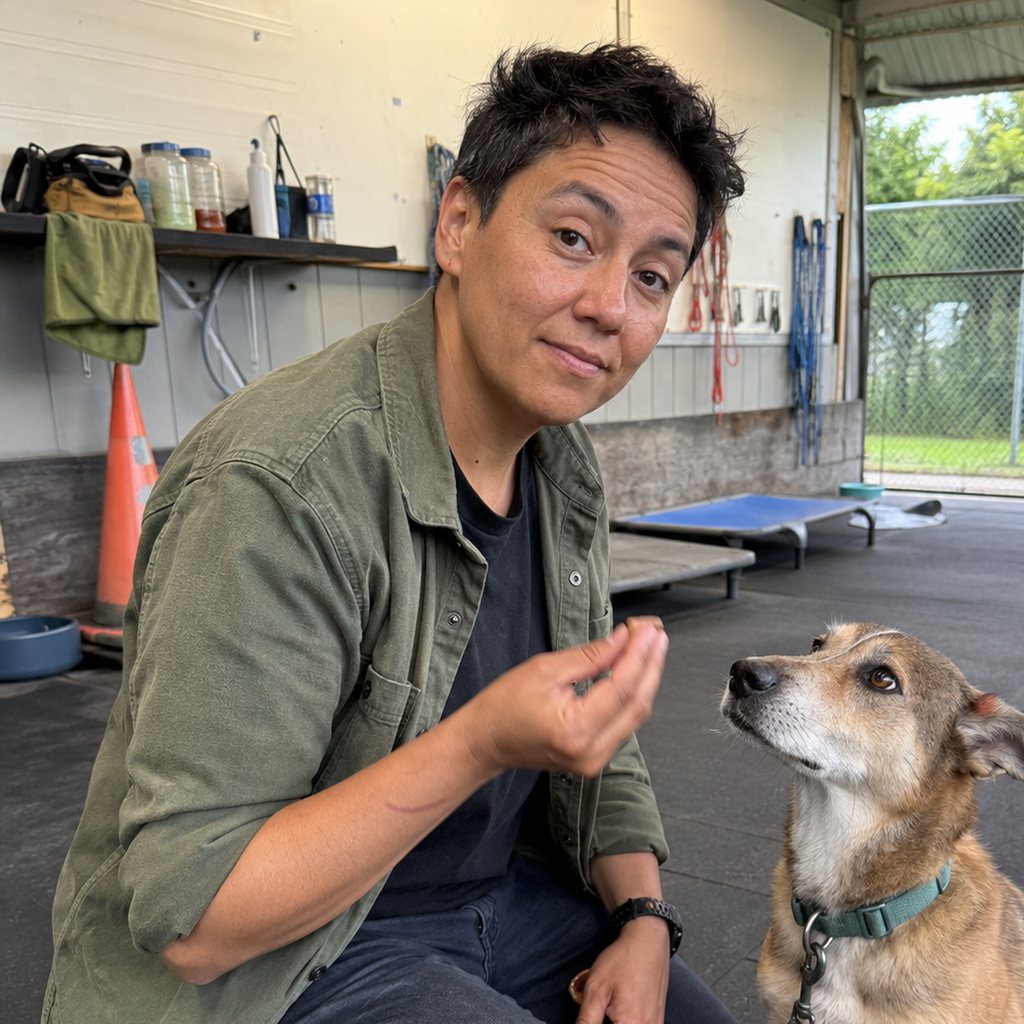
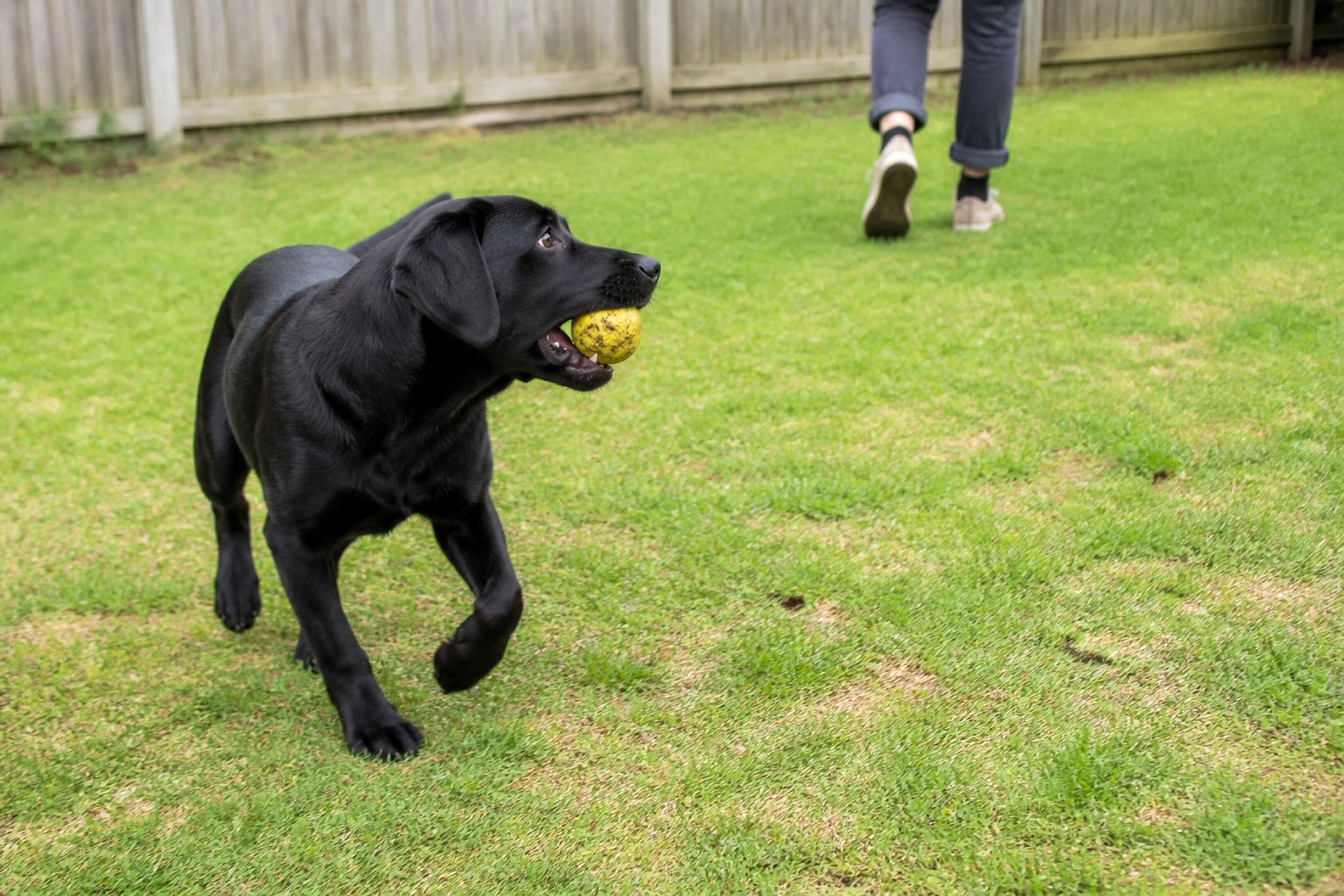
Here is the single insight that fixes more broken games of fetch than any technique: in a yard full of dogs playing keep-away, the human is almost always the problem. Your dog grabs the ball, you step toward them to get it, and you have just taught them the best game in the world, one where they hold the prize and you come running. Fetch falls apart the moment you become the chaser. Everything else in this guide flows from flipping that dynamic.
Fetch is worth the effort, because it is that rare activity that is great for both of you. It gives your dog real exercise while you barely break a sweat, it teaches the genuinely useful skill of releasing an object on cue, and because it is playful and shared, it deepens the relationship between you. Some dogs arrive knowing how to do it and will practically play alone. For the rest, it is a game you build.
Build the game step by step
Start inside the house. I know that sounds backwards, but indoors there are fewer smells and distractions, so it is easier for your dog to lock onto the toy. (I’ll say “ball” throughout, but use whatever toy your dog loves.) You’ll take it outside once the pattern is solid.
First, make the toy come alive. Bounce it, toss it up and catch it, wiggle it around. The movement is the magnet, so get it moving before your dog is even in the game.
Then toss it a short distance, no more than about five feet. If your dog trots over and grabs it, give a soft clap and walk the other way. Most dogs can’t resist following, and your retreat is what pulls them back toward you. Do not call them or say their name, which tends to make dogs drop the toy and come to you with nothing. Treat it as an unbreakable rule: they move toward you, you never move toward them.
If they grab it and run, run too, in the opposite direction. This is the hard part, and it is the whole ballgame. Every time you give in and chase, you strengthen the wrong game.
When they bring it back and drop it near you, throw it again instantly. Most of us want to pause and praise, but to your dog that looks like you’re keeping the ball hostage. They want it back, and they want it now. Make a personal challenge of it: you win if the ball leaves your hand the second it lands, you lose if you hold on. Over the years I’ve found this is the step people struggle with most, and it is the one that makes or breaks the game.
Fixing the classic problems
Once the basic loop is running, real dogs throw real curveballs. Here’s how to handle the common ones.
If your dog won’t bring the ball back. Some dogs love the chase and have no interest in the carrying-it-home part. Pick the toy they find most compelling, and ideally one you can play with interactively. If your dog likes to tug, use a tug toy and play a little tug after each return before tossing it again. If they love a squeaky fleece toy, squeak it before and after each throw. And some dogs will only pick up something that smells like food, so try rubbing a bit of peanut butter on the ball or soaking it in a little broth. If they bring that back, add more food and toss again. Plenty of dogs learn to enjoy ordinary fetch after starting with this “active dinner” version.
If your dog won’t drop the ball. Slide a treat right under their nose and most dogs will let go to eat it. Throw immediately so the focus goes back to the game. Once they reliably release for a treat, add a cue, saying “drop it” and then presenting the treat, until eventually the words work alone. For dogs too distracted by food, skip treats and use two balls: the moment your dog comes near holding one, toss the second, bounced or thrown up first to make it interesting, and most will drop the first to chase the new one. You’ll do some fetching yourself at first, but the habit of dropping to chase settles in quickly.
If your dog quits after a handful of throws. Play indoors where there’s less to distract them, and end the session while they still want more, which leaves them eager next time. Watch their pattern: if they usually give up after four throws, do three for a while, then slowly build back up. You can also make each throw more exciting by running away as they return, playing at their peppiest time of day (often mid-morning or late afternoon), or using a squeaky ball you squeak before each toss.
If your dog prefers keep-away to fetch. Do not chase, full stop. Being chased is endlessly fun for a dog, so if you start, you’ll be doing it forever. Use several toys and send them off in directions your dog can’t anticipate, so they can’t bolt until you throw. If they keep peeling away instead of chasing the toy, end the session and come back to it later. Quitting teaches them that running off doesn’t start the chase game they were angling for.
If your dog won’t quit. Some dogs take the end of fetch badly. Teach a wind-down cue: pick a phrase like “one more” that means the next throw is the last. A heads-up helps a lot of dogs cope. You can let some dogs keep the ball after the final toss, but if yours keeps dropping it at your feet expecting another throw, tuck it away once you’re finished. Following fetch with something else your dog enjoys, a training session, a walk, or a chew, softens the landing and teaches them the fun isn’t over just because the ball is.
If your dog gets overexcited or nippy. Mouthiness during fetch is almost always about arousal, and it needs to come down before the game can be enjoyable for you both. Skip the upbeat clapping and cheering that revs them up. Instead, toss the toy a short way and say a calm, drawn-out “goood” when they bring it back. Every couple of throws, ask for a known behavior, a sit, a down, a stay, which has a settling effect. (Avoid asking for “spin,” which winds most dogs up rather than down.) Begin with a lower-key toy, often a plush one instead of a ball, and build up the energy gradually. If pauses aren’t enough and they’re still too mouthy, stop and redirect to a chew or a walk.
If your dog shows no interest at all. Don’t give up. Many dogs come to enjoy fetch by way of a toy stuffed with treats. Pack the food in so it’s a little hard to get out, toss the toy a few feet, then take it back, dig out some treats, and give them to your dog. Once they figure out that bringing the toy to you is the fast route to the food, they’re technically retrieving. Gradually feed from your pocket instead of the toy, then stop stuffing it altogether. You can also shape the behavior in tiny steps, rewarding any interest in the toy first, then a touch, then holding it, then a step with it, then a return. Some dogs grow to love it this way, though for others it stays a trick rather than a passion, and that’s a perfectly good outcome.
Why some dogs are naturals and yours might not be
If you’ve ever felt like your dog is defective for not chasing a ball, science has good news: fetching is heavily written into a dog’s genetics, and the variation between dogs is real. In behavioral research, retrieving turns out to be one of the most heritable traits studied, with genetics accounting for roughly half of the differences between dogs. A 2024 study in PLOS One that surveyed fetching across huge numbers of dogs and cats found the behavior is common but far from universal, and that it clusters by type. Herding and sporting breeds tend to be more toy-focused and more inclined to play, while breeds like the Great Pyrenees, Alaskan Malamute, and Basset Hound are markedly less likely to fetch than a retriever ever would be.
The takeaway is freeing. If your dog treats a thrown ball with polite confusion, they aren’t stubborn or badly raised. They may simply be wired for a different job. You can still teach the game using the food and shaping methods above, but you can also let it go and find the activity their genes actually reward, whether that’s sniffing, tugging, or working a puzzle.
The number one thing I fix isn’t the dog, it’s the human who keeps walking toward their dog to grab the ball. The second you make yourself the interesting thing to run to, and you throw the instant that ball hits the ground, most dogs figure fetch out on their own. And if yours never does, that’s genetics talking, not a training failure, so stop taking it personally and go find the game they were built for.
Teaching fetch takes patience
The goal is happy, easy games of fetch, and getting there means staying flexible about the how. Move away to draw your dog to you, reward anything that resembles fetching while they’re learning, and decline the invitation to run in circles after them. Pick the methods that suit your particular dog, keep it fun, and play ball.
References
Common questions
Why won't my dog bring the ball back?
Usually because chasing is the fun part and carrying an object back is not. Switch to the toy your dog finds most interesting, ideally one you can play with together like a tug or a squeaky toy, and reward the return by immediately restarting the game. If they drop it partway, keep moving away from them rather than walking toward them.
How do I get my dog to drop the ball?
Put a treat right under their nose. Most dogs release the ball to take the food, and then you throw again immediately so the game continues. Once that's reliable, add the words 'drop it' just before the treat, and over time the cue works on its own. For treat-obsessed dogs, use two balls instead and toss the second one to make them let go of the first.
Some dogs just don't fetch. Is mine one of them?
Maybe, and that's normal. Retrieving is strongly influenced by genetics, so breeds like Great Pyrenees, Malamutes, and Basset Hounds are far less likely to naturally fetch than retrievers or herding dogs. Even so, most dogs can learn a version of the game using a treat-stuffed toy or by shaping the behavior in small steps. They may play it as a trick rather than a passion, and that's fine.
Jordan Ellis is a certified professional dog trainer with a decade of experience working with rescue organisations and private clients. They specialise in anxiety, reactivity, and positive reinforcement methods, and review all training and behaviour content at The Pet Times.
Meet our experts ↗Keep reading
 LivingADHD Doesn't Make You a Bad Dog Parent. Your Reminder App Does.Leila Torres · 8 min
 TrainingYes, Your Dog Can Learn to Skateboard. It's Just Shaping in Disguise.Claire Sutton · 5 min
 LivingThe Only People Who Should Own a Husky Walk 11 Miles a DayMarcus Webb · 7 min
 TrainingYour Dog Doesn't Fail at Restaurants. They Fail in the First 90 Seconds.Dr. Nina Kohl · 7 min
 TrainingBefore You Cut a Hole in Your House, Answer This: What Else Can Fit Through It?Marcus Webb · 8 min
 TrainingYour Herding Dog Has No Sheep. Give It Eight Exercise Balls Instead.Marcus Webb · 6 min