


Your Dog Pulls Because You Pull Back. Rock Climbers Found the Fix.
Leash belay borrows a climbing technique to stop the tug-of-war with a strong dog. Here's how the carabiner-and-ring setup works, who it's for, and how to brake without a single leash pop.

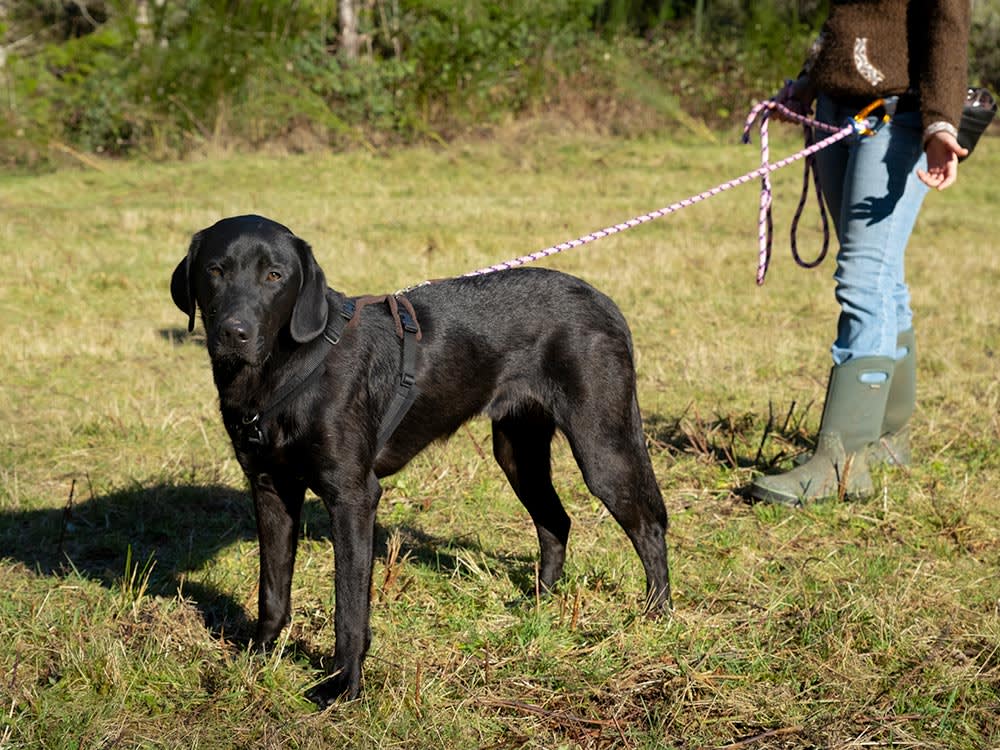
Here is the uncomfortable truth about the dog dragging you down the block: pulling takes two. When your dog surges ahead and you either scramble to keep up or haul back on the leash, you are not correcting the pull. You are answering it. Rush to catch up and you teach the dog that leaning into the collar gets them where they want to go. Yank back and you have started a tug-of-war, which most dogs are delighted to win.
Leash belay is a way to stop playing the game entirely. It comes straight from rock climbing, and once you see the mechanics, it is hard to unsee how much gentler it is on both ends of the leash.
What belaying actually does
In climbing, a belay is the system that catches a falling climber by feeding a rope through a friction device rather than through bare, burning hands. Trainer Grisha Stewart adapted that idea for dog walking as part of her Behavior Adjustment Training, or BAT, a force-free approach that uses positive reinforcement and careful leash skills to help nervous dogs build confidence around the things that worry them.
The heart of the setup is small: a metal carabiner paired with one or two O-rings, or an equivalent piece of climbing hardware. Rather than running through your clenched fists, the leash threads through that ring, which absorbs the friction that would otherwise burn your palms. You do two things with your hands. You belay, letting the line slide through the device as your dog moves, and you brake, bringing them to a smooth, gradual stop. No jerk, no pop, no whiplash on either side.
That is the philosophical point, not just the physical one. Older leash-training styles rely on the correction, a sharp pop to punish a lunge. Belaying sits at the opposite end of the humane hierarchy that force-free trainers now work from: reach for the least intrusive tool that gets the job done. Slow stops instead of sudden ones. A nudge toward better behavior instead of a penalty for the wrong one.
A leash pop tells a dog what not to do in the harshest half-second you’ve got, and it teaches nothing about what you’d rather they did. A belay flips that. You buy yourself a beat of friction, the dog feels a soft ceiling instead of a wall, and suddenly you’re shaping a calm walk instead of refereeing a fight.
The gear, and why a rope leash is non-negotiable
You can start with very little indoor practice and a short kit. The working list looks like this:
- A dynamic climbing rope, which is stretchier than a standard rope lead
- One or two O-rings
- A leash tab
- A locking carabiner
- A hip belt, ideally a skijoring or CaniX belt
- For serious stopping power, a belay device such as a Beal Birdie, an ATC, or a figure-8 descender
The single most important piece is the leash itself. Round rope leashes slide through the hardware cleanly, which flat leashes will not do. Stewart’s BAT sessions use a 15-foot rope leash, and if you have ever done BAT, tab belaying will feel like familiar territory. You can belay with a shorter leash and a tab, but keep it to at least eight feet so you have enough line to brake before your dog runs out of runway.
Two methods, matched to your dog
Stewart landed on two approaches by testing them across many dogs and handlers.
The belt method is built for large, powerful dogs. A carabiner clips to a hip belt, which moves the entire force of the pull off your arms and onto your hips, leaving your hands free. To brake, you form a V-shape with the lead through the carabiner. Because a skijoring or CaniX belt rides low on the hips rather than climbing up under your ribs, it stays put when a big dog throws its weight forward.
The handle method is the simpler version. A leash tab, essentially a handle with a clasp, clips onto a ring you’ve fitted onto the leash itself, so you keep two handles, and both of your hands, in the game. The ring only needs to be large enough to slide freely. For a brake, thread the leash handle through a second ring, a tweak that leash designer Trisha Case of Trailblazing Tails came up with.
When you’ve got a thrasher on the other end
For a dog that reacts hard, the instinct is to reel them in. Don’t. Shorten the line instead by walking up the leash hand over hand, then reward heeling or any calm behavior, offering a treat or praise for even a small slowdown. Better still, keep enough distance from triggers that the meltdown never starts.
For the strongest pullers, whiplash-fast reactors included, you want maximum stopping power: a hip belt plus a heavy-duty device like a figure-8 or an ATC to feed the line through slowly. Pulling your elbows in stops the dog quickly. The most capable, and priciest, option is the Beal Birdie, whose built-in auto-stop keeps holding even if your hands leave the leash entirely.
A few finer points make it smoother. To ease a dog to a stop, lean back to lock the ring in place; to release, guide the line forward so the ring drops, and tie a knot in the leash so the ring never slams into your hand. When you cue a turn or a halt, slide your leash hand toward you hand-under-hand, and produce those all-important slow stops by pressing down on the line while feeding out only as much as you need to slow the dog gradually.
Who this is, and isn’t, for
Be honest about the fit. Belaying shines for a dog that is strong, bouncy, or reactive enough that a normal leash grip leaves you outmuscled, and for a handler willing to practice the moves indoors before taking them to the sidewalk. It is not a magic collar, and it does not replace the underlying work of teaching loose-leash walking and managing a reactive dog’s distance from triggers. If your dog’s pulling is tangled up with real fear or aggression, loop in a certified force-free trainer or a veterinary behaviorist before you troubleshoot hardware. Used well, though, leash belay does something most anti-pull gadgets cannot: it lowers the intensity of the whole walk instead of raising it.
Dr. Kohl is a board-certified veterinary dentist with a particular interest in preventive oral care. She reviews all dental health content at The Pet Times and contributes practical guides on home dental routines, professional cleaning, and oral disease prevention.
Meet our experts ↗Keep reading
 Health & WellnessAn ER Vet on Why Walking Your Dog by the Collar Is a Quiet GambleDr. Amara Solis · 6 min
 Product PicksThe Leash Can't Stop the Pulling. It Can Stop the InjurySasha Ford · 12 min
 Product PicksThe No-Pull Harness That Won't Wreck Your Dog's Shoulders: 8 Picks RankedSasha Ford · 13 min
 Product PicksTheir First Dog Backpack Fell Apart in Two Weeks. So They Built One That Doesn't.Sasha Ford · 7 min
 Product PicksThe Dog Training Gear That Actually Does the Work, Grouped by the JobJordan Ellis · 12 min
 Product PicksWhy Every Cool Dog's Leash Suddenly Looks the SameLeila Torres · 5 min