


The Dog Training Gear That Actually Does the Work, Grouped by the Job
Training gear roundups list a dozen 'best' picks with no logic. We grouped the ones worth owning by the training job they do, from containment to leash manners, and said plainly which tools teach and which just buy you time.
Affiliate disclosure. This article contains affiliate links. We may earn a small commission if you buy through a link, at no extra cost to you. How we handle recommendations.
Most training-gear roundups hand you a dozen “Best This” picks in no particular order and leave you to guess which ones you actually need. That’s backwards. Good training isn’t about owning gear; it’s about doing a handful of specific jobs well, and each job has one or two tools that genuinely help. So we reorganized this around the job the gear does, with an honest line on each about whether it teaches your dog something or just manages the situation while you teach. Both have their place. Confusing them is where people waste money.
The one principle underneath all of it, from every trainer we talked to: reward-based, positive-reinforcement training is the most effective and humane approach. Gear supports that. It never replaces it.
Job 1: Rewarding the right behavior (the foundation)
Everything starts here, because a dog learns fastest when the reward is fast, small, and precise.
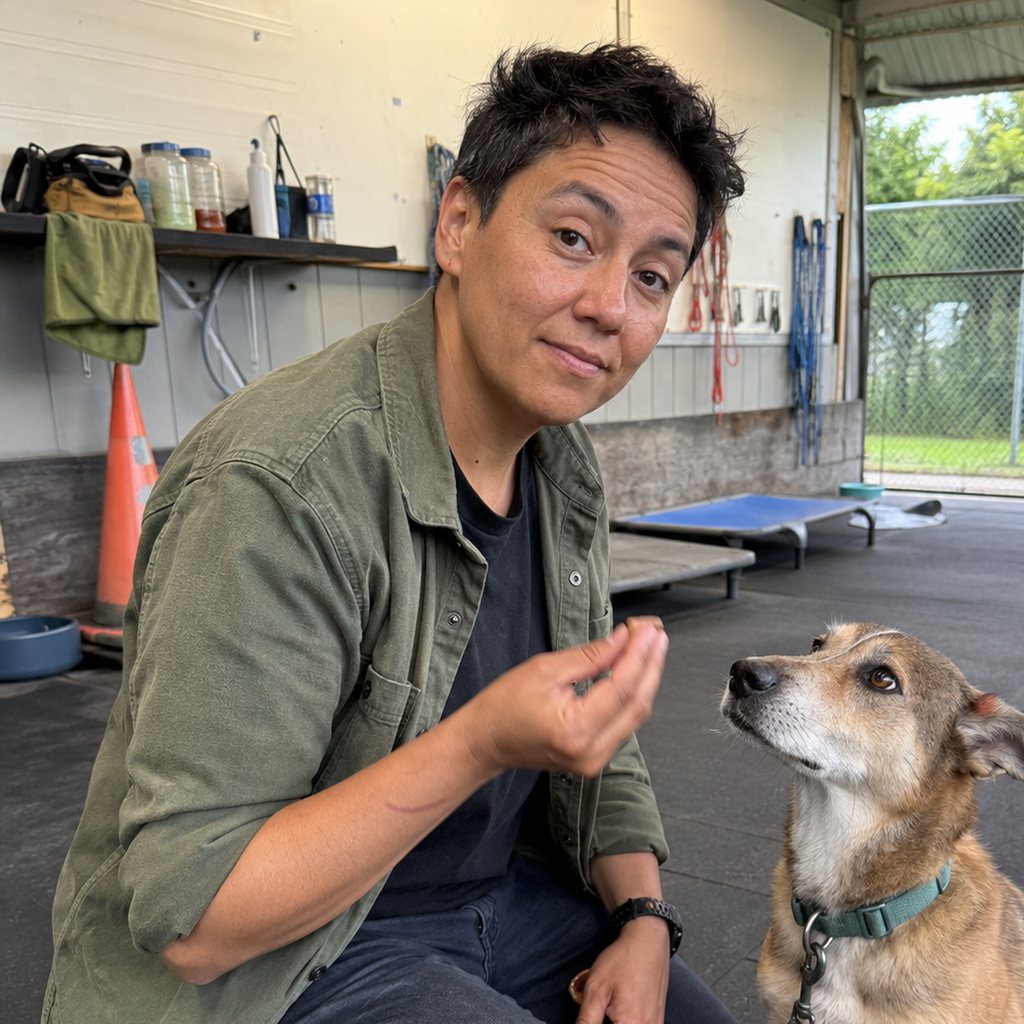
Training treats. Dog behaviorist Lauren Novack’s rule of thumb is to keep training treats tiny — think pea, not biscuit — and easy to carry, so you can deliver a lot of reps without overfeeding. Limited-ingredient treats (like Bocce’s Bakery recipes) are a good starting point that’s gentle on new-puppy stomachs. Whatever you pick, break it small: the number of reps matters more than the size of each reward.
A treat pouch
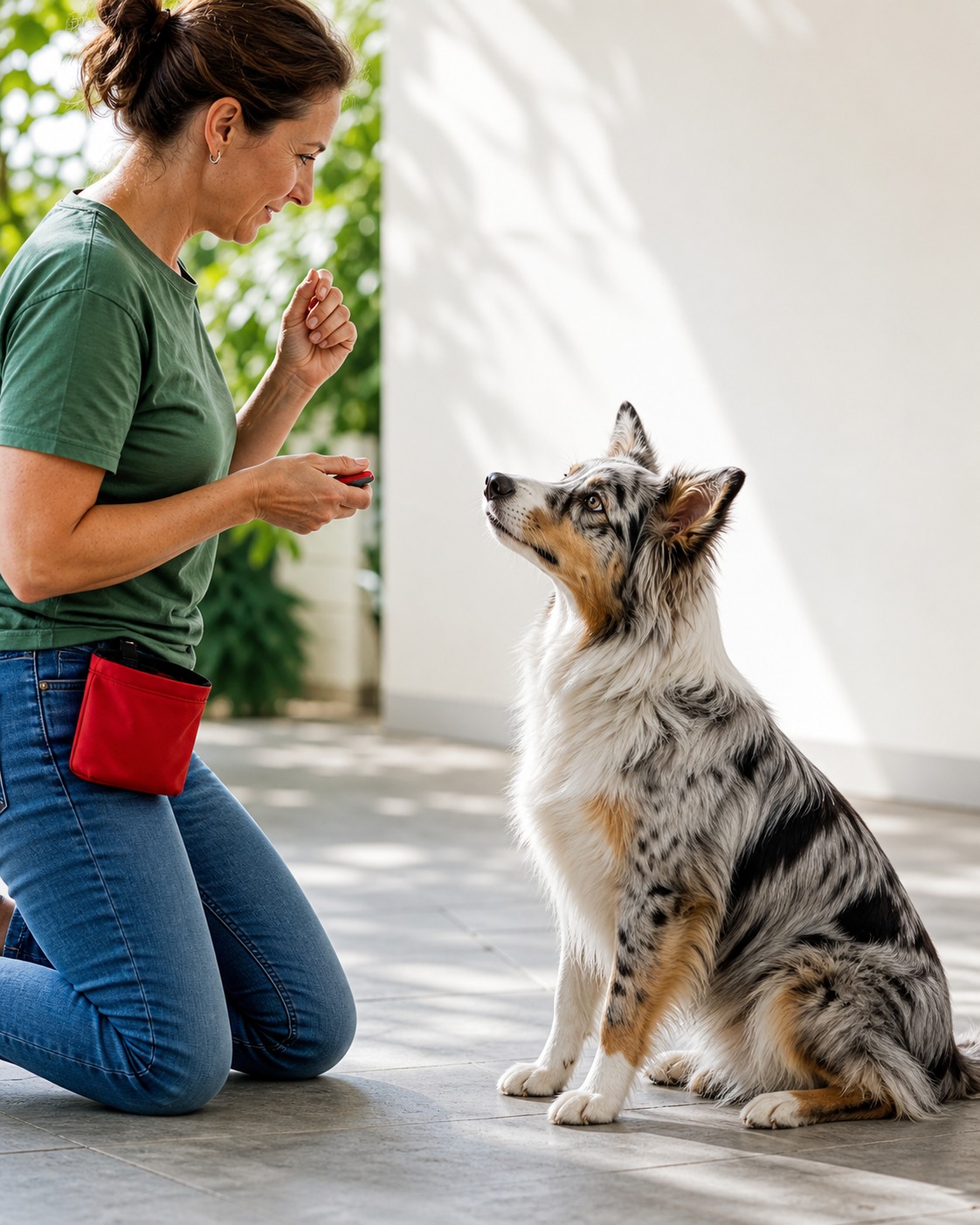
Fumbling in a pocket kills your timing, and loose treats turn your bag into a crumb graveyard. A dedicated pouch like the Wild One (eight colors, built-in poop-bag dispenser, wears as a fanny pack or crossbody, made from recycled knit) keeps rewards in reach so you can mark good behavior the instant it happens. Small tool, outsized effect on your timing.
A clicker
This is the purest “teaching” tool on the list. Trainer Robert Haussmann describes it as an unambiguous signal for a learner with no vocabulary — one sound that always means “yes.” And since dogs connect cause and effect only when feedback lands in the moment, a point trainer Melissa Dallier emphasizes, the click precisely marks the exact instant of the behavior that earned the treat. A durable two-pack metal clicker with a big center button is all you need. And yes, this works for cats too: clicker training actually predates its use with dogs, having come from marine-mammal training.
Job 2: Managing the environment (setting your dog up to succeed)
You can’t teach a dog who’s constantly rehearsing the wrong thing. Management gear removes the temptation while training takes hold. None of this “trains” your dog on its own, and that’s the point: it buys you a clean slate.
A crate
Done right, a crate gives a dog a safe den and speeds house-training, eases separation stress, and makes vet visits and travel calmer. “Being comfortable in a crate can also help reduce anxiety when your dog is at the veterinary clinic,” veterinary behaviorist Dr. Valli Parthasarathy notes. For a stylish, easy-collapse option there’s the Diggs Revol (diamond-mesh sides that won’t catch collars, multiple doors); for a straightforward pick, a basic wire crate with a divider panel grows with a puppy and includes a leak-proof pan.
A puppy pen and a gate
Both do the same core job, containing a dog to a safe zone, at different scales. A pen (durable, reconfigurable, sized to your space) is “a life saver for housebreaking, teaching independence, and keeping your pup safe,” trainer Aislynn Ross says. A gate does the guest-management version: dogs confined behind a gate when visitors arrive are less frantic, and a little settling time before they join the room means a calmer greeting. Look for a wide gate (up to about 56 inches) to fit most openings.
Pee pads, if you’re paper-training or managing a young or small dog. Placed near the door, a pad helps a new puppy learn the routine and can later become a signal spot. A leak-proof pad protects your floors while the real training, getting outside, takes root.
Job 3: Leash manners (and an honest word on the tools)
This is the category with the most gadgets and the most confusion, so here’s the plain version. No walking tool teaches loose-leash walking by itself. Each one changes the physics of pulling to make training easier. Pick based on your dog and your comfort.
No-pull front-clip harness. The best starting point for most dogs. A front clip sits at the chest, right in front of the dog’s center of gravity, so pulling turns the dog back toward you instead of letting them lean into the leash. Trainers like the 2 Hounds Freedom harness for its front-and-back clip option; the front clip reduces pulling and encourages a check-in you can reward. Gentle and beginner-friendly. Check it on Amazon ↗
Head halter, with a caveat. A head halter (like a Gentle Leader) gives strong steering control and is powerful for lunging and jumping, but it loops around the muzzle, and trainer Charlie DiBono cautions that a dog’s neck is nowhere near as sturdy as that of the halter-wearing horse the design borrows from, and one hard yank can do real damage. Use gentle, no-jerk handling and introduce it slowly. Best for strong pullers under guidance, not as a first tool.
Slip lead, for a specific purpose. These tighten and loosen to teach heel position and are handy for quick control, but because they can put pressure on the neck, they’re best in skilled hands for defined training moments, not as an everyday walking lead for a puller.
Long line, for recall. Once your dog is ready for more freedom, a 20-to-30-foot training lead lets them range ahead on a hike while staying tethered, so you can practice calling them back. Behaviorist Karen B. London ranks recall as the one skill most worth every hour you’ll ever spend on training, and a secure long line with an auto-locking carabiner is how you build it safely. Shop long training leads on Amazon.
On shock-absorbing bungee leashes: they cushion the jolt of a pull and can spare your shoulder, but be clear-eyed that they manage rather than teach. Keep working on the underlying leash skills so the goal, a dog who walks nicely on a normal lead, doesn’t slip away.
Job 4: Focus and enrichment (a tired brain is a trainable brain)
A training platform
The Blue-9 Klimb is a raised platform that gives a dog a clear “place” to go and settle. Trainer Nicole Ellis finds that a little height changes a dog’s mindset: up on the platform, dogs settle faster and hold their attention longer. And teaching a solid place cue transfers everywhere, from a café to a busy train station. Its rubberized deck and screw-in legs make it stable and portable, and it’s UV-stable for outdoor sessions. One of the most versatile teaching tools here.
An agility kit
Agility isn’t just for show dogs; it’s mental and physical enrichment for nearly any dog. Certified trainer Karen Chapdelaine’s experience is that agility has no real entry requirements — big or small, young or old, purebred or mystery mix — and even self-styled couch potatoes often light up for it. The Outward Hound Zip & Zoom indoor kit (weave poles, a collapsible tunnel, an adjustable jump, plus a tip booklet) is an easy, low-commitment start that packs into a bag. A great outlet for a dog whose “bad behavior” is really boredom.
Talking buttons, if you’re curious and patient. Recordable buttons (à la Hunger for Words) let you build a small vocabulary your dog presses to communicate. The science here is young but real, and it’s a genuine enrichment project rather than an obedience tool. Best for owners who enjoy a long-term, low-stakes experiment.
Job 5: Cleaning up (because accidents are part of training)
An enzymatic stain and odor eliminator. This one is quietly essential, because if a dog can still smell a past accident, they’re drawn back to the same spot, which sabotages house-training. “I would treat a pet stain as a 911,” cleaning expert Melissa Maker says; the longer it sits, the deeper it sets. Rocco & Roxie’s bio-enzymatic formula breaks down the odor at the source rather than masking it, and it’s pet-safe, which matters because many household cleaners aren’t. Keep a bottle on hand from day one. Check it on Amazon ↗
The bottom line
You don’t need a cabinet of gadgets to train a dog. You need the tools for a few clear jobs: fast rewards (treats, a pouch, a clicker), smart management (crate, pen, gate), a leash setup matched to your dog (start with a front-clip harness), a focus-and-enrichment outlet (a place platform or agility kit), and an enzymatic cleaner so accidents don’t repeat. Buy for the job, remember which tools teach and which merely manage, and keep the real work, reward-based training, at the center.
Some links above are affiliate links; if you buy through them, Pet Times may earn a commission. Products were chosen on merit, not commission.
References
- American Veterinary Society of Animal Behavior. “Position Statement on Humane Dog Training.” https://avsab.org/wp-content/uploads/2021/08/AVSAB-Humane-Dog-Training-Position-Statement-2021.pdf.
- Blackwell, E. J., et al. “The use of positive-based training methods and its relationship to reported behaviour problems in a population of domestic dogs.” Journal of Veterinary Behavior, 2008. https://www.sciencedirect.com/science/article/abs/pii/S1558787808000646.
- Grainger, J., et al. “The behavioral effects of walking on a collar and harness in domestic dogs.” Journal of Veterinary Behavior, 2016. https://www.sciencedirect.com/science/article/abs/pii/S1558787816300818.
Jordan Ellis is a certified professional dog trainer with a decade of experience working with rescue organisations and private clients. They specialise in anxiety, reactivity, and positive reinforcement methods, and review all training and behaviour content at The Pet Times.
Meet our experts ↗Keep reading
 Product PicksMatch the Tool to the Pull: A Humane Guide to No-Pull Collars (10 Picks)Dr. Nina Kohl · 12 min
 Product Picks7 Pieces of Dog Gear That Won't Wreck Your Living RoomSara Lim · 6 min
 Product PicksThe $350 Viral Boot Sold Out. Your Dog's $49 Version Is Better.Sasha Ford · 4 min
 LivingThe Rescue-Chihuahua Coincidence That Built a Cult Leash BrandMarcus Webb · 5 min
 Product PicksRescue Workers Swear by This Collar. Most People Use It Wrong.Dr. Nina Kohl · 7 min
 Product PicksYour Hand Is the Worst Place for a Leash. 7 Hands-Free Picks for Active Dogs.Marcus Webb · 6 min